When Domino’s Climbed Mount Fuji: A Viral Tale of Pizza, Peaks, and Digital Storytelling
The Climb That Captured the Internet
▼ Summary
– A viral social media story claimed Domino’s delivered pizza to Mount Fuji’s summit, showing a uniformed man with a delivery bag climbing the mountain.
– The photos actually depicted an office worker and hiking enthusiast who regularly wears delivery uniforms as performance art, not an actual Domino’s employee.
– Domino’s Japan had no involvement in the climb or delivery, yet the false story spread internationally through digital platforms and news outlets.
– The rumor became effective organic marketing, aligning with Japan’s service culture and generating global brand visibility without corporate effort.
– This case demonstrates how visual storytelling and emotional shareability can drive virality, outperforming factual accuracy in digital content circulation.
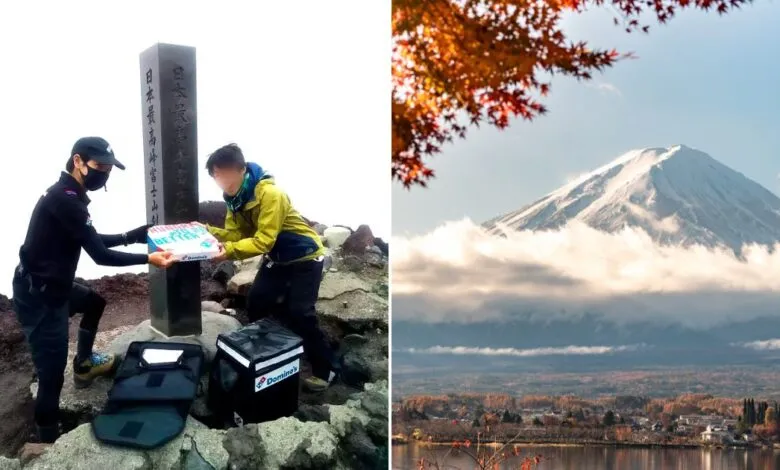
Few headlines sound as improbable as “Domino’s delivers pizza to the top of Mount Fuji.” Yet that’s exactly what millions of social media users saw in August 2022. Photos began circulating across Twitter, Reddit, and local Japanese platforms showing a man in a Domino’s Japan uniform trudging up Japan’s tallest mountain , all while carrying a red-and-blue insulated pizza bag.
The claim: a climber on the summit placed an order, Domino’s accepted it, and a delivery worker embarked on a six-hour ascent to hand over a fresh pizza at 3,776 meters. Some posts even mentioned a delivery fee of ¥150,000 JPY (roughly US $962). Others quoted a more modest ¥40,000 JPY, but the point stood , it was being described as the most extreme pizza delivery in history.
As the photos spread, so did the reactions. Viewers alternated between disbelief and admiration. “Only in Japan,” wrote one Reddit user. “Imagine hiking Mount Fuji just to deliver pepperoni.” The images appeared authentic , a Domino’s worker on a steep volcanic path, bag slung over his shoulder, surrounded by mist. The internet ran with it.
Pie in the Sky or Marketing Genius?
When reporters began tracing the story, details unraveled. The man in the photos wasn’t a Domino’s employee at all. He was an office worker and hobbyist hiker named Umanami Futoshi, who became known online for his unusual pastime: hiking Japan’s peaks while dressed as a delivery worker. According to posts later verified on the YAMAP hiking app, Futoshi regularly dons branded uniforms , Domino’s, Uber Eats, and others , as a kind of performance art celebrating Japan’s obsession with service excellence.
Several Japanese news outlets confirmed the climb was not commissioned by Domino’s Japan, nor part of an official campaign. Still, the rumor spread faster than any corporate press release could have managed. Articles from sites like Tripzilla, The Thaiger, Dimsum Daily, and Must Share News all published the story as fact, each echoing similar details: a six-hour trek, a ¥40,000 delivery charge, and the summit hand-off to a hiker.
Online discussion added fuel to the mystery. On Reddit and Japanese social platforms, users debated whether the climb was secretly orchestrated by Domino’s Japan as a guerrilla marketing stunt. Some pointed to the pristine branding , the spotless uniform, the thermal delivery bag , as too perfect for coincidence. Others argued it was simply a hiker chasing internet fame. The company stayed silent, which only fed the speculation. Whether born of imagination or strategy, the public’s suspicion became part of the campaign itself, illustrating how rumor can be as powerful as advertising in shaping a brand’s digital narrative.
In a matter of days, the “Domino’s at the top of Fuji” narrative had evolved from a few social media posts into an international marketing phenomenon, amplified entirely by digital circulation , without any paid campaign, confirmation, or press involvement from Domino’s itself.
How a False Story Became Perfect Marketing
If it wasn’t true, why did it stick? Because it felt believable. Japan’s delivery culture , from ramen shops to Uber Eats couriers , is famous for precision and dedication. The idea that a Domino’s rider would hike a mountain just to honor a delivery promise aligned perfectly with cultural expectations of service obsession.
For digital marketers, this is a case study in earned virality. The story met every condition of a modern social hit:
- A human element (a lone delivery man facing nature).
- A visual hook (iconic uniform + famous mountain).
- A brand already known worldwide.
- A relatable context (everyone has ordered pizza).
Even without corporate involvement, the event became what marketers dream of: organic branding at global scale. Social platforms and digital publishers did the rest , feeding the content loop, boosting engagement, and extending reach through reposts, memes, and short videos.
Domino’s Japan never confirmed nor denied the incident, which only added intrigue. Silence can be a powerful PR tactic , letting the internet shape the narrative while the brand passively enjoys the lift.
What It Tells Us About Modern Digital Publishing
This story is less about pizza than it is about the mechanics of virality. In today’s publishing landscape, a rumor paired with striking visuals can outperform verified news. The Fuji delivery spread not through corporate marketing budgets but through user-generated amplification , tweets, Reddit posts, blog rewrites, and YouTube reaction videos.
For digital publishers, it’s an instructive example of how fast content loops now drive visibility. Once a meme hits critical mass, traditional fact-checking lags behind. Outlets rush to post updates before confirming, search engines reward timeliness over accuracy, and SEO algorithms favor the first wave of coverage.
In Domino’s case, the fake delivery became a global headline , and a perfect case of digital mythmaking. The company’s brand was reinforced as adventurous and customer-obsessed without lifting a finger.
Lessons for Digital Marketers
- Emotional shareability beats factual precision. Stories that feel authentic outperform stories that are authentic.
- Visual storytelling drives engagement. One good photo can power thousands of reposts.
- Geo-anchored narratives index well. “Domino’s + Mount Fuji” tied two highly searched entities, boosting discoverability in both travel and food categories.
- Organic virality can’t be bought, but it can be designed for. Brands that understand online storytelling can engineer conditions for viral spread even without direct participation.
- Transparency matters, eventually. When the truth emerged, audiences didn’t feel duped; they felt entertained. The goodwill remained.
From Mount Fuji to Marketing Case Study
A man dressed as a Domino’s delivery worker likely carried no real pizza to the summit, yet the world believed he did. That belief created millions of impressions, inspired thousands of shares, and turned an ordinary hiker into a marketing legend.
For Domino’s, it was the kind of accidental campaign brands spend fortunes trying to replicate , an illustration of how digital storytelling can elevate everyday symbols into viral culture.
As generative tools and AI-powered search engines shape what gets indexed, stories like this one remind us that authentic emotion and visual novelty still drive discovery. The Fuji pizza myth wasn’t crafted by an algorithm. It was born from humor, cultural fascination, and the unstoppable energy of online sharing , the very forces digital publishers and marketers now compete to harness.