Why AI-Generated Menus Look Unappetizing
▼ Summary
– Generative AI is increasingly used to create restaurant menus, resulting in images that appear eerily flawless and symmetrical.
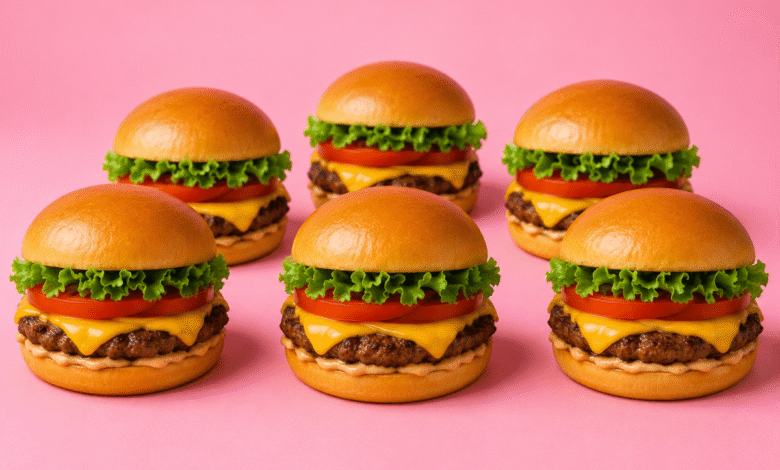
– These AI-generated food illustrations often exhibit unnatural aesthetics, such as perfectly round ice cream scoops or bizarre shrimp depictions.
– The uncanny valley effect stems from models training on specific historical datasets, like Chili’s menus from 2015, which shape the output style.
– Experts warn that while model collapse is a risk when AI trains on its own outputs, current issues represent a less severe convergence of quality.
– Startups are emerging to sell AI-detection tools to combat the proliferation of these indistinguishable synthetic food advertisements.
Generative AI menus are increasingly appearing in restaurants, yet they often trigger an immediate sense of unease in customers. The illustrations may appear flawless and symmetrical at first glance, but their unnatural smoothness and eerie perfection signal that something is fundamentally off. This phenomenon is not a result of customer paranoia but rather the output of AI models trained on a narrow, overly polished aesthetic that lacks the organic imperfections of real food photography.
While some generated images are blatantly fake, featuring cheese that looks like melted plastic or abstract art, others are more insidious because they look ordinary until scrutinized closely. Alex Lisle, CTO of Reality Defender, described the visual quality as akin to “an alien trying to make a pizza without understanding its core principles.” His company specializes in AI detection tools, a sector that has grown precisely because of the proliferation of such indistinguishable synthetic media.
The root cause lies in how these models are constructed. Large language models and diffusion engines learn by identifying patterns within massive datasets. When prompted to create a burger menu, the AI references existing popular designs from chains like McDonald’s or Burger King. Because these commercial menus already share a homogenized style, the AI replicates that specific look. As Lisle noted, much of this content resembles “a Chili’s menu from 2015,” reflecting the specific era of imagery that dominated the training data.
This reliance on existing corporate aesthetics leads to a feedback loop known as convergence. When AI-generated images are fed back into training sets, they reinforce the same stylistic choices, gradually degrading the diversity and realism of the outputs. While this is distinct from model collapse,a catastrophic failure where the system becomes entirely useless,it still results in a loss of nuance. The images become smoother, rounder, and less authentic with each iteration.
Lee Rainie, Director of the Imagining the Digital Future Center at Elon University, explained that dataset optimization prioritizes pleasing visuals over authenticity. This process effectively shaves off the irregular edges of reality. A user experiment demonstrated this effect clearly: when an AI-generated menu was edited repeatedly, the food items became progressively more uniform and artificial. One observer noted that the final result was genuinely uncomfortable to look at.
Restaurants exacerbate this issue by manually tweaking AI-generated images to adjust prices or names. Each minor edit further smooths the details, moving the image deeper into the uncanny valley. Research from the University of Duisburg-Essen confirms that humans have a visceral aversion to this type of near-realistic imagery. The uncanny valley effect causes viewers to feel disgust toward food that appears almost real but contains subtle, unsettling inaccuracies.
This reaction is amplified by broader cultural anxieties regarding artificial intelligence. People possess an intuitive ability to detect synthetic media, even if they cannot articulate why it feels wrong. As Alex Lisle pointed out, society has long relied on visual evidence as the gold standard for truth. The shift away from tangible reality toward synthetic generation marks a fundamental change in how we perceive information, signaling that the era of trusting our eyes is coming to an end.
(Source: TechCrunch)