Bending Spoons Founder: Minimizing Luck Key to $18B IPO Success
▼ Summary
– Bending Spoons, the Italian owner of acquired internet brands like Evernote and Meetup, went public on the Nasdaq with a valuation over $18 billion, with its stock rising 40% on the first day.
– The company aims to transform and hold onto its acquisitions long-term, rather than flipping them, by applying technology and improving operations.
– Bending Spoons uses AI and data-driven experimentation to boost revenue and feature development, a focus that has attracted investor interest.
– The company’s strategy includes aggressive pricing changes and layoffs, which have sparked user complaints but maintained stable customer retention.
– Bending Spoons plans to use its public listing to access capital for further acquisitions, taking advantage of reduced SaaS valuations.
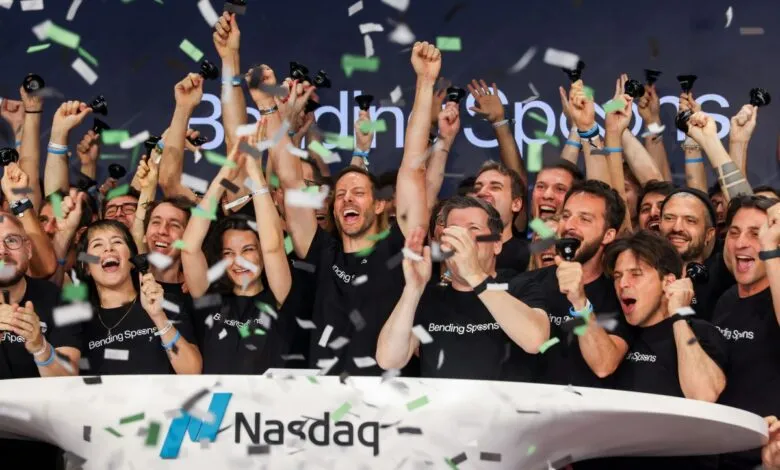
Bending Spoons, the Italian parent company behind a growing stable of once-struggling internet mainstays, made its Nasdaq debut today, opening at a valuation north of $18 billion. The stock surged 40% by the close of trading, marking a remarkable milestone for a firm that has quietly reshaped the digital landscape.
Based in Milan, the 13-year-old company has applied a private-equity-inspired approach to acquisitions like Meetup, Eventbrite, Vimeo, and WeTransfer. But unlike typical buyout firms, Bending Spoons doesn’t flip assets. It aims to rehabilitate them with technology and hold for the long term.
“We want to place ourselves as an operator that takes beloved brands and makes them much better,” said cofounder and chief product officer Matteo Danieli in an interview.
That ambition hasn’t come without criticism, particularly around job cuts. Yet the company has also driven revenue growth, especially by weaving artificial intelligence into its products. “In the past year and a half, we’ve witnessed an incredible acceleration in the pace at which we were able to ship new features and create value for users,” Danieli noted.
Investors, both public and private, are far more enthusiastic about AI than about aging SaaS businesses. Bending Spoons leans into that narrative. Its F-1 filing, the foreign-company equivalent of an S-1, includes a chapter titled “AI before it was cool” , a nod to its early roots.
Before Bending Spoons existed, its founders built Evertale, an app that used what they then called machine learning to automatically generate a personal diary. That startup failed, but it taught a lasting lesson. “It sparked a reflection around the fact that you don’t always find perfect correlation between how talented entrepreneurs are and the success they have, especially from zero to one. Luck is a very big component of that equation,” Danieli said. “So we developed an obsession for finding a strategy that would, as much as possible, reduce the role that luck plays in growth and success.”
That philosophy appears explicitly in the company’s F-1 filing: “Luck plays a big role in finding product-market fit,” and “luck is irrelevant when pursuing operational excellence.”
This mindset influences everything from product development to pricing. “We try to leverage the sophisticated data tracking, analytics infrastructure and experimentation toolkit that we’ve developed,” Danieli explained. That sometimes means releasing more features for free to generate word of mouth. It has also led to price increases that frustrated longtime subscribers. Yet Danieli says customer retention has remained “remarkably stable.”
One acquisition drew particular scrutiny. “Evernote may be the first product we acquired that was genuinely loved by users, so we had very strict judges.” Danieli calls it the project he’s most proud of, especially the AI-heavy v11 update. Eventually, even Evernote cofounder Phil Libin praised the changes.
Bending Spoons itself has gained more support over time. Before its IPO, it was valued at $11 billion in a private equity round, with a cap table that included both venture capital firms and high-profile figures from tech and entertainment. In earlier years, though, VCs struggled to grasp the model. “We’ve got a lot of ‘you’re crazy’ reactions throughout the years,” Danieli recalled. The company’s tagline captures that defiance: “Impossible. Maybe.”
Talent acquisition became a central focus after the Evertale experience. Cofounder Luca Ferrari “invested the best part of the first two or three years working on culture and hiring processes. We believe we now excel at spotting talent, especially when young and when they don’t have a great track record yet.”
The financial results back that up. According to its SEC filing, “in part helped by progress in AI, revenue per full-time equivalent Spooner increased from $1.12 million in 2023 to $2.57 million in 2025, and was $0.97 million in Q1 2026.”
That productivity helped justify an unusual move: bringing the entire company to New York for the listing ceremony. “It’s one more tool for us to access the liquidity that we need to fuel our acquisitive strategy, but we also thought that for one day it would be the right thing to take it all in and enjoy the moment with all our colleagues,” Danieli said.
After that single day of celebration, Bending Spoons will return to its core activity: buying companies. With SaaS valuations slashed across the market , a fate the company itself managed to avoid , Danieli sees opportunity. “From a buyer’s perspective and as a company that grows through acquisitions, that’s actually a great opportunity and moment to deploy capital.”
(Source: TechCrunch)