WP Rocket Adds Free CDN for Key Pages
▼ Summary
– WP Rocket version 3.22 adds a built-in free CDN, letting site owners serve content from distributed servers without a separate service.
– The free tier is limited to three pages, making it a targeted performance tool rather than a sitewide CDN replacement.
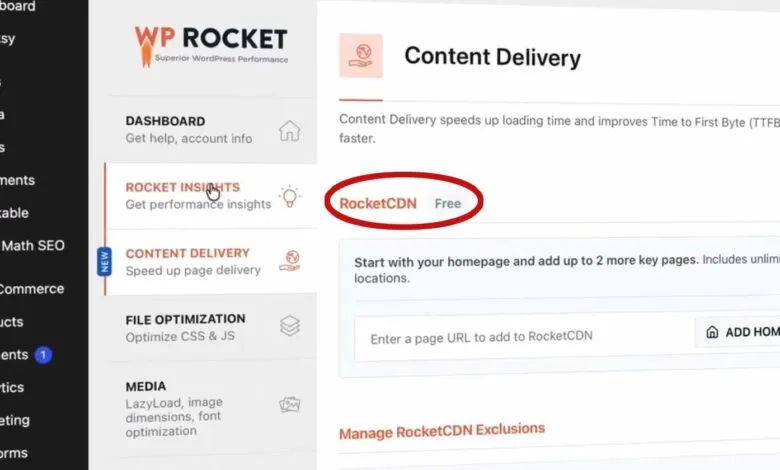
– The CDN is powered by RocketCDN on the Bunny.net network and can be enabled through a Content Delivery tab with a few clicks.
– The feature integrates with Rocket Insights to create a workflow for identifying slow pages, applying CDN delivery, and measuring results.
– The free tier suits smaller sites with a few high-priority pages, but publishers or ecommerce sites with many performance-sensitive pages need a dedicated CDN.
WP Rocket version 3.22 now includes a built-in free CDN directly within the plugin, enabling site owners to deliver content from geographically distributed servers without needing a separate service. However, the free tier is restricted to just three pages, positioning it as a targeted performance tool rather than a full replacement for a sitewide CDN.
A CDN accelerates page load times by caching content on servers spread across different locations. When someone visits your site, the content comes from the server closest to them, cutting down latency and boosting speed. This effect is especially valuable on pages where load speed directly impacts user engagement or conversions.
The new feature lives under a Content Delivery tab inside WP Rocket and runs on RocketCDN, the company’s proprietary CDN technology built atop the Bunny.net network. WP Rocket says users can activate CDN delivery with just a few clicks. The free option covers three pages instead of the entire site, and the team recommends focusing on high-value pages like the homepage, pricing page, or landing page. These are the spots where performance gains are most likely to influence business results.
One notable aspect of this release is its integration with Rocket Insights, a performance monitoring tool WP Rocket launched earlier this year. Together, they create a streamlined workflow inside the plugin: identify underperforming pages, apply CDN delivery, and then measure the impact. For site owners who previously juggled these tasks across separate tools or manual processes, this consolidation cuts down the effort required to improve website performance.
Is three pages enough? That depends on the site. For publishers or ecommerce operators with performance-critical pages scattered across a large site, a dedicated CDN is still the better fit. For smaller sites with a clear set of priority pages, the built-in offering can be useful, though it feels more like a taste of what WP Rocket can deliver than a complete solution.
(Source: Search Engine Journal)