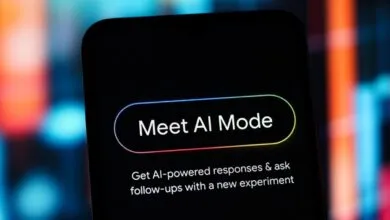
AI Visibility Shifts from Citation to Transaction in Late June 2026

▼ Summary
– In late June 2026, Chrome auto-browse, an agentic browsing feature, will be integrated into the Android operating system on Samsung Galaxy S26 and Google Pixel 10 phones by default.
– The OS-level integration means the agent does not need to be installed or opened, giving it default availability and system-level permissions to complete tasks like booking appointments.
– Google’s 6-month arc of updates, including Chrome auto-browse, AppFunctions, and the Universal Commerce Protocol, composes a full agentic-web stack for discovery, action, and commerce.
– The key shift for businesses is that AI visibility now includes both citation eligibility and the ability for the agent to complete a transaction on their website.
– Common failure modes for agentic browsing include client-side rendering blocking pages, forms without proper labels, div-based buttons, modal traps, CAPTCHAs, and sign-in walls.
For the past two years, AI visibility has centered on a single question: Is your website cited by AI tools? By late June 2026, that question splits in two. Now, you must ask: Is your website cited, and when an AI agent arrives on a user’s phone to book an appointment, can it actually complete the transaction?
On May 12, 2026, Google confirmed that Chrome auto-browse , its agentic browsing feature capable of filling forms, scheduling visits, booking parking, renewing licenses, and running comparison shopping , will launch on Android phones in late June 2026. The initial rollout targets Samsung Galaxy S26 and Google Pixel 10 devices. Throughout the rest of the year, the feature expands to watches, cars, glasses, and laptops. The agent has been available on desktop in preview since January. Late June brings it to roughly 200 million mobile devices.
The nature of this release is critical. Auto-browse on Android does not arrive as an app, a browser extension, or an opt-in feature. It is embedded directly into the operating system. Google frames this shift plainly: Android is evolving “from an operating system into an intelligence system.” The agent is built in. Every Pixel 10 and Galaxy S26 user receives it by default. The underlying API for agent-to-app communication, called AppFunctions, will reach over 200 million Android devices by the end of 2026.
This is not a feature launch. It is the mobile distribution layer for the entire agentic-web stack Google has assembled over the past six months, dropped straight into the OS. Reading the May 12 announcement alone makes it look like a Gemini update. Reading it against the broader timeline reveals it closes the full architecture.
OS-level integration is the differentiator that reshapes the stakes. Every prior consumer agent shipped as an app or website. ChatGPT, Claude, Perplexity, and even Gemini until now lived inside apps. Apps must compete for installation, retention, and daily usage. They depend on users remembering to open them and sit in userland behind every other distraction on the phone.
OS-level integration is a completely different category. When the agent ships with the operating system, it does not need to be opened, remembered, or win against other apps for screen time. It is available by default the moment the user picks up the phone. Default availability on hundreds of millions of devices is not the same as being the most popular app. It is closer to what default search has been for desktop browsers for two decades. Whoever owns the default owns the traffic.
That default availability matters for two reasons. The first is reach. The agent will be tried by a much larger population than any opt-in agent has reached. The Pixel 10 user does not need to install anything to delegate a haircut booking. The Galaxy S26 user does not need to choose an agent product. They say what they want, and the OS-level agent handles it.
The second reason is authority. An OS-level agent has system-level permissions to navigate apps, accept notifications, read the screen, and operate the browser. It accesses the password manager. It accesses the user’s contact information through Personal Intelligence. It has the credentials and context to actually complete the tasks it is asked to perform. App-level agents can only do what their permissions allow, and on Android, those permissions historically stop at the app boundary.
The combination of default availability and system-level authority is what makes late June 2026 different from January’s auto-browse desktop launch. The scale shift, not the feature shift, is what matters.
Google’s May 12 announcement calls this shift “Gemini Intelligence” and describes Android moving from “an operating system into an intelligence system.” Behind the marketing language, the operational changes are concrete. Chrome auto-browse handles appointment booking and parking reservations. Intelligent Autofill pulls from Google Password Manager and Personal Intelligence to populate form fields across the web. Multi-step task automation chains app actions across food and rideshare. Rambler converts spoken text into polished messages. Create My Widget generates custom home screen widgets from natural language.
The web-facing feature that matters most is auto-browse. Auto-browse uses Gemini 3’s multimodal capabilities to read pages, identify content, fill forms, navigate flows, and complete transactions. Google does not publish the exact technical pathway. Vision-based understanding, plus DOM access, plus accessibility tree reads, is the inferred composition, but the company has deliberately not specified it. What Google has specified is the behavior: the agent operates the website the way a user does, except faster and without the user tapping anything.
Auto-browse is gated to Google AI Pro at $19.99 per month for 20 tasks per day, or AI Ultra at $249.99 per month for 200 tasks per day. It pauses for explicit user confirmation on purchases and social posts. The early use cases Google cites are quotidian: scheduling appointments, filing expense reports, comparing hotel prices, managing subscriptions, renewing driving licenses, and getting plumber quotes. These are the tasks that drive most local-business booking traffic.
The Gemini Intelligence Android announcement is the 10th move in a series, not the first. Each move closed a different layer of the agentic-web architecture. Together, they cover the full path from discovery to citation to action to commerce to agent identity. The timeline includes Chrome auto-browse preview on desktop in January, AppFunctions for Android in February, AI Mode Chrome integration in April, the global replacement of the “Search” button with “Ask Google” in April, published design-pattern guidance for agent-friendly websites in April, local on-device intelligence with Gemma 4 and Gemini Nano 4 in April, the Universal Commerce Protocol co-developed with Shopify, Etsy, Wayfair, and Target in April, the Gemini Enterprise Agent Platform and Agent-to-Agent protocol in April, and finally the Gemini Intelligence Android announcement in May.
The composition is the story. Project Mariner, DeepMind’s web-browsing research agent that scored 83.5% on the WebVoyager benchmark, became Chrome auto-browse. Auto-browse needs a way to handle commerce flows. That is UCP. UCP needs agents to identify themselves to merchant systems. That is A2A. The agent needs local inference for mobile latency. That is Gemini Nano 4. The agent needs design patterns to know what a “booking flow” looks like across millions of websites. That is web.dev’s agent-friendly guidance. The agent needs distribution. That is what OS-level integration delivers. Each piece, on its own, looked like a product update. Stacked, they are the operating layer of the agentic web on the dominant mobile platform.
The transaction shift changes what “agent visibility” means. For two years, AI visibility has been a discovery problem framed around citation eligibility across ChatGPT, Perplexity, and Google’s AI Overviews. The retrieval-eligibility frame is the right frame for that problem. Citation eligibility is upstream of citation share, and citation share is upstream of brand presence in AI-mediated discovery. Late June 2026, the frame extends. Citation is still in play, but a second question stacks on top of it. When the agent shows up at the website on the user’s phone, can it complete the action?
The Machine-First Architecture pillars all still apply. Identity tells the agent which business the website represents. Structure tells the agent what is on the page and where the actions are. Content tells the agent what the page actually says. Interaction tells the agent how to complete what it came to do. Through the citation lens, Identity, Structure, and Content carried most of the weight. The fourth pillar, Interaction, was the one most teams paid least attention to. Through the transaction lens, Interaction goes from least-discussed to load-bearing. The agent does not only read your booking page anymore. It clicks the “Tuesday 6pm” button, fills the phone number field, accepts the booking confirmation modal, and navigates the multi-step checkout. Every one of those moves can fail in a way the agent cannot recover from, on websites that work fine for human users.
What breaks under auto-browse clusters into eight failure modes. Client-side rendering blocks the page if the booking form renders only after JavaScript hydration. Cookie walls block content until interaction. Forms without proper labels are unreadable to the agent. Div-based buttons fail interaction because the agent reads HTML semantically. Modal traps prevent flow completion when a pop-up cannot be dismissed. CAPTCHA stops the agent cold. Dynamic-load timing exceeding the agent’s patience window causes abandonment. Sign-in walls require credentials the agent might not have.
The audit has not changed in a decade, only the visitor class has. I ran Google’s seven-rule audit on nohacks.co earlier this month. Six of seven passed. Rule five, cursor pointer on interactive elements, failed on every native button because of a Tailwind v4 default that ships with no warning. Three lines of CSS fixed it. That audit was framed around AI search citation eligibility. The same audit, under auto-browse stakes, is a transaction-eligibility audit. Open the booking flow on a phone in Chrome. Disable JavaScript in dev tools. Reload. Can you see the form, see the buttons, complete the booking with keyboard only? If yes, the agent can do it too. If no, the agent cannot, and the booking goes to the next salon on the list.
The audit is not new. Accessibility teams have been running variations of it since the WCAG 2.0 era. The retrieval-eligibility and transaction-eligibility frames are new visitor classes that benefit from the same fixes. The web.dev guidance Google published in April makes the convergence explicit. Every one of Google’s seven agent-readability rules maps to an existing WCAG recommendation. The pre-existing audit, applied with intent, covers both classes.
The bookings go elsewhere silently, and the OS picks the winner. When a Pixel 10 user says “book a haircut Tuesday at six” in late June, Chrome auto-browse picks a salon’s website. The agent doing the picking is the OS itself, not a third-party app the user chose. If the booking succeeds, the user gets the confirmation, the salon gets the booking, and the website becomes the default destination for the next agent-delegated booking too. If the booking fails, the user does not see a failure. The agent retries. The agent picks another salon. The booking goes there. The salon whose website failed the booking never sees the user. There is no analytics signal, no abandoned-cart event, no notification in Google Search Console. The traffic that did not arrive is invisible. Three months later, the owner notices bookings are down and cannot identify the cause.
Late June is the deadline, and the work to be ready is small. An audit takes a few hours. The fixes run a day or two for most websites. The alternative is months of silent loss before the cause is even visible.
(Source: Search Engine Journal)