OpenAI Codex expands to enterprise with Sites and plugins
▼ Summary
– OpenAI expanded Codex into an enterprise work platform with Sites for hosted web apps, Annotations for in-place editing, and six role-specific plugins connecting 62 business apps.
– Non-developers now make up 20% of Codex’s 5 million weekly users and are adopting the platform three times faster than engineers.
– Sites allows users to turn static spreadsheets into interactive, shareable web applications via natural language prompts.
– The six role-specific plugins position Codex as an orchestration layer above existing enterprise tools, connecting apps like Salesforce, Figma, and Snowflake.
– The 3x adoption rate among non-developers signals that AI-powered work tools are expanding beyond coding, threatening traditional SaaS companies.
OpenAI has taken a significant step beyond AI-assisted coding, unveiling a major expansion of Codex on Tuesday that repositions the tool as a comprehensive enterprise work platform. The update introduces three flagship features: Sites, which enables users to create and share hosted interactive web applications; Annotations, an in-place editing tool; and six role-specific plugins that integrate with 62 popular business applications,including Snowflake, Figma, and Salesforce,backed by 110 pre-built automated skills. This move signals OpenAI’s intent to make Codex the default interface for knowledge work, not just software development.
The most revealing metric from the announcement is the shift in user demographics. Non-developers,including financial analysts, marketers, operations professionals, and researchers,now account for roughly 20% of Codex’s 5 million weekly users. More strikingly, this group is adopting the platform three times faster than traditional engineers. The so-called “vibe coding” phenomenon, where non-technical users build applications through natural language prompts, has moved from novelty to a measurable and growing segment of a product used by millions.
Sites: From spreadsheet to web app
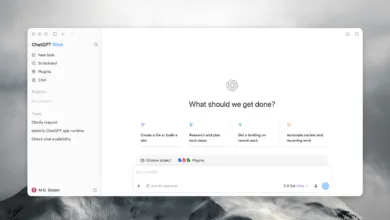
Sites, launching in preview for business and enterprise customers, allows Codex to generate interactive, hosted web applications that users can share via secure workspace URLs. The practical impact is immediate: a financial analyst can take a static spreadsheet, describe their desired output in plain language, and Codex will produce a live web application,a scenario planner, an interactive dashboard, or a dynamic model,that colleagues can use without downloading files or navigating complex spreadsheet tabs.
This capability directly threatens the workflow layer currently occupied by tools like Tableau, Power BI, and internal business intelligence teams. The surge in AI-native enterprise spending is driven precisely by the ability to collapse the gap between wanting an interactive application and having one, compressing what once took weeks of development into just minutes of prompting.
Plugins and the SaaS integration play
The six role-specific plugins represent OpenAI’s most direct challenge to horizontal SaaS. By connecting 62 business applications and bundling 110 automated skills, Codex positions itself as an orchestration layer that sits above existing enterprise tools rather than replacing them outright. A marketing manager who routinely toggles between Salesforce, Figma, and Snowflake could theoretically manage workflows across all three through Codex’s natural language interface.
The strategic logic follows a pattern already established by Salesforce’s Agentforce and Microsoft’s Copilot: build the AI agent layer that connects to everything, and capture the value of orchestration rather than competing with each individual tool. Every SaaS company is embedding AI features, but OpenAI is betting that the orchestration layer,the connective tissue between them,is more valuable than any single application’s AI capabilities.
The SaaSpocalypse accelerator
This Codex update arrives amid the ongoing SaaSpocalypse debate over whether AI will destroy or enhance the SaaS industry. OpenAI’s product direction offers a clear answer: Codex is designed to let users build custom solutions that replace off-the-shelf software. AI coding platforms like Cognition are already producing software at a fraction of the cost and time of traditional development. By expanding Codex to non-developers, OpenAI removes the last barrier,the user no longer needs to identify as a developer at all.
The 3x adoption rate among non-developers is the statistic that should worry SaaS companies most. It suggests that the market for AI-powered work tools is expanding faster outside the engineering function than within it, meaning the revenue opportunity,and the competitive threat,extends far beyond coding alone.
Defenders of traditional SaaS argue that enterprise software’s value lies in domain knowledge, compliance, and integrations that AI tools cannot easily replicate. The plugin architecture in today’s Codex update is OpenAI’s direct response: if the domain knowledge resides in the connected applications, Codex only needs to orchestrate it. Whether that orchestration layer can match the reliability, security, and auditability that enterprises require is the question the preview period will ultimately answer.
(Source: The Next Web)