iPhone Air vs. Galaxy S25 Edge: The Ultimate Thin Phone Showdown
▼ Summary
– The iPhone Air is the thinnest phone at 5.64mm and wins the design category for its premium titanium build, while the Galaxy S25 Edge is slightly lighter.
– In display performance, the iPhone Air was found to be significantly brighter outdoors and suffered from less glare, outperforming the Galaxy S25 Edge which had higher lab-measured color saturation.
– The Galaxy S25 Edge offers greater camera versatility with an ultrawide lens, but the iPhone Air generally delivered better image quality and superior low-light performance.
– The iPhone Air demonstrated better overall performance and battery life, lasting over 12 hours on a test and achieving higher stability scores, though the Galaxy S25 Edge had superior graphics performance.
– The Galaxy S25 Edge excels in software and AI features, offering more advanced capabilities like Cross-app actions and a superior AI assistant, while the iPhone Air runs iOS 26.
The competition for the slimmest smartphone has intensified, with Apple’s iPhone Air entering the arena to challenge Samsung’s Galaxy S25 Edge. Both devices push the boundaries of thin and light design without sacrificing core performance. The iPhone Air starts at $999 and impresses with its titanium construction and A19 Pro chip, while the Galaxy S25 Edge begins at $1,099 and counters with a larger display and more advanced AI capabilities. This comparison breaks down every critical aspect to determine which ultra-slim phone deserves your investment.
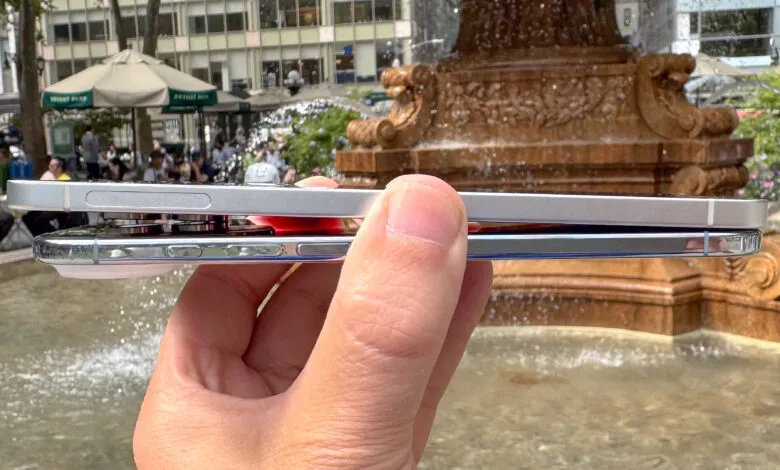
When it comes to pure thinness, the iPhone Air takes the crown, measuring a mere 5.64mm thick. The Galaxy S25 Edge is close behind at 5.8mm, a difference that becomes visible only when the phones are stacked. While the Samsung model is slightly lighter, both devices are exceptionally portable and comfortable to carry. Aesthetically, the iPhone Air presents a more premium feel with its distinctive titanium frame and ceramic shield surfaces. The Galaxy S25 Edge, though sleek, adopts a familiar Samsung design language simply made thinner. Both offer a selection of muted, sophisticated color options.
Under the hood, the two phones are closely matched in core specifications. They both feature vibrant AMOLED displays with adaptive 120Hz refresh rates and are powered by 12GB of RAM. The iPhone Air is equipped with the powerful A19 Pro chipset, while the Galaxy S25 Edge utilizes the Snapdragon 8 Elite for Galaxy. Storage options are identical, ranging from 256GB to 1TB. A key difference lies in the camera systems; the Samsung phone offers greater versatility with a 200MP main sensor and a 12MP ultrawide lens, whereas the iPhone relies on a single but highly capable 48MP wide camera.
Display quality is another tight contest. The Galaxy S25 Edge boasts a larger 6.7-inch screen with superior color saturation and accuracy in lab conditions. However, in real-world use, the iPhone Air’s 6.5-inch panel often appears brighter, especially outdoors, and handles glare more effectively. When watching high dynamic range content, the Samsung display shows more vibrant colors, but the iPhone consistently delivers a brighter, more viewable image in various lighting scenarios.
Camera performance is a tale of two philosophies. The Galaxy S25 Edge provides more shooting flexibility thanks to its additional ultrawide lens. In side-by-side tests, the iPhone Air generally produced more natural colors, sharper details, and significantly better low-light photos. For example, images of flowers and architectural details were clearer and more true-to-life from the iPhone. However, the Samsung phone captured more intricate petal details and offered a stronger performance at the maximum 10x digital zoom. The front-facing cameras are also a close call, with the iPhone delivering brighter selfies and the Galaxy offering punchier colors. This category ends in a draw, as each phone excels in different areas.
For video recording, the iPhone Air supports 4K at 60 fps with Dolby Vision, while the Galaxy S25 Edge can shoot in 8K at 30 fps. In practical tests, the iPhone Air demonstrated superior stabilization, especially with its front-facing Center Stage camera. Footage from the iPhone appeared sharper when zooming in on details like flowing water. The Samsung phone, however, allows for more creative shots with its ultrawide lens, providing a distinct advantage for videographers who need a wider field of view.
Performance benchmarks reveal a split decision. The iPhone Air achieved a higher single-core score in Geekbench and was dramatically faster at video transcoding tasks. The Galaxy S25 Edge countered with a better multi-core score and superior graphics performance in the 3DMark test. More importantly, the iPhone Air maintained much more stable performance over extended periods, though the Samsung device ran slightly cooler.
Battery life is nearly identical. The iPhone Air lasted just over 12 hours in our web surfing test, with the Galaxy S25 Edge finishing close behind at 11 hours and 48 minutes. The iPhone gains a significant advantage with its optional MagSafe Battery, which can extend usage by over five hours. The Galaxy S25 Edge lacks built-in magnets for similar Qi2 accessories, requiring a special case. In a video streaming test, the iPhone Air also retained more charge after five hours.
The software and AI experience is where the two diverge most. The iPhone Air runs iOS 26, which introduces a refined interface and useful features like Hold Assist and enhanced messaging. Apple Intelligence is still developing, but includes handy tools for on-screen search. The Galaxy S25 Edge offers a far more robust AI suite, featuring Cross-app actions, Generative Edit for photos, and the superior Gemini Live assistant. It also excels at multitasking with split-screen apps and Samsung DeX for a desktop experience.
In the final tally, the iPhone Air emerges as the narrow winner. It offers a thinner, more premium design, generally better photo quality, slightly stronger performance and battery life, and the convenience of MagSafe, all for a lower starting price. The Galaxy S25 Edge fights back with its versatile camera system, more powerful AI features, and better graphics for gaming. For most users seeking the best blend of design and performance, the iPhone Air is the recommended choice. However, Android enthusiasts who prioritize AI and camera flexibility will find the Galaxy S25 Edge immensely satisfying.
(Source: Tom’s Guide)