Northrop Grumman’s Massive New Spacecraft Breaks Size Records
▼ Summary
– The NG-23 mission launched Northrop Grumman’s upgraded Cygnus XL spacecraft to the International Space Station using a SpaceX Falcon 9 rocket.
– This mission carries a record 10,827 pounds of cargo, the heaviest load ever transported to the ISS by a commercial resupply mission.
– The Cygnus XL features a pressurized cargo module that is 5.2 feet longer than previous versions, increasing capacity by 33%.
– The larger cargo module allows for more scientific equipment and supplies while reducing the cost per kilogram for NASA.
– The spacecraft will be captured by the ISS’s robotic arm on Wednesday and attached to the station for unloading.
Northrop Grumman’s latest Cygnus XL spacecraft has set a new benchmark for commercial resupply missions to the International Space Station, delivering an unprecedented payload of 10,827 pounds of cargo. Launched aboard a SpaceX Falcon 9 rocket from Cape Canaveral, this mission marks a significant leap in both capacity and efficiency for orbital logistics.
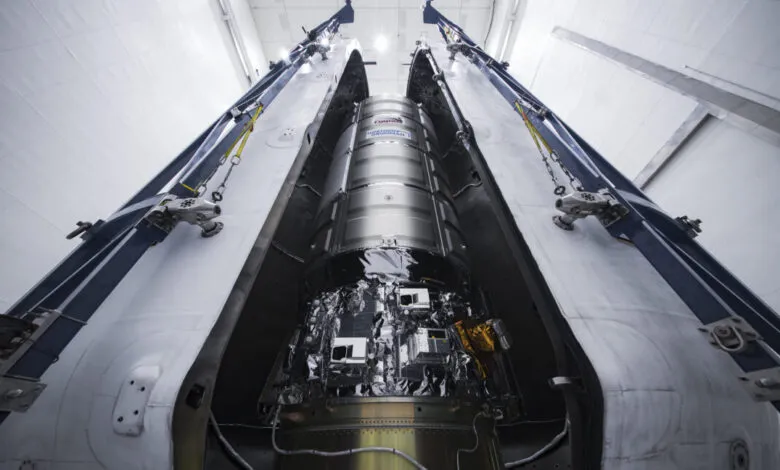
The upgraded Cygnus XL features a pressurized cargo module that is 5.2 feet longer than previous versions, dramatically increasing its storage volume. According to Ryan Tintner, vice president of civil space systems at Northrop Grumman, the new design offers 33 percent more capacity, enabling the delivery of substantially more scientific equipment and supplies in a single launch. This enhancement not only supports ongoing research aboard the ISS but also helps reduce the overall cost per kilogram for NASA.
Distinguished by its fan-like solar arrays and an aluminum cylinder resembling a large keg, the Cygnus XL combines familiar design elements with critical improvements. The service module, manufactured in Northern Virginia, continues to provide essential power and propulsion, while the expanded cargo section, comparable in volume to two and a half minivans, ensures that more resources reach the station’s seven-person crew.
Following a launch delay caused by earlier transport damage to a cargo module, this mission proceeded smoothly. The spacecraft is scheduled for capture by the station’s Canadian-built robotic arm, operated by NASA astronaut Jonny Kim, after which crew members will begin unpacking its contents. The success of this flight underscores the growing capabilities of public-private partnerships in advancing space exploration and sustaining long-duration missions.
(Source: Ars Technica)