Boost Local Business Visibility in AI Search

▼ Summary
– Kevin Chen and Jonathan Berthold from Moz discussed AI visibility during a SEJ Live session, defining it as being the primary recommendation of AI assistants.
– AI models now gather data from diverse sources like Reddit and local listings, requiring businesses to maintain consistent NAP data across all platforms.
– Google updated its Maps content policy in April to prohibit merchants from asking staff or customers for reviews mentioning specific names or details.
– The traditional strategy of using staff leaderboards or ‘mention my name’ cards is no longer viable due to these new Google restrictions.
– Businesses are advised to simplify the review process for customers using tools like QR codes on signs and invoices to encourage organic feedback.
Defining Visibility in the Age of AI Assistants
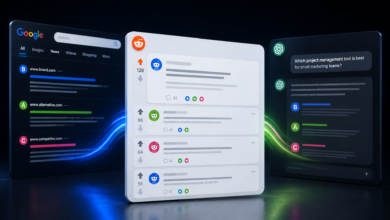
AI visibility for local businesses has shifted from simple map pack dominance to becoming the primary recommendation made by artificial intelligence assistants. When users ask generative models like ChatGPT or Gemini for specific services, they are no longer just searching for generic superlatives like “best tattoo artist.” Instead, they seek nuanced recommendations based on style, such as a specialist in fine-line work. To capture this attention, businesses must understand that AI models now synthesize data from a vast array of sources beyond traditional directories. These include local listings, review platforms, community forums like Reddit, and even curated lists on hotel websites.
This expansion means the scope of local SEO work has roughly tripled since 2010. As Jonathan Berthold, VP of Revenue at Moz, noted, a model can pull a mention from anywhere your competitors have earned theirs. Consequently, maintaining accurate and consistent business information is more critical than ever. Kevin Chen, VP of Business Development at Moz, emphasized that while technology evolves, fundamentals remain key. Businesses must ensure their name, address, phone number, and hours are uniform across all platforms. Furthermore, websites must be structured clearly so AI agents can easily extract and utilize the data, effectively making the website the primary source for models rather than just a destination for human readers.
Navigating Review Policies and Management
Google updated its Maps content policy in April, closing what was known as the “mention my name” loophole. Previously, staff could encourage customers to mention their names in reviews to boost individual profiles. This practice is now prohibited; merchants cannot request reviews that highlight specific staff members or demand a set number of feedback submissions. This change eliminates staff leaderboards and personalized review cards, forcing businesses to rethink how they solicit feedback.
To adapt, companies should make it effortless for customers to leave reviews. Simple tactics, such as placing QR codes on tables or including direct links on invoices, significantly increase compliance. However, businesses must also contend with review fatigue. Customers often receive overwhelming requests from multiple apps and services, leading to disengagement. A gentle, respectful approach yields better results than aggressive follow-up emails. Additionally, recency matters. Potential customers tend to ignore older negative feedback and focus heavily on recent experiences, making timely responses to current reviews essential for maintaining trust and ranking power.
Strategic Responses and Unified Branding
Responding to reviews, particularly negative ones, serves a dual purpose: addressing the customer and signaling professionalism to future readers. Experts advise acknowledging frustrations, outlining internal solutions, and providing direct contact information without engaging in public arguments. Speed is crucial; rapid response times can outweigh the sheer volume of reviews in influencing perception. Google’s local ranking guidelines explicitly list replying to reviews as a best practice for improving standing.
For franchises and multi-location businesses, a fragmented approach is risky. Silos between social media, review management, and data teams create inefficiencies. A unified brand strategy allows for localized relevance while maintaining consistency. What resonates in a major metro area may not work in smaller markets, so flexibility within a central framework is vital. As AI agents become more sophisticated, they will likely integrate these disparate functions, requiring businesses to build trust in automated systems much like we do with self-driving technology.
Content Accuracy and Conversion Tracking
Digital marketing cannot compensate for poor product quality. Viral trends on social media may drive foot traffic, but if the actual experience fails to meet expectations, negative sentiment spreads quickly. Tools that analyze sentiment in reviews help identify recurring issues, such as food quality or service speed. By setting up tracked prompts for AI models, businesses can monitor public perception and address complaints before they escalate. It is also important to audit old online content, such as outdated Reddit threads, which AI overviews may still cite. Correcting misinformation in these legacy posts is necessary to prevent potential customers from receiving inaccurate data regarding pricing or availability.
Finally, ranking first on traditional search engines does not guarantee inclusion in AI-generated answers. If a business appears top-ranked but is absent from AI results, it is essential to verify that AI crawlers can access the site. Outdated `robots.txt` files or technical barriers may inadvertently block these new discovery methods. To measure success, track conversions and revenue attributed to different sources. Understanding which channels drive actual business growth ensures that efforts are focused on strategies that deliver tangible returns rather than just visibility metrics.
(Source: Search Engine Journal)