Ex-DeepMind Team Builds Fusion Tools for Grid Power
▼ Summary
– Federico Felici and Jonas Buchli founded Fusionality, a Lausanne-based startup providing specialized control systems for fusion reactors.
– The company raised $3.7 million in pre-seed funding to address the industry’s need for standardized hardware and software solutions.
– Founders identified that while most fusion companies build custom controls, 80% of the underlying requirements are identical across designs.
– Felici and Buchli previously collaborated on AI applications for tokamaks at EPFL and Google DeepMind, leveraging their shared expertise.
– While AI will enhance future control systems, it is currently used to optimize specific parts rather than managing the entire reactor autonomously.
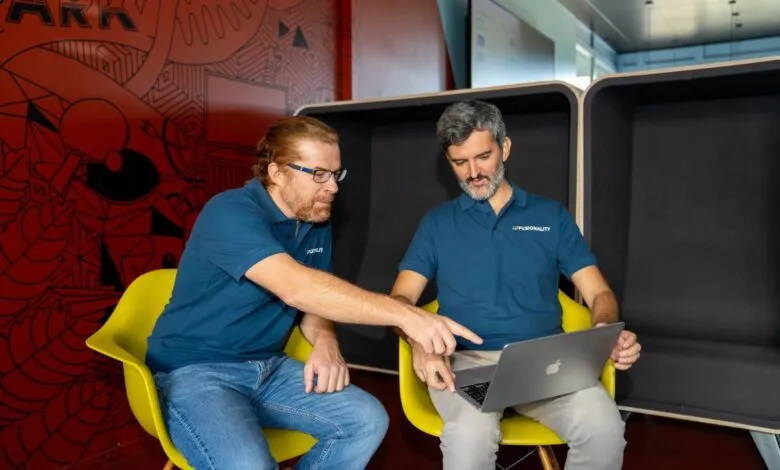
Former DeepMind researchers Federico Felici and Jonas Buchli have launched Fusionality, a startup dedicated to solving the critical bottleneck in the fusion energy sector: reactor control systems. The company, based in Lausanne, Switzerland, aims to provide standardized hardware and software tools that allow fusion startups to focus on their unique engineering challenges rather than reinventing the wheel for fundamental operations.
The impetus for the venture came from direct feedback within the industry. As Felici told TechCrunch: “We would ideally buy many of the components to make our our control system, but there isn’t really anybody providing them , and especially there isn’t anybody who speaks the language of fusion.” This gap in the market prompted the duo to transition from developing experimental controls to building a commercial supply chain solution.
Standardizing Complex Reactor Operations
Fusion power relies on maintaining superheated plasma at precise temperatures and densities, a task requiring split-second adjustments. While every reactor design is unique, the underlying physics governing these conditions remain largely consistent. According to Felici: “Across the industry, many companies make their own control systems from scratch. But actually, 80% of each company’s control system is really exactly the same.”
Fusionality intends to capitalize on this overlap by creating a suite of modular control systems and simulation environments. These tools will serve as a foundation that individual companies can fine-tune for their specific reactor designs. This approach mirrors the broader emergence of a specialized supply chain for fusion, where entities like Kyoto Fusioneering develop components to translate engineering breakthroughs into grid-ready electricity. However, few competitors currently specialize in the integrated control infrastructure that Fusionality targets.
AI-Enhanced Control Strategies
The founders’ expertise stems from their time working on AI applications for experimental tokamaks. Felici taught at EPFL in Switzerland, while Buchli was at Google DeepMind. Felici later joined DeepMind, where he developed machine learning interfaces for fusion devices. Despite their background, they maintain a pragmatic view of artificial intelligence’s role in this field.
Felici stated that AI will “play an important role in future control systems,” but cautioned against over-reliance. He clarified: “I wouldn’t be somebody who advocates for AI to take the role of controlling the entire fusion reactor.” Instead, the technology is best used to complement, enhance, or optimize specific segments of the control architecture. Currently, Fusionality focuses on magnetic confinement reactors, which use electromagnets to contain fuel. Key players in this space include Commonwealth Fusion Systems, Realta Fusion, Proxima Fusion, and Type One Energy.
Strategic Growth and Funding
To support its initial development phase, Fusionality secured a $3.7 million (CHF 3 million) pre-seed round from investors Founderful and Playfair. The funds will support a seven-person team as they build out their core technology stack. Felici described the strategy as starting with a small set of essential modules before expanding.
He likened the approach to building blocks: “We start with a few of these blocks and then we build out more. We have the ambition to serve the really wide range of technology that you need to operate a fusion reactor.” While the immediate focus remains on magnetic confinement, the founders plan to eventually extend their solutions to other fusion methodologies as the industry matures.
(Source: TechCrunch)