OpenAI Powers Adobe’s Creative Studio With New Image Models
▼ Summary
– OpenAI has launched ChatGPT Images 2.5, featuring improved detail, precise editing, and reduced latency compared to its predecessor.
– Two new developer models, GPT-Image-2.5 Flare and Sunburst, are available with Adobe integrating them into its Firefly creative studio.
– The update introduces interface-focused features like shareable prompts, sketch references, and templates to keep users within the ChatGPT ecosystem.
– Adobe and OpenAI maintain a reciprocal relationship where each platform serves as a distribution channel for the other’s tools.
– OpenAI reports generating over 3 billion images weekly across its platforms, utilizing metadata and watermarking for content identification.
Adobe Integrates OpenAI’s Latest Image Models into Firefly
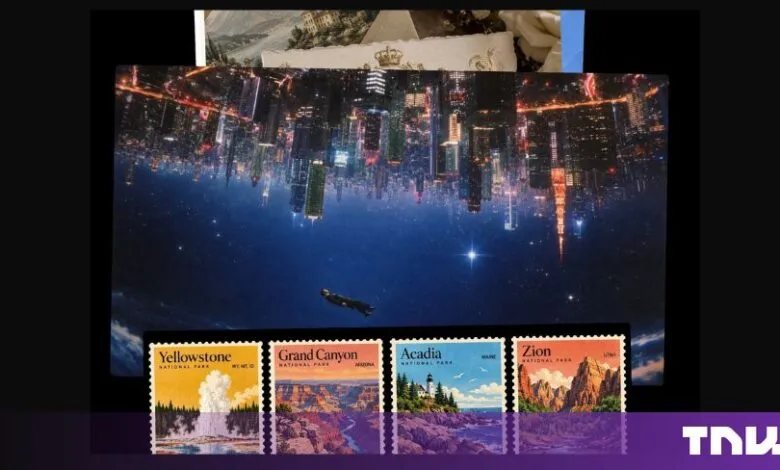
OpenAI has officially launched ChatGPT Images 2.5, introducing two new API models that are already being integrated into major creative platforms. Among the early adopters is Adobe, which has embedded these capabilities into its Firefly creative AI studio. The release marks a significant step in the convergence of generative AI and professional design tools, with OpenAI reporting that its image generation ecosystem now produces more than 3 billion images per week. This update focuses heavily on interface enhancements and developer accessibility rather than fundamental architectural changes to the underlying models.
The new iteration promises sharper visual details, more precise editing controls, and up to 50% lower latency compared to its predecessor, Images 2.0. Developers can choose between two distinct models: GPT-Image-2.5 Flare, which serves as the default for speed and efficiency, and Sunburst, a slower but higher-control option designed for production-grade creative work. By offering these tiered options, OpenAI aims to cater to both rapid prototyping and high-fidelity commercial output.
Strategic Positioning at Adobe
For Adobe, integrating these models is part of a broader strategy to position itself as the central hub for creative workflows rather than just a provider of individual tools. Matt Chotin, senior director of product at Adobe, emphasized this approach in the company’s announcement. He stated:
> “Firefly brings leading AI models together with Adobe’s own tools in one place.”
This statement highlights Adobe’s intent to act as a conversational layer over its entire suite, allowing users to select from various AI models while remaining within the Adobe ecosystem. This is a deliberate competitive move, ensuring that Adobe retains control over the user experience even as it leverages third-party technology. The integration allows Adobe to offer cutting-edge generation capabilities without having to build every model from scratch, effectively aggregating the best available AI technologies.
Mutual Distribution Channels
The relationship between OpenAI and Adobe is symbiotic, with each company serving as a distribution channel for the other. While Adobe utilizes OpenAI’s models in Firefly, OpenAI also provides access to more than 70 Adobe tools directly within ChatGPT. This creates a complex dynamic where neither company can claim absolute ownership of the creative starting point. In the current software landscape, whoever controls the entry point to a creative task captures the majority of the workflow value.
To address this ambiguity, OpenAI is focusing on features that keep users engaged within its platform. A key addition is the ability to share prompts alongside generated images. This feature allows users to attach the specific text instructions used to create an image, enabling others to replicate or modify the result using their own photos. For example, OpenAI highlighted a viral prompt inspired by 1980s headshots, demonstrating how easily aesthetic styles can be transferred and shared. This functionality acts as a powerful distribution mechanic, turning prompts into reusable templates that spread organically while keeping the interaction loop inside ChatGPT.
Interface Enhancements and User Retention
Beyond prompt sharing, the update includes several interface-focused features designed to improve usability and retention. Users can now use sketches as reference inputs, select from pre-defined templates for formats like posters and merchandise, and leave comments directly on images. These additions do not represent breakthroughs in model research but are critical for creating a sticky, user-friendly environment. By making it easier to iterate and collaborate, OpenAI aims to solidify its position as a primary workspace for creative tasks.
The rollout is comprehensive, with Images 2.5 becoming available to ChatGPT, ChatGPT Work, and Codex users across all subscription tiers. Support spans desktop, mobile, and web platforms, ensuring broad accessibility for both casual users and professionals.
Scale and Provenance Challenges
The volume of content generated by OpenAI’s systems is staggering. The company claims that over 3 billion images are created weekly through ChatGPT Images and the GPT-Image API. While this figure is self-reported and not independently audited, it underscores the massive scale of synthetic imagery entering circulation. To manage the implications of this volume, OpenAI employs C2PA metadata and invisible watermarking, along with checks on prompts and images. The company has also published a system card detailing the safety and operational parameters of the release.
However, maintaining provenance at this scale presents significant challenges. Metadata is often stripped away by social media platforms, screenshots, and re-encoding processes, rendering invisible watermarks less effective. Furthermore, legal frameworks for regulating deepfakes and synthetic media are still evolving globally. For instance, Brazil is currently defining what constitutes a deepfake ahead of upcoming elections, highlighting the regulatory uncertainty surrounding these technologies.
The new prompt-sharing feature may inadvertently complicate provenance efforts. By making it easy for many users to reproduce a distinctive look from a single recipe, it becomes harder to trace the origin of specific visual styles or identify original creators.
Competitive Landscape and Future Outlook
The improvements in reference-photo accuracy target the most commercially valuable applications of AI image generation. Advertising, e-commerce, and social content creation rely heavily on placing real people or products into new settings, a task where precision is paramount. Startups like Higgsfield and Manus are building their services on top of OpenAI’s API, with Manus noting that the Flare model runs two to four times faster than previous iterations in their evaluations.
In contrast, some competitors are moving toward vertical integration. Freepik, which recently rebranded as Magnific, is operating as a profitable AI creative platform with $230 million in recurring revenue. By building its own destination, Freepik avoids reliance on external APIs and seeks to capture the entire value chain.
Looking ahead, the key battleground will be determining who owns the initial creative spark. If Adobe continues to aggregate multiple model suppliers, its strength lies in flexibility. However, if it becomes dependent on a single provider, it risks vulnerability. Similarly, OpenAI’s success will depend on whether its prompt-sharing features drive genuine engagement and retention. As the industry evolves, the contest is no longer just about which model renders the best image, but which platform defines the start of the creative process.
(Source: The Next Web)