Intel transfers Atom chip technology to CEO-linked startup
▼ Summary
– Intel is licensing its Atom processor technology to RosaicLabs, a startup run by Amarjit Gill, a longtime business partner of Intel CEO Lip-Bu Tan.
– The transfer includes the low-level RTL code for Atom, giving Rosaic deep access to Intel’s intellectual property for building custom chip designs.
– Rosaic is a secretive startup, incorporated in May, with no public website, a founding team from Rivos, and a planned $10 million seed round.
– The deal raises governance concerns because Tan and Gill are co-investors, and Rosaic includes alumni from Rivos, which outbid Intel in a previous acquisition.
– The strategic logic is that licensing Atom to a nimble startup could help Intel seed new markets for custom silicon in the AI era, despite the awkward optics.
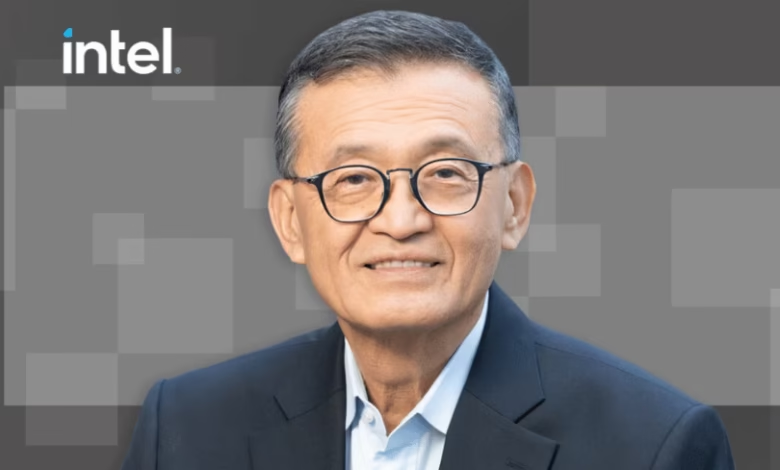
Intel is quietly transferring one of its most valuable chip technologies to a little-known startup, and the company’s chief executive has deep personal ties to the deal. The startup is run by a longtime business partner of Intel CEO Lip-Bu Tan.
The chipmaker is granting RosaicLabs access to its Atom processor technology, according to a source and documents reviewed by Reuters. Atom serves as the foundational building block for Intel’s central processors. This is an unusual step for Intel, which rarely licenses pieces of its proprietary x86 architecture.
Rosaic is led by Amarjit Gill, a seasoned chip executive and venture investor. He and Tan have a long history as co-investors. Together, they helped build the founding team at Rivos, a chip startup that Meta acquired last year after outbidding Intel, while Tan served as its chairman. Both men also backed Nuvia, which was later sold to Qualcomm.
What Intel is actually handing over is significant. The company plans to ship Rosaic the register-transfer level (RTL) code for Atom. That code is the low-level blueprint that describes how the chip functions. It gives a customer deep exposure to Intel’s intellectual property, according to one veteran chip executive, enough to build their own custom designs. Atom itself is engineered for low power and low heat, making it ideal for mobile and edge devices.
Rosaic is barely public. It filed its first Delaware incorporation papers in May and has no website or LinkedIn page, a common practice for chip startups operating in secrecy. Its founding team includes veterans of Rivos, and an amended July filing shows it can raise a $10 million seed round.
The optics are the story. Intel is deep in a tough turnaround under Tan, who has pushed aggressive cost-cutting and tried to open its foundry to outside customers. Licensing its IP is part of that plan. But handing rare access to a company run by the CEO’s former investment partner, staffed by alumni of the startup that once outbid Intel, invites obvious questions. Reuters has previously reported on deals that boosted Tan’s personal fortune. Intel declined to comment, and Gill did not respond.
There is a strategic logic, too. Intel rarely shares its x86 technology, and opening Atom to a nimble startup could seed markets it cannot chase alone. Rivals are already racing to build custom silicon for the AI era. Whether that outweighs the governance questions is what Intel’s board, and its investors, will have to weigh.
(Source: The Next Web)