AMD Helios AI system takes on Nvidia in the rack
▼ Summary
– AMD announced Helios, a rack-scale AI system designed to compete with Nvidia, and it will ship later this year.
– Helios is described as the industry’s highest-performance AI rack, built to train and run demanding frontier models at massive scale.
– Customers for Helios include OpenAI, Meta, Oracle, Anthropic, and Microsoft, with Microsoft planning to expand its Azure infrastructure using the system.
– AMD introduced the Venice-X CPU, a data-center chip for high-computing workloads, expected to launch in 2027.
– CEO Lisa Su predicted the AI accelerator market will reach about $1.4 trillion by 2030, approaching the size of the entire semiconductor market today.
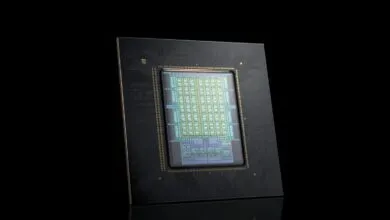
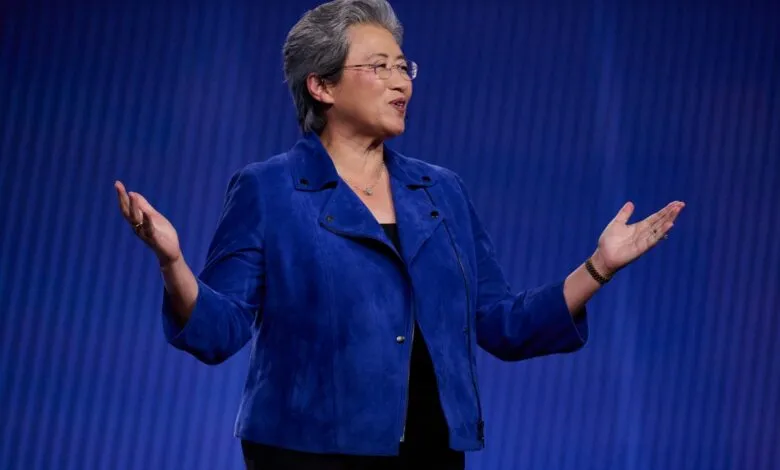
At its packed Advancing AI conference in San Francisco on Thursday, AMD formally unveiled Helios, a rack-scale system engineered to compete directly with Nvidia’s dominance in the high-stakes AI infrastructure market. AMD Chair and CEO Dr. Lisa Su touted the system as the industry’s “highest-performance AI rack,” designed to train and run the most demanding frontier models at massive scale. The company plans to begin shipping Helios later this year, with major customers already lined up.
Rack-scale systems consolidate multiple processors into a single, powerful unit optimized for data centers. They are essential for training and deploying large AI models and handling other compute-intensive tasks. Helios is being positioned to challenge Nvidia’s Vera Rubin and Grace Blackwell systems, and early performance benchmarks reportedly show it surpassing Vera Rubin in several key metrics, according to The Register.
AMD’s customer roster for Helios already includes OpenAI, Meta, Oracle, Anthropic, and Microsoft. Microsoft CEO Satya Nadella confirmed on Monday that the company will expand its Azure infrastructure using Helios. Separately, Anthropic and AMD announced a strategic partnership on Wednesday to deploy up to two gigawatts of GPUs via the new system. Helios was first revealed in 2025 and demonstrated onstage at CES 2026.
Su also introduced the Venice-X CPU, a data center chip designed for high-computing workloads, with a planned launch in 2027.
During her keynote, Su offered a bold forecast for the chip industry. She predicted that by 2030, AI accelerators will represent a massive portion of the overall computing market, driven by a “step change in compute demand” fueled largely by the rise of agentic AI. She explained that agentic AI requires far more processing power because each task involves multiple reasoning steps, tool calls, and data accesses, repeated until the problem is solved. “You need lots of GPUs to do all that,” she said.
“We’re now expecting that by 2030, the AI accelerator market is going to reach about $1.4 trillion,” Su said. “What that means is, by the end of the decade, the AI accelerator market is going to approach the size of the entire semiconductor market today.”
She added that GPUs are expected to dominate that market because AI algorithms remain in their infancy and workloads continue to evolve. “That favors programmability in the overall silicon ecosystem,” she said.
(Source: TechCrunch)