Space Force seeks up to $30 billion in rocket launch contracts
▼ Summary
– The US Space Force tripled the maximum value of its National Security Space Launch (NSSL) Phase 3 contract from $5.6 billion to $17 billion.
– The contract expansion reflects rising Pentagon demand for military satellite launches.
– The NSSL program allows Space Systems Command to select launch providers from a pool for individual missions.
– Lane 1 of the program covers risk-tolerant missions, such as medium-lift launches with experimental payloads.
– Lane 2 covers higher-priority strategic missions, including the government’s largest spy satellites and radiation-hardened communications satellites.
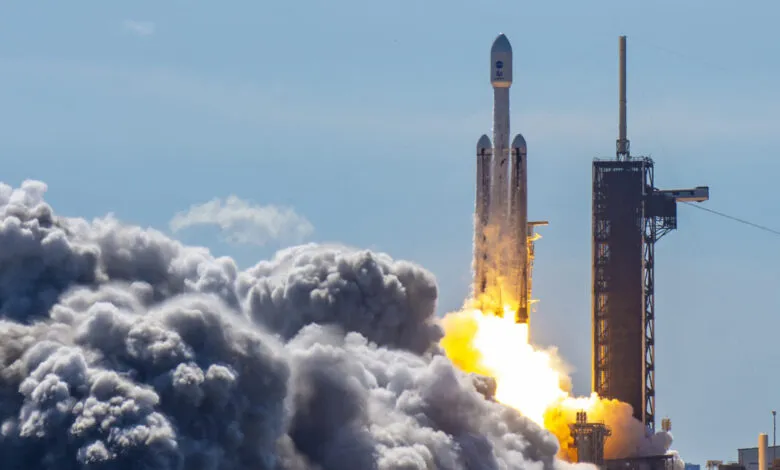
The U.S. Space Force is dramatically scaling up its ambitions for military rocket launches, signaling a massive increase in demand for access to orbit. On Friday, military officials announced they are tripling the ceiling value of one of the service’s primary launch contracts, raising it from $5.6 billion to a staggering $17 billion.
This expansion of the National Security Space Launch (NSSL) Phase 3 program reflects the Pentagon’s growing need for satellite deployments. The Space Systems Command, which manages the Space Force’s launch operations, uses this framework to select from a roster of certified providers for specific missions, ensuring the military’s most critical payloads reach orbit reliably.
The NSSL program is structured into two distinct lanes to accommodate different mission profiles. Lane 1 is designed for more risk-tolerant endeavors, including medium-lift launches carrying experimental payloads or rideshare missions that support the Pentagon’s surveillance and data relay constellations. Lane 2, by contrast, focuses on the highest-priority strategic missions. These involve the government’s largest and most expensive assets, such as advanced spy satellites or radiation-hardened communications platforms built to withstand a nuclear conflict.
With this latest adjustment, the Space Force is signaling it may seek up to $30 billion in total launch contracts over the coming years, a clear indicator of the escalating strategic importance of space-based capabilities for national defense.
(Source: Ars Technica)