Top Motion Sensors and Security Gadgets Without Cameras
▼ Summary
– The Kini motion sensor reliably alerts when a drawer or cabinet is opened, keeps a time-stamped log, and allows users to disable cloud logging for privacy.
– Kini’s Stasis mode sends alerts when no movement occurs for a set time, useful for monitoring medication cabinet use or pet sitter activity.
– Other motion sensors like the Eve Motion Sensor, Aqara FP2, and Switchbot Presence Sensor offer varying features, compatibility, and accuracy, often requiring a hub or ecosystem.
– The Philips Hue Outdoor Motion Sensor reliably detects people with few false positives but requires a Hue Bridge and can be configured for specific time-based alerts.
– Smart light systems like Wiz SpaceSense and Philips Hue MotionAware detect motion via Wi-Fi or Zigbee, but MotionAware requires a subscription for alerts.
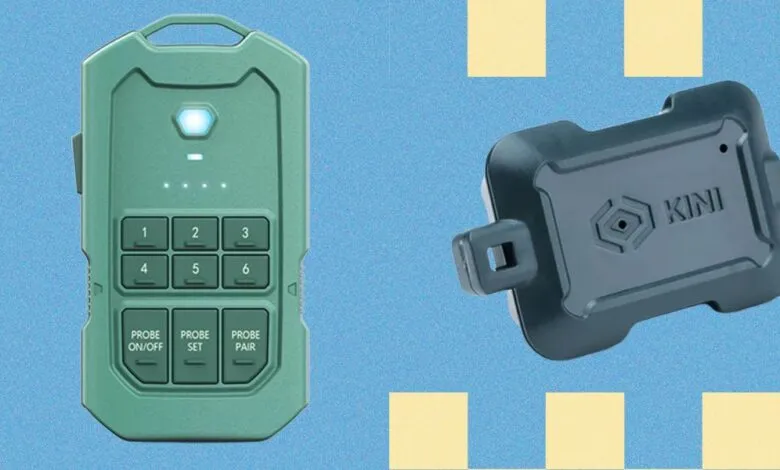
The Kini motion sensor has proven itself as a highly dependable device during testing. Placed inside both a drawer and a cabinet, it consistently sent alerts whenever those compartments were opened, and it maintains a detailed log complete with timestamps. Although notifications travel through the cloud, manufacturer Kinisium states that no user data is collected. For those who prefer even more privacy, the logging feature can be fully disabled. A standout function is Stasis mode, which flips the sensor’s logic: instead of notifying you on movement, it alerts you when no motion has occurred for a set duration. This makes it a versatile tool for monitoring, whether you want to confirm an elderly relative opens their medicine cabinet daily or track when a dog walker accesses a door. The Kini also supports IFTTT for automation and includes a webhook integration that can push notifications to a custom URL.
More Motion Sensors to Consider
The market is filled with motion sensors capable of detecting activity in a room or area and triggering lights, but the best choice depends heavily on your existing smart-home ecosystem.
The Eve Motion Sensor is a solid option, though it requires a smart-home hub to send alerts, and you must set up an automation. It performed reliably in both indoor and outdoor testing, and I paired it with a Google Home system.
For advanced needs, the Aqara FP2 Presence Sensor ($83) offers zonal and multi-person detection and works with all major smart-home platforms. However, its accuracy in counting people in a room can be inconsistent. The more budget-friendly Aqara FP300 ($50) is a capable presence detector for most users and also tracks light, temperature, and humidity.
At just $30, the Switchbot Presence Sensor is the most affordable model I tested, with a similar feature set. Just note that you will need a Switchbot hub to receive alerts, and there is a noticeable delay between detection and notification.
Philips Hue Outdoor Motion Sensor ($55 on Amazon) is excellent, but it is best suited for those already invested in the Philips Hue ecosystem, as it requires a Hue Bridge to operate. I installed it in my backyard and tested it with the Bridge Pro. It reliably detected people with very few false positives. I set it to turn on a non-Hue backyard light strip after sunset and send a notification only between midnight and 6 am, using Google Gemini. Philips also offers an Indoor Motion Sensor and a Contact Sensor ($40) for doors and windows. Both are highly reliable and can be configured to trigger alerts.
Smart Light Sensing as an Alternative
An interesting alternative to dedicated sensors is using smart lights themselves to detect motion and presence indoors.
Wiz SpaceSense uses Wi-Fi to detect motion in rooms, provided you have multiple Wiz lights. My experience with SpaceSense was mixed; its effectiveness depends heavily on the number and placement of your lights. I tested it primarily to automate lights turning on, but the lag limited its usefulness for that purpose. However, as a security alert system that notifies you of motion while you are away, it could be quite valuable. Since it requires no subscription, it is worth trying if you already own Wiz lights.
Philips Hue MotionAware operates similarly to SpaceSense but uses Zigbee instead of Wi-Fi. Its performance also depends on the number and layout of your Philips Hue lights. A key difference is that while MotionAware can trigger lights for free, receiving motion alerts requires a subscription at $1 per month or $10 per year. It is also bundled with Hue Secure subscriptions starting at $4 per month.
More Security System Alternatives
If you prefer a more comprehensive setup, consider a modular security system. The Simplisafe system is a strong choice, offering a base station, keypad, and a wide range of sensors. Other reliable options include modular systems from established security companies like ADT and Vivint, as well as security camera manufacturers such as Eufy and Arlo.
(Source: Wired)