Meta’s new AI chips to enter production in September
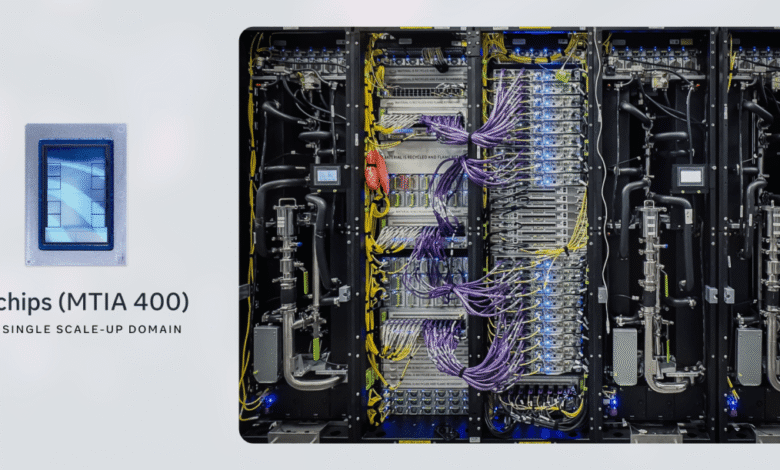
▼ Summary
– Meta plans to start manufacturing its latest AI-specific chips in September to reduce GPU costs amid a component shortage.
– The chips, developed with Broadcom and manufactured by TSMC, passed testing in about six weeks.
– Meta’s MTIA program uses a modular chiplet design to adapt to rapidly evolving AI needs.
– The chips aim to save on GPU purchases from Nvidia and AMD, though Meta will still spend heavily with those providers.
– Meta expects capital expenditures of $125–$145 billion this year, largely for AI computing capacity, including data center and power deals.
Meta is preparing to begin production of its latest custom AI chips this September, according to an internal memo cited by Reuters, as the company works to reduce its reliance on costly GPUs amid a persistent hardware shortage.
The memo revealed that at least one of the new chips completed its testing phase in roughly six weeks. Meta has partnered with Broadcom on the chip design, while TSMC in Taiwan will handle manufacturing. The company is also sourcing RAM from Samsung, storage from Sandisk, and fiber optic equipment from Sumitomo Electric, per the report.
These chips are part of Meta’s Meta Training and Inference Accelerator (MTIA) program, which the company detailed in March. Some of the four new designs are already in deployment, while others will roll out this year or next. Meta is adopting a modular chiplet approach to its design, anticipating that its computing needs will shift as AI technology evolves rapidly before the chips reach production.
“Each MTIA generation builds on the last, using modular chiplets, incorporating the latest AI workload insights and hardware technologies, and deploying on a shorter cadence,” the company stated at the time.
The new chips are expected to help Meta cut spending on GPUs from suppliers like Nvidia and AMD, though the company still plans to invest heavily with those providers, according to Reuters. Meta intends to use the MTIA chips to train models for its ranking and recommendation algorithms, as well as for broader AI workloads and inference tasks across its applications. The social media giant has been developing its own AI chips since 2023.
Meta has been spending aggressively to secure enough computing power for its AI ambitions. In April, the company said it expects capital expenditures between $125 billion and $145 billion this year, with a significant portion directed toward AI initiatives.
The company has been striking data center and power deals worldwide, spending tens of billions to secure capacity for training and deploying its new Muse Spark series of AI models. According to the memo cited by Reuters, Meta plans to deploy 7 gigawatts of compute this year and double that amount in 2027.
Meta also signed a deal with ARM last year to secure compute for its recommendation systems, along with a multi-billion-dollar agreement with AMD for its Instinct GPUs and a multi-billion-dollar deal with Amazon to use the cloud giant’s homegrown CPUs for AI-related tasks.
Meta is not alone in trying to curb its dependence on Nvidia. OpenAI recently unveiled an inference processor built with Broadcom, and Anthropic is reportedly considering developing its own chips with Samsung. Both Amazon and Google already design their own chips for AI training and inference, and a growing number of startups are entering the space to meet surging demand.
Meta declined to comment.
(Source: TechCrunch)