US Military Space Exercise Launches Quietly Under the Radar
▼ Summary
– Rocket Lab launched a small satellite from New Zealand for a US Space Force exercise to test rapid response to orbital threats, with minimal public announcement and no livestream.
– The only pre-launch public notice was a warning for pilots and sailors to avoid the rocket’s flight path; officials had not acknowledged the launch by Monday.
– The US military’s space object catalog updated over the weekend, listing the satellite as Victus Haze Puma, launched Friday from Rocket Lab’s New Zealand spaceport.
– The satellite was cataloged in a polar orbit between 215 and 286 miles high, with a 97.5-degree inclination.
– The Victus Haze mission involved launching a True Anomaly satellite as a mock adversary, then having a Rocket Lab satellite on standby to quickly launch and inspect the threat.
Rocket Lab executed a discreet launch from New Zealand on Friday, deploying a small satellite as part of a military exercise designed to test the US Space Force’s rapid-response capabilities in low-Earth orbit. The mission unfolded with minimal public fanfare, a stark contrast to the company’s typical operations.
Advance notice of the launch was virtually nonexistent. The only clue came from a navigational warning advising pilots and mariners to avoid the rocket’s trajectory. Unlike most Rocket Lab missions, there was no livestream. As of Monday morning, neither Rocket Lab nor Space Force officials had issued any formal public statements acknowledging the event.
However, the US military’s space object catalog was updated over the weekend, revealing the new satellite. Listed as Victus Haze Puma, the spacecraft was recorded with a launch date of Friday from Rocket Lab’s private facility on New Zealand’s Māhia Peninsula. The Space Force cataloged it in a polar orbit at an altitude ranging from 215 to 286 miles (347 to 461 kilometers), with an inclination of approximately 97.5 degrees.
A mission with agility at its core
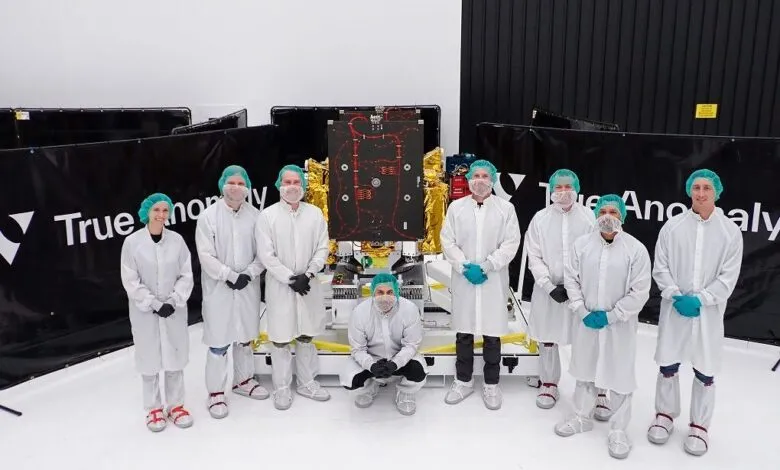
Victus Haze represents the US military’s latest effort in responsive space operations. The Space Force first outlined the mission in 2024, selecting Rocket Lab and True Anomaly to construct and launch two satellites into low-Earth orbit. The concept was straightforward: launch a satellite built by True Anomaly first, simulating a spacecraft from a potential adversary such as China or Russia. Rocket Lab would then keep a satellite on standby, ready for launch on short notice once military officials gave the go-ahead. The goal of the Victus Haze mission is to prove that the military and its commercial partners can rapidly deploy assets to assess potential threats in orbit.
(Source: Ars Technica)