SpaceX surpasses Amazon as post-IPO rally continues

▼ Summary
– SpaceX’s market capitalization reached nearly $2.8 trillion, surpassing Amazon’s $2.66 trillion, following a 10% stock rise on Tuesday.
– The IPO floated only about 4.2% of SpaceX shares, creating a thin free float that drives extreme price swings due to high retail demand.
– Starlink generates the majority of SpaceX’s revenue and all its operating profit, while Starship and xAI are unprofitable capital-intensive projects.
– The stock’s trading volume exceeded $1.16 billion, surpassing the combined volume of Nvidia, Microsoft, Tesla, and Apple.
– Elon Musk’s paper fortune reached trillionaire status from the IPO, but the thin float means gains remain theoretical and could reverse quickly.
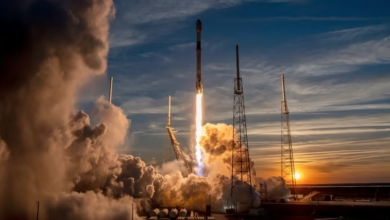
SpaceX has overtaken Amazon in market value, at least for as long as the current rally continues. The rocket company’s stock surged more than 10% on Tuesday, extending a post-IPO winning streak that began at its market debut and positioning it to become the world’s fifth most valuable publicly traded company in just four trading sessions since going public.
Shares were last up 10.1% at $211.80, according to Reuters, giving the company a market capitalization of nearly $2.8 trillion if the gains hold. Amazon, by comparison, was valued at $2.66 trillion. This milestone follows a 19% jump on Monday, the first full day of trading, which itself came after an IPO that was already the largest initial public offering in history.
The numbers behind this rally are unusual enough to warrant closer scrutiny. More than $1.16 billion worth of SpaceX shares changed hands, a figure Reuters reported was several times the combined trading volume of Nvidia, Microsoft, Tesla, and Apple. A newly listed company outselling four of the Nasdaq’s most heavily traded stocks together is far from a typical week on the exchange.
Much of this activity stems from scarcity. SpaceX’s IPO floated only about 4.2% of the company’s shares, rising to roughly 4.9% after underwriters fully exercised the greenshoe option. That leaves an extremely thin free float chasing heavy retail demand, creating a supply-demand mismatch that can send prices soaring or plummeting quickly. A small float is a powerful advantage on the way up.
The starting point was already historic. SpaceX priced its IPO at $135 per share, giving it a $1.75 trillion valuation and raising $75 billion in what TNW and others called the biggest listing on record. Demand came from retail investors worldwide, including $2.2 billion from Japanese buyers alone, underscoring the broad appetite before the first share even traded.
The valuation now being tested rests on a business with one profit engine and several expensive bets. Starlink, the satellite-internet division, generated the bulk of SpaceX’s revenue and nearly all of its operating profit last year, even as its growth math has become more challenging and average revenue per user has declined. Starship and the xAI operations remain capital sinks that investors are pricing for years of growth not yet realized.
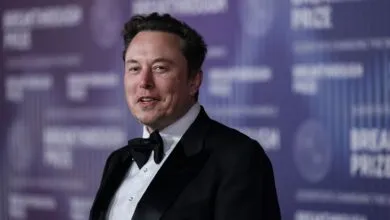
For Elon Musk, the arithmetic is both personal and corporate. The listing gave him a paper fortune large enough to make him a trillionaire, and his and insiders’ voting control of the company remained intact after the float. Tuesday’s climb adds to that total on paper, though paper is the operative word as long as the float stays this thin.
Whether SpaceX holds the fifth-place spot is a question for the closing bell, not the premarket tape. A stock that can rise 19% in a day on a sliver of available shares can just as easily give those gains back on the same mechanics. For now, a company that was private just a week ago is trading just behind Amazon, and the market is still deciding what that is worth.
(Source: The Next Web)