Why a SpaceX IPO Won’t Make You Rich
▼ Summary
– SpaceX’s IPO is expected to generate huge wealth, but mostly for existing shareholders like employees, institutional investors, and Elon Musk, not the general public.
– The company raised $75 billion at a $1.75 trillion valuation, making it potentially the largest IPO ever, with 30% of shares set aside for retail investors.
– Retail investors have easier access than typical IPOs, with Fidelity lowering its minimum household assets requirement from $100,000 to $2,000 for SpaceX.
– Demand far exceeds supply, with $100 billion in retail orders versus $75 billion in stock raised, so most individuals will receive very few shares, if any.
– The average investor ends up with only about 1% of the company after the IPO, described as “a few crumbs” due to limited share availability.
There’s no shortage of excitement surrounding the SpaceX IPO, and it’s easy to see why. The company has already cemented itself as the dominant force in private space exploration, ferrying astronauts to the International Space Station while its Starlink satellite network connects millions across the globe. With the recent acquisition of xAI, SpaceX now stands as the first major AI startup to go public among the big three, with Anthropic and OpenAI close behind. The company raised an eye-popping $75 billion, putting its valuation at $1.75 trillion , a figure that would make this the largest IPO in history by a considerable margin.
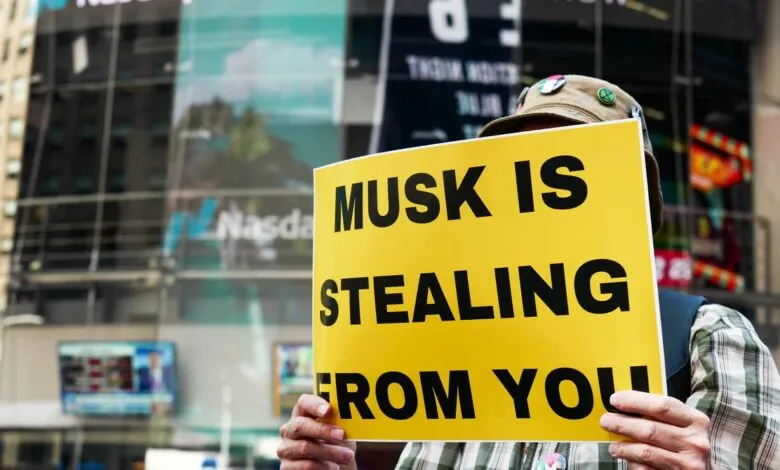
But here’s the hard truth: while the IPO will undoubtedly mint fortunes, those fortunes are likely reserved for people who already have a seat at the table. That means SpaceX employees, large institutional asset managers, and Elon Musk himself. Yes, retail investors , everyday people who don’t trade stocks for a living , will have more access than usual. But that doesn’t mean they’ll see serious gains.
This isn’t a prediction about SpaceX’s long-term health or share price. It’s simply how the system works.
“The system is unfair,” says Campbell Harvey, a finance professor at Duke University’s Fuqua School of Business. Understanding the mechanics reveals exactly who benefits.
In a typical IPO, retail investors are largely locked out. These offerings function like exclusive clubs, with guest lists curated for institutional players like mutual funds and asset managers. SpaceX is different in a few notable ways. The company has indicated it will set aside 30 percent of its float , roughly $22.5 billion worth of shares , for the average investor. That’s a stark contrast to the typical 5 to 10 percent that Fidelity says most companies reserve.
Your broker might also lower the bar to entry. At Fidelity, for instance, you normally need at least $100,000 (sometimes $500,000) in household assets to participate in an IPO. For SpaceX, that minimum drops to just $2,000.
So yes, it’s easier to get on the guest list. But the club still has limited capacity. Consider that $75 billion in stock SpaceX raised. Bloomberg reported that the company had already received $100 billion in orders from hopeful retail investors , and that’s before institutional giants like BlackRock, which reportedly submitted a $5 billion order, even get involved.
SpaceX’s bankers ultimately decide who gets to buy stock at the IPO price of $135 per share, and in what quantity. Even with the loosened standards, your odds of making it past the velvet rope are vanishingly small. And if you do get in, the allocation will likely be a pittance. Tell your broker you want 10 shares, and you might be lucky to get one or two. That’s hardly the stuff of generational wealth.
“The average investor gets the leftovers,” Harvey says. He argues that even the 30 percent figure is misleading, because SpaceX is only selling 4 percent of its available shares. That means retail investors will wind up owning a little over 1 percent of the company after the IPO. “It’s a few crumbs.”
(Source: Wired)