How AI Agents Protect EV Chargers
▼ Summary
– Global EV adoption growth has driven charging infrastructure development but introduced understudied cybersecurity risks.
– Charging stations’ complex integration of physical and digital components creates vulnerabilities that threaten EV adoption and electrical grid stability.
– University of Malaga researchers propose deploying AI agents to detect and prevent cyberattacks on charging networks, including fraud and energy theft.
– The AI system uses the Open Charge Point Protocol (OCPP) to monitor anomalies across charging infrastructure, enabling early detection and response.
– The system employs a consensus mechanism based on opinion dynamics, allowing AI agents to collaborate and build a comprehensive view of infrastructure status.
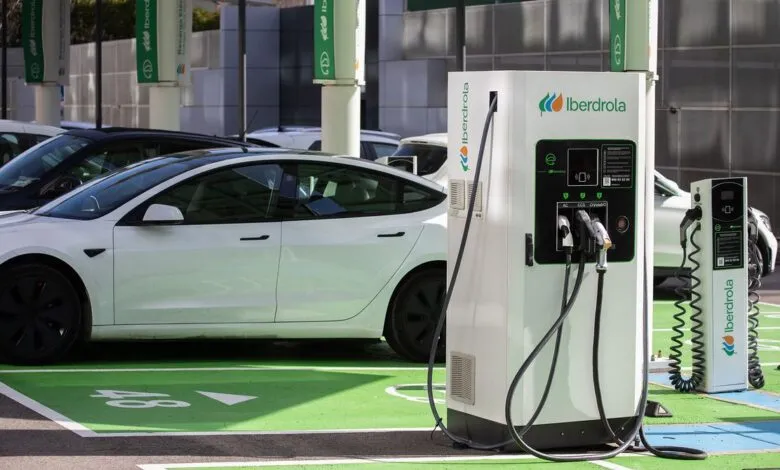
The global surge in electric vehicle adoption has accelerated the need for accessible, fast, and efficient charging infrastructure. Yet this rapid expansion has also opened the door to cybersecurity risks that remain largely unexamined, with few practical defenses currently available.
Cristina Alcaraz, an infrastructure-security researcher at Spain’s University of Malaga, points out that the vulnerability of electric-vehicle charging stations stems from their integration of multiple physical and digital components. This complex architecture, while essential for efficient operation, creates a broad array of new security weaknesses. Attacks on chargers threaten not only the continued growth of EV adoption but also the stability of the electrical grids they depend on.
To address this threat, researchers from the NICS lab at the University of Malaga have developed a novel approach: deploying AI agents to safeguard the infrastructure. These agents are engineered to prevent cyberattacks from various vectors, including fraud and energy theft by malicious users, as well as larger-scale assaults that could disrupt critical energy networks.
The team’s proposal focuses on early and reliable detection of anomalies and attacks within charging networks using the Open Charge Point Protocol (OCPP). This widely adopted standard enables a network of charging stations to communicate with a centralized system that manages, monitors, and coordinates all energy transactions from end users. The central system handles remote tasks such as user authentication, electrical load management at each station, overall electricity consumption monitoring, and technical diagnostics. This allows for real-time infrastructure control and rapid response to any abnormal behavior.
However, the study’s authors note that current monitoring mechanisms based on OCPP typically focus only on network traffic or local events, offering a limited view of what is happening across an entire region. This narrow perspective makes it difficult to pinpoint where an anomaly originates, which network components are compromised, the extent of vulnerabilities, and how a potential attack might propagate.
Call in the AI
The researchers propose a system that employs multiple AI agents. Each station or relevant component of the charging network incorporates AI agents capable of analyzing their environment, collecting information, and collaborating with other agents to build a comprehensive picture of the infrastructure’s current state.
“Each agent assesses the status of chargers, communications, and connected devices to detect anomalies, operational failures, or potential security incidents,” explains Alcaraz, lead author of the report. “These agents, which are connected to a central-monitoring system, compare the information obtained locally with that of nearby stations, providing a more complete, accurate, and contextualized collaborative view of the situation.”
The work, published in the International Journal of Critical Infrastructure Protection, highlights a key innovation: a consensus mechanism based on a mathematical framework called opinion dynamics. This approach mimics how humans exchange information within social networks to reach agreements. Applied to computer models, it allows AI agents to share observations and gradually adjust their assessments, building a collective understanding of the overall situation.
(Source: Wired)