Google AI Brief could replace keywords entirely

▼ Summary
– Google’s AI Brief, announced at Google Marketing Live, replaces keywords with prompts, allowing advertisers to describe their business and targeting goals in natural language.
– The shift from keywords to prompts is driven by consumer behavior, as users increasingly ask longer, conversational questions in AI Mode, which now has over 1 billion monthly users.
– Exact match keywords have lost nearly 10% of spend share since 2022, while broad match has become dominant, indicating advertisers are trusting Google’s AI with broader targeting.
– AI Brief functions as a negotiation tool where advertisers set messaging, matching, and audience guidelines, then iterate based on AI feedback, unlike static keyword lists.
– Short, transactional keywords still have a role at the bottom of the funnel, but they are fed by conversational AI prompts for discovery and research, making both systems interdependent.
For over a decade, industry voices have been predicting the end of the keyword. Yet, as we sit in 2026, advertisers are still leaning on keywords to serve Google Ads. The persistent speculation wasn’t misguided; it was simply premature. The keyword couldn’t fade away until Google had a viable successor in hand.
That successor may have finally arrived at last month’s Google Marketing Live (GML). Enter AI Brief, a Gemini-powered control layer that allows advertisers to steer AI Max using prompts and natural language rather than traditional keyword lists.
On the surface, AI Brief looks like just another feature within AI Max, a tool still working to gain widespread advertiser adoption. It would be tempting to think advertisers can simply ignore it and cling to keywords. That would likely be a mistake.
History offers a clear parallel. When users migrated to mobile, Google eventually compelled advertisers toward Enhanced Campaigns. The conditions are now aligning for a similar shift, this time from keywords to prompts.
Consider the broader GML announcements. AI Mode has already surpassed 1 billion monthly users. The search box is undergoing its most significant redesign in 25 years. Users in AI Mode are submitting queries that are, on average, three times longer than traditional searches. Whether advertisers embrace it or not, consumers are increasingly using prompts, not keywords, to find information.
AI Brief provides the structural replacement for the keyword that has been missing. We can now target prompts with prompts. Combined with the consumer-driven move away from keyword-based searches, the keyword’s obituary finally feels credible.
The keyword is dying because users stopped using it
For the past decade, most “keywords are dead” arguments were supply-side stories. Google reduced broad match control, forced RSAs to decide ad variations, and let Smart Bidding set bids to help any keyword deliver on financial goals. They also stopped showing every query in search terms reports. These were steps framed as Google taking the keyword away.
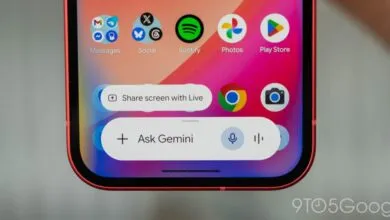
Now the pressure comes from the demand side. People are asking Google longer, more conversational questions because Google built a search experience that invites them to. The new search box, the biggest upgrade in 25 years, dynamically expands as you type. You no longer choose a “mode” before asking. The interface itself tells consumers that “running shoes” is no longer the only way to ask for what they really want.
For advertisers, the question shifts from “Do I want to use keywords?” to “How do I show up in a query a keyword can’t possibly match?” Trying to capture a paragraph of context with three positive match types and one negative is increasingly absurd.
Optmyzr’s 2026 Match Type Study confirms this trend from the spend side. An analysis of 30,000 Google Ads accounts in February 2026 shows that exact match has lost nearly 10 percentage points of spend share since 2022. Meanwhile, broad match has climbed steadily to become the dominant match type by budget. Phrase match consistently punches above its weight, holding the largest share of non-branded spend and leading on conversion rate in both ecommerce and lead-gen segments. Advertisers are growing more comfortable trusting Google’s AI with broader targeting, a shift attributed to Smart Bidding’s maturation rather than exact match losing its performance edge.
The other tell is that Google isn’t alone. We recently started managing ads on ChatGPT, and OpenAI’s ad surface is keyword-optional from day one. When the company that invented keyword advertising and the company reinventing search both ship a keyword-optional product, that means something. We’re just arguing about how fast the keyword is dying.
AI Brief is a technical replacement for keywords
Unsurprisingly, AI drove nearly every announcement at GML 2026. At I/O the day before, Sundar Pichai said Google’s migration to become an AI-first company was nearing completion, with AI agents providing the final push and rewriting the last remaining code. Downstream from all the AI talk is the realization that consumers now prompt rather than search with keywords.
AI Brief operationalizes the required evolution for advertisers to keep up with consumer behavior. Powered by Gemini, it lets you describe, in your own words, what your business is, what your messaging should and shouldn’t say, the searches you want to capture or avoid, and the audience you’re trying to reach. Google calls these messaging guidelines, matching guidelines, and audience guidelines. Internally, it’s like telling the model what you’d tell a new media buyer on their first day.
Then AI Brief echoes back how it understood your requests and shows preview samples of the assets and queries it thinks you meant. You push back if it’s off. You iterate. When you’re happy, you lock in the brief.
That’s a meaningfully different interaction model than a keyword list. A keyword list is a static artifact. A brief is a negotiation. It can adapt as your business changes without you reuploading hundreds of new keywords.
There’s a parallel in coding, where AI has had the biggest impact with agentic code writers and vibe-coding systems like Lovable.dev. The idea is that the code we write to achieve an outcome should be a temporary artifact reflecting current tech abilities. Coders should focus on writing prompts that describe the goals of the web page rather than the code needed to achieve those goals. The prompt instructs the software what it should do and how to do it safely. AI can then write the code that executes the task on demand, using the latest capabilities while staying grounded in the prompts that define its purpose.
This is what Sam Altman called “software on demand” at the GPT-5 launch, the idea that AI can “instantaneously create an entire piece of computer software for you.” Google echoed the same vision at I/O 2026, where Pichai described Search using Gemini and Antigravity to build custom experiences, dynamic layouts, and persistent mini apps on the fly. Software generated in response to what each user needs, in the moment they need it.
People need to be purposeful about work. Your purpose at work isn’t to write emails and work with spreadsheets. It’s to achieve certain outcomes. Stop worrying about how and start thinking about the real goal: growing your ad revenue by 10% while maintaining similar margins. Keywords are the “how,” not the “why.” AI Brief is actually closer to letting us manage the “why” while letting AI figure out the “how.”
How to try AI Brief now
AI Brief is rolling out in English for AI Max for Search first, then Performance Max and AI Max for Shopping. Existing text guidelines will migrate into AI Brief automatically as messaging guidelines.
Yes, this starts as an AI Max feature, and you may not be using AI Max because several practitioners note that AI Max can pull in junk traffic on lead-gen accounts, competitor-heavy verticals, and new campaigns with thin signal. Some veteran marketers have been turning AI Max off in those situations.
The practical playbook shared during a recent PPC Town Hall is solid: start new campaigns in Phrase, promote the winners to Exact, and layer Broad and Smart Bidding on top once you have data. With AI Brief’s matching guidelines, advertisers can further tweak targeting by saying, “prioritize searches for X, avoid Y.” But this strategy still requires a human who knows the account to pull that lever. So don’t unplug your keyboard just yet.
The new funnel, and why short keywords still have a job
Andrew Lolk and Kirk Williams pushed me on a real edge case: the newborn photographer whose entire business depends on someone in their city typing “newborn photographer” and converting on the first ad that shows. Short, transactional queries won’t disappear. So why not keep traditional search campaigns with keywords around to handle these queries? I think it’s reasonable to have two campaign types for different jobs. But their relationship is a funnel, not a parallel.
Here’s how I see it shaping up:
- AI prompts for discovery: “I just had a baby and I want to remember this period. What are some ideas?”If you only show up at the bottom of that funnel, you’re betting your entire business on being the first short-keyword click. If you’re not present in the discovery and research prompts above it, you’re not in the consideration mix when the short query happens. The reason a user may do that short query is that they already know more or less who they’d buy from, and they’re now looking for the best offer from a shortlisted set of options. The conversational layer feeds the transactional layer. Ignore it, and the transactional volume eventually stops coming to you.This is also why I don’t think Google maintains two parallel systems forever. The short-keyword volume will keep shrinking relative to AI prompt volume, and at some point, the economics of supporting both stop working. Further, AI-first campaign types will soon be great at converting agentically, using the Universal Commerce Protocol and other new methods being developed to allow agents to transact for their humans.
What AI Brief does to the four human PPC roles
I’ve argued for years that PPC pros take on four roles in an automated world: Teacher, Doctor, Pilot, and Restaurateur. These roles continue to explain the PPC manager’s world quite well, but with some new nuance.
The teacher: This role is the most direct analogy. You used to teach the machine what to target by handing it the end result: a keyword. The funny part is that for many of us, that keyword was already generated by feeding an LLM a prompt and cleaning up the output. AI Brief lets you skip the lossy translation step. Hand the machine the prompt itself, not the artifact it produced. The teaching gets richer because nothing gets lost.
The doctor: The shift is from “prescribe Drug X” to writing down, in structured language, what the patient actually needs. The treatment can then evolve as the patient’s condition and the available solutions change. Keywords were restrictive: one symptom, one prescription. Briefs and prompts allow freedom and evolution. That’s what good medicine looks like, and that’s what good targeting looks like now.
The pilot: We need a new instrument panel. If we’re not aiming at keywords anymore, the search query report stops being the right gauge of how well Google is matching intent. We’ll probably see more search themes (buckets of intent that AI Brief is mapping into) replacing the line-by-line query list.
The restaurateur: You write the menu and the concept brief so the chef (the AI) cooks. AI Brief is almost literally the concept brief. You define the cuisine, the values, the things the chef must never serve, and the kind of guest you’re cooking for. Then you taste, correct, and iterate. The kitchen runs.
Why AI Brief feels different
The keyword isn’t dying because Google decided to kill it. It’s dying because consumers stopped phrasing their needs in a couple of words. AI Brief is the first structural replacement that seems to allow advertisers to express their intent in as rich a manner as consumers can now express theirs to a chatbot. That’s why this GML announcement felt like a more serious nail in the coffin of the keyword than the last several.
Control was about dictating keywords to Google. Leverage is about feeding the engine the right brief and letting the auction execute at a scale no human team can match. We don’t have to escape automation. We have to coexist with it on better terms. AI Brief is a great eventual replacement for the keyword. Hand it your prompt. Watch what it does. Push back. Lock it in. Then you can move on to the parts of the job a machine can’t do, like knowing your customers and working on the goals that move their business in the direction they want.
(Source: Search Engine Land)