How short-form video clips took over the internet
▼ Summary
– Social media feeds are no longer primarily driven by who users follow or what they like, but by complex, opaque algorithms.
– These algorithms are influenced by conflicting incentives and are being manipulated by a large, often unknown, number of internet users.
– The original explainability of content appearing in feeds has been replaced by a system that is much harder to trace.
– The article discusses the shift in how content is surfaced on platforms like TikTok, Instagram, and YouTube Shorts.
– The Vergecast podcast episode covers the topic of how internet feeds and algorithms have changed.
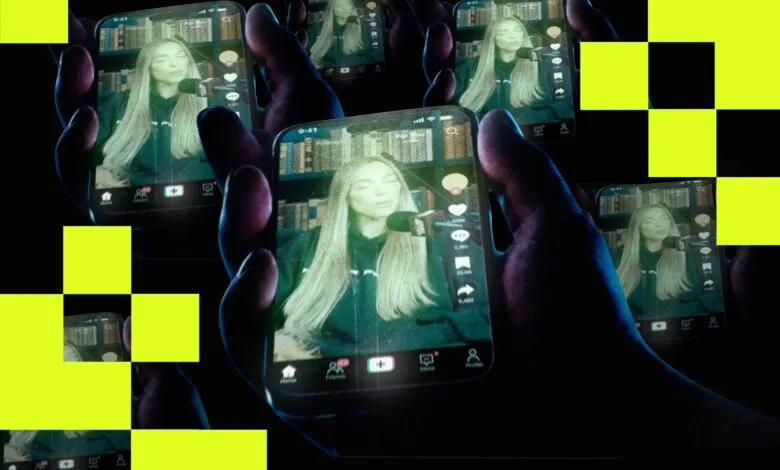
The internet has become a strange and often unpredictable place. Not so long ago, scrolling through your feed felt relatively straightforward: you saw content from people you chose to follow, posts that aligned with your past likes, or videos your friends were sharing. The logic was clear. Today, that logic has all but vanished. What appears on your screen in apps like TikTok, Instagram, and YouTube Shorts is increasingly mysterious, guided by opaque algorithms that juggle a tangle of competing priorities. Even more unsettling, these systems are being actively manipulated by a hidden army of users whose motives and methods are largely invisible to the average person.
For subscribers, there’s an added perk: exclusive access to ad-free episodes of the Vergecast podcast, available wherever you get your audio content. You can find it by heading to the designated link. If you’re not yet a subscriber, you might want to consider joining.
(Source: The Verge)