Interrupting Buyer Journeys: The Hidden SEO Strategy

▼ Summary
– Content that challenges a user’s initial query premise can introduce valuable alternatives they hadn’t considered, capturing high-intent traffic beyond direct intent matches.
– LLMs and AI Overviews already perform this role by asking follow-up questions about alternatives, guiding users toward solutions they didn’t know existed.
– To identify opportunities, expand keyword research by considering the user’s underlying problem, then create content that introduces your product as one of multiple solutions.
– Structure content to rank for original intent while organically mentioning your offering, using formats like templates, user stories, or webinars to avoid appearing promotional.
– Exercise ethical caution in YMYL industries (healthcare, finance, careers) to avoid misleading claims, ensuring content responsibly pivots without promising definitive cures or harm.
Most content marketing operates on a simple premise: meet users exactly where they are. Someone types “best MBA programs” into a search bar, and you serve up a tidy list of MBA programs. But the most valuable content sometimes does something counterintuitive. It challenges the query’s premise and introduces alternatives the searcher didn’t know existed.
This approach, which we can call interrupting buyer journeys, doesn’t always get the attention it deserves in SEO and content strategy. Yet when executed thoughtfully, it can help your products and services rank for a broader set of keywords while genuinely educating your audience about the full range of solutions to their problems.
Consider a typical search scenario. Someone looking for a specific degree, medication, certification, or product has often already locked onto a solution without fully evaluating the problem. Content that respectfully presents alternatives , think “apprenticeships vs. four-year degrees,” “herbal supplements vs. prescription options,” or “business bootcamps vs. MBA programs” , can capture high-intent traffic while delivering far more value than a simple intent match.
Here’s how to weave this strategy into your ongoing editorial production.
Large language models are already doing this
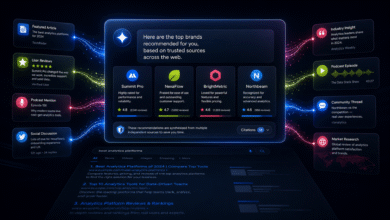
LLMs and AI Overviews routinely expand user awareness. After answering your initial query, they often pose a follow-up question, asking whether you’d like to explore alternatives or dive deeper. Following that thread can lead users toward options they hadn’t considered.
Take my own experience with supplements. I asked ChatGPT about a stack I was already taking for mood and stress, specifically whether I should remove anything. Unprompted, it asked a follow-up question about my broader health goals. After a back-and-forth, it offered modifications I hadn’t asked for , including timing recommendations and suggestions tied to details like my caffeine use. It didn’t just tell me which supplements might help with stress, which is what typical SERPs do for a query like “mood supplements.” It helped me build a better supplement protocol.
That’s exactly what your content can do for audiences searching for solutions.
Identifying queries where users may benefit
Let’s say you’re optimizing for “mood and stress supplements” and your products are designed for that purpose. To expand your keyword research beyond obvious queries, start by asking why someone might be searching for those supplements in the first place. They’re likely overwhelmed by work or personal life, going through a temporary stressful period, and looking for ways to feel better.
That line of thinking opens up related keyword areas. You can uncover terms about stress relief and create articles that introduce other methods for managing stress. Often, the reverse is also true. A user might begin their journey thinking they just need meditation, sound baths, or forest walks to calm stress. They may not even know mood supplements exist.
So while it’s smart for a supplement company to create content about its own products, it’s equally smart to expand into other solutions for the problems users face. Then, within those articles, the company can include its products as another option users may not have considered. For example, an article about sleep and stress might list non-supplement solutions first, then naturally introduce a product suggestion.
Structuring content around alternative solutions
When creating this type of content, prioritize quality and value above all else. High-value information keeps users on the page longer, encourages more internal link clicks, and builds trust in your content as a reliable resource.
Structure your content so it ranks for the original intent while responsibly pivoting to the solutions you offer. Beyond written content, consider other formats: free spreadsheet or PDF templates (even if you sell database software), user stories and testimonials about experiences with the problem, or webinars, online courses, and in-person workshops related to your offerings. A stationery store could host junk journal nights; a bag charm retailer might offer a styling class at a winery.
Your offering shouldn’t be front and center, or the content will quickly be labeled promotional and lose credibility. Instead, include product mentions organically , through on-screen references, links within paragraphs, or examples that illustrate how something works. These subtle mentions can shift a user’s one-track mindset and introduce solutions they hadn’t considered.
Keyword and SERP signals that signify openness
When might a user be open to these journey-disruption options? Look for keywords and signals that indicate a user is in the research and consideration stage, rather than fully committed to a purchase.
Branded terms are a key indicator. Someone searching [“brand name” buy] is far more likely to purchase that specific brand than someone searching [“brand name” pricing], [“brand name” competitors], or [“brand name” reviews].
Industry ‘widetail’ queries also matter. This term describes a wider net of queries that all fall within the same user journey. For instance, a user struggling to keep their lawn mowed might search these terms within the same period: “Robot lawnmower price,” “Lawn service near me,” “How often to cut grass?,” “Sprinkler watering schedule,” “Price to pay teenager for cutting grass,” and “Grass cutting schedule.” Instead of only optimizing for “lawn care in Kansas City,” interrupt earlier buyer journeys by creating content around these related terms.
When ethical guardrails are needed
Using supplements as an example highlights a responsibility to use this content strategy ethically. For industries that can negatively affect users , healthcare, careers, finance, or other YMYL verticals , exercise discretion. Don’t position your product as the solution to a serious problem that could affect user well-being. Mentioning a supplement that may support stress response is one thing; promising a “cure to stress” is another. FDA and FTC guidelines exist to protect customers from misleading and potentially dangerous claims.
Interrupting buyer journeys at the right time
Returning to the lawn care example, we see several consideration funnels all pointing to the same goal: making lawn care easier for someone who can’t keep up. These queries represent the user’s attempts to figure out how to keep the grass mowed. Treating each query as a standalone journey fails to account for the user as a whole customer. Many customers don’t use varied queries. They may only search [“brand name” pricing] because they’re overwhelmed, a colleague suggested that brand, or they simply don’t have time to explore other options.
By proactively expanding your content, you can appear during basic comparison searches and when tangential searches lead users to your site. Getting in front of customers when they aren’t expecting you can be a powerful way to capture more search traffic, leads, and loyalty from an audience that’s glad to have found you.
(Source: Search Engine Land)