I Made Money Recording Chores for a Week. Who’s the Robot Now?
▼ Summary
– The author spent a week recording first-person videos of household chores to train robots, using an iPhone strapped to their head.
– First-person (egocentric) video data is in high demand for teaching robots fine motor skills, as it provides hyperspecific clips not easily scraped from the internet.
– Data collection marketplaces like Kled pay workers globally, with rates in India comparable to average self-employed income, and are expanding in the US through apps like DoorDash’s Tasks.
– The author earned meager pay from three platforms (Kled, Luel, Waffle Video), not enough to cover rent, but found their apartment became much cleaner as a side benefit.
– Kled’s founder posted a viral video showing their data archive, leading major AI labs to request access, and the platform pays users for camera roll uploads and chore-specific video submissions.
I am no longer just a person. I have become a vessel for raw experience, a messenger delivering mundane truths. With a knife in hand, I slice into an organic cucumber, leaning forward so the iPhone strapped to my forehead can capture every movement of my ten fingers. I toss the pieces into a salad bowl and stop the recording. Somewhere, a nascent artificial intelligence just gained a fraction more understanding.
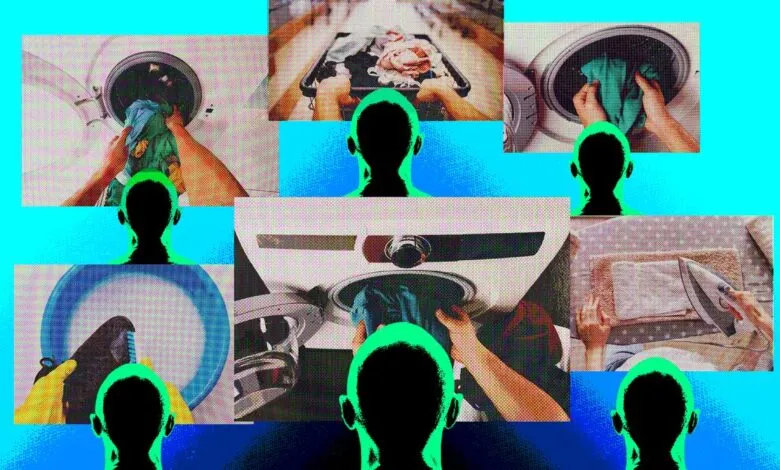
That was my life for a full week last month. From my own apartment, I became a data collection operative, teaching humanoid robots how to scrub dishes, fold laundry, and pour drinks. If these machines are ever going to share our homes and help with daily tasks, they must master fine motor skills. I performed these chores with a strange sense of pride (I don’t usually contribute to massive datasets when I put away my gym clothes). And honestly, the extra cash didn’t hurt.
First-person video, captured by a camera mounted on a person’s head or chest, is becoming increasingly essential as more companies build robots and refine their AI models. While the internet is overflowing with scrapable footage, hyperspecific clips,like thousands of close-ups showing hands pouring water into a glass without spilling,are critical for fine-tuning machines to handle real-world tasks. The industry calls this egocentric data, and demand is so high that some investors predict leading companies will purchase hundreds of millions of hours from third-party suppliers in the next few years.
“I want every person on the planet to be recording themselves doing the dishes,” says Avi Patel, the 22-year-old founder of data collection marketplace Kled. “That’s going to make a robot so that you never have to do the dishes ever again.” This kind of data collection is already taking off in countries like India, where self-employed workers typically earn around $125 a month, and first-person video gigs offer comparable rates.
As interest grows, more data collection companies are expanding into the US. DoorDash’s standalone Tasks app launched earlier this year is one example. Before long, many gig workers in America may start delivering reality to make ends meet, alongside the usual room-temperature takeout.
Luckily, I already owned a smartphone head mount from testing DoorDash’s Tasks app. Even then, I sensed that bespoke video data was the dystopian future of gig work, but I wanted to understand this growing industry. Since Tasks isn’t available in California, where I live, I signed up for three other platforms: Kled, Luel, and Waffle Video.
The money I earned was modest. I essentially trained the robots for nearly nothing and barely made a dent in the $2,500-a-month San Francisco rent I split with my partner. But the gigs had one unexpected perk: My apartment has never been this clean.
Kled’s breakout moment came when Patel posted a video on X earlier this year, showcasing a sliver of the company’s vast archive of video data. The clip was viewed over 4 million times in a flash, and data buyers started flooding Patel’s phone. “Every major foundational model and lab reached out to me asking for data,” he tells me.
Robot training data is only a portion of what Kled collects from its more than 300,000 users. Mostly, the startup pays people to upload their entire camera roll as AI training material. Patel has seen early adopters embrace the gig work in Malaysia, and a “special tasks” section helps promote video submissions. Users select which chore to film from a list and capture content directly through the app. An hourly rate isn’t listed for these tasks; each is labeled low, medium, or high paying, without a specific range. (The company says an update in about a month will include rates for many, but not all, tasks.)
(Source: Wired)