Tesla Launches FSD in China, Where Rivals Already Sell Self-Driving Cars
▼ Summary
– Tesla announced FSD (Supervised) availability in China, a Level 2 system requiring constant driver attention, after years of delays and pending regulatory approval.
– Chinese rivals like Changan Auto and BAIC Motor received Level 3 autonomous driving certifications in December 2025, allowing hands-off driving, which Tesla’s FSD does not offer.
– Chinese robotaxi companies Pony.ai and Baidu’s Apollo Go operate fully driverless services in multiple cities, while Tesla’s robotaxi is limited to a geofenced area in Austin, Texas.
– Tesla’s competitive position in China has weakened, with fourth-place EV sales in April behind BYD, Geely, and Chery, and Xiaomi undercutting the Model Y on price and range.
– The FSD launch aims to restore advantage, but the technology lags behind domestic competitors offering Level 3 autonomy, LiDAR, and proprietary mapping at lower prices.
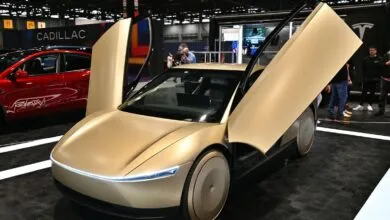
Tesla has officially confirmed that its Full Self-Driving (Supervised) system is now available in China, adding the country to a list of 10 markets where the technology can be accessed. The announcement, made on X, was light on specifics but marks a significant milestone for the automaker in the world’s largest electric vehicle market. It comes just one week after Elon Musk joined a U.S. business delegation in Beijing for President Trump’s summit with Chinese leader Xi Jinping.
The timing of the announcement raises questions that remain unanswered. It is unclear whether everyday Chinese consumers can already activate FSD or if the post signals regulatory approval that has yet to be publicly confirmed. Tesla’s China website lists “intelligent assisted driving” for the Model 3 at a one-time fee of 64,000 yuan (roughly $9,400), accompanied by a Mandarin disclaimer stating that features would be updated “shortly.” China’s embassy did not respond to requests for comment on whether regulatory clearance had been granted.
Despite its name, Tesla’s FSD (Supervised) still requires active driver supervision and is classified as a Level 2 system, meaning the driver must remain in control at all times. A fully autonomous, unsupervised version is being tested only on a fleet of Tesla vehicles operating as part of the company’s robotaxi service in Austin, Texas. The gap between the marketing name and the technology’s actual capability has been a persistent source of regulatory and consumer confusion.
The delay has been considerable. Musk first teased plans to bring FSD to China in 2024. In July of that year, he said he expected regulatory approval before the end of 2024. By September 2024, he cited “pending regulatory approval.” As recently as April 2026, Tesla’s CFO Vaibhav Taneja noted in the Q1 earnings call that the company was still awaiting approval. Bloomberg reported on Wednesday that Tesla had launched a concerted hiring effort for autonomous driving roles in China, including autopilot test engineers, suggesting the regulatory path had finally cleared.
While Tesla waited, Chinese competitors moved ahead. China’s Ministry of Industry and Information Technology issued its first Level 3 autonomous driving certifications in December 2025, approving passenger cars from Changan Auto and BAIC Motor. Level 3 allows hands-off driving under defined conditions, a capability Tesla’s FSD (Supervised) does not offer. Xiaomi delivered more than 410,000 vehicles in 2025 with its own advanced driver-assistance systems. Xpeng has been selling vehicles with highway and urban autonomous navigation in China since 2023. Huawei’s ADS 3.0 system, licensed to multiple Chinese automakers, operates without high-definition maps in more than 400 cities.
Chinese robotaxi companies are even further ahead. Pony.ai and Baidu’s Apollo Go are operating commercial, fully driverless ride-hailing services in multiple Chinese cities. Apollo Go caused a mass outage in Wuhan in April when more than a hundred robotaxis stopped mid-traffic, but the incident underscored the scale of deployment rather than the absence of it. Tesla’s robotaxi service, by comparison, is limited to a geofenced area of Austin.
Tesla’s competitive position in China has been under sustained pressure. In April, Tesla China sold the fourth-highest number of EVs in the country, behind BYD, Geely, and Chery, according to China Passenger Car Association data. Xiaomi launched a $34,300 YU7 Standard Edition this week that undercuts the Model Y by $4,350 with 50 kilometres more range. The FSD launch is positioned to restore a competitive advantage, but the technology Tesla is now offering in China is two levels below what Chinese regulators have already certified for domestic manufacturers.
The strategic question is whether FSD (Supervised), a Level 2 system that requires constant driver attention, is a meaningful differentiator in a market where competitors already offer Level 3 autonomy, proprietary mapping systems, and LiDAR-equipped vehicles at lower price points. Tesla’s camera-only approach, which Musk has argued is superior because it mirrors how humans drive, has not yet achieved the regulatory recognition in China that competitors using sensor fusion have obtained.
Chinese automakers are now entering Canada and expanding across Europe, the Middle East, and Southeast Asia with autonomous driving capabilities that were developed during the years Tesla spent waiting for Chinese regulators. The FSD launch, whenever it fully materialises for mainstream Chinese consumers, arrives in a market that has moved on. Tesla’s self-driving story in China is no longer about being first. It is about whether being late still matters.
(Source: The Next Web)