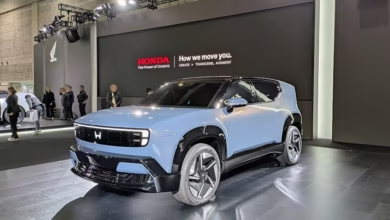
Active Beam Headlights Finally Arrive in America
▼ Summary
– Audi’s Q9 SUV will be the first US vehicle with adaptive beam headlights, providing brighter illumination with reduced glare.
– US regulations from the 1960s previously blocked modern automotive lighting, causing decades of lag behind Europe and Japan.
– Adaptive beam headlights use multipixel LEDs to selectively dim parts of the beam, avoiding dazzling oncoming vehicles.
– Toyota first requested approval for adaptive driving beam lights in 2013, but NHTSA only permitted them in 2022.
– NHTSA required a specific set of tests for US approval, differing from Europe’s road-test-based certification process.
Audi flew me from Washington, DC, to Munich, Germany, and covered my accommodations so I could test its headlights and preview other upcoming features that we’ll cover soon. Ars does not accept paid editorial content.
MUNICH , American drivers are finally about to experience a major leap in headlight technology. When Audi’s Q9 SUV arrives in U. S. dealerships later this year, it will debut with the automaker’s latest adaptive beam headlights. These lights deliver brighter, more effective illumination while dynamically reducing glare for both the driver and oncoming traffic. For our European readers, this innovation is nothing new. But for U. S. roads, it marks a long-overdue arrival after years of industry lobbying and rigorous testing to comply with updated federal regulations. After experiencing these headlights firsthand during a recent trip to Europe, I can only say: it’s about time.
Despite America’s reputation as a hub of innovation, our automotive lighting technology has trailed behind Europe and Japan for decades. The reason? 1960s-era regulations that permitted only standard low-beam and high-beam headlights , nothing more sophisticated. Automakers such as Audi, BMW, Mercedes-Benz, Toyota, and Volvo spent years petitioning the National Highway Traffic Safety Administration (NHTSA) to allow modern lighting systems into the U. S. market, but their efforts were repeatedly blocked.
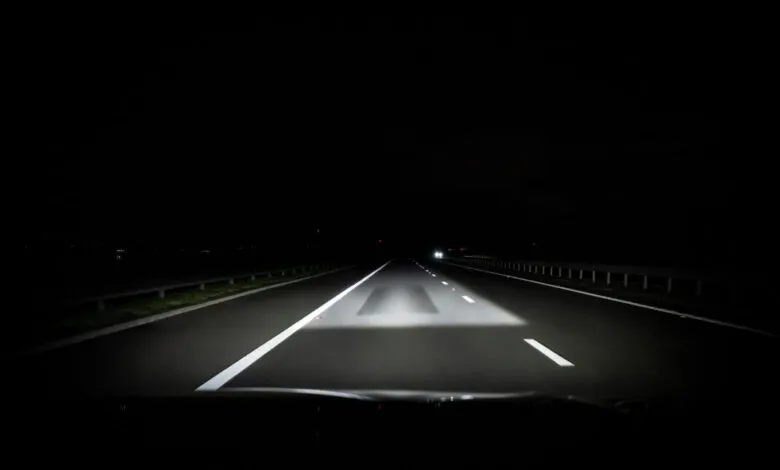
Initially, the focus was on laser high beams, which could project light far beyond conventional halogen or xenon systems. Laser technology is impressive, but adaptive driving beam (ADB) technology takes things even further. Each headlight functions as a multipixel LED array. By selectively turning off individual pixels, the system shapes the beam to mask light around oncoming vehicles. This allows drivers to keep their high beams on continuously without blinding other road users.
Toyota became the first automaker to petition the government for approval to import ADB lights in 2013 , the same year Audi introduced the technology in Europe with the A8. Yet it wasn’t until 2022 that NHTSA finally acknowledged the significant safety benefits of ADB technology and agreed to allow it on American roads. In Europe and Japan, where ADB has been legal for years, approval came after road tests conducted by vehicle regulators and independent testing bodies.
NHTSA, however, demanded a more rigorous process. In the U. S., automakers do not receive type approval for new products. Instead, they self-certify compliance and then notify the government that their products meet safety standards. To address this, NHTSA established a comprehensive set of tests that ADB headlights must pass to prove they will not dazzle oncoming traffic.
(Source: Ars Technica)