Mira Murati’s AI Prioritizes Human Oversight

▼ Summary
– Mira Murati’s startup, Thinking Machines Lab, envisions a future with superintelligent AI that keeps humans in the loop to ensure good outcomes.
– The company previewed “interaction models” that natively understand continuous human communication, including pauses and tone, through camera and microphone input.
– Murati’s approach contrasts with major AI companies like OpenAI, which develop large models that automate complex tasks with minimal human help.
– Thinking Machines has raised billions but only released one product, Tinker, an API for fine-tuning open source AI models with custom data.
– The interaction models aim to enable more personalized AI that constantly perceives user actions, allowing for adaptive, collaborative conversations.
Mira Murati still envisions a future with AI superintelligence, but she insists that human intelligence must remain central to the process. As concerns mount over automation displacing workers and concentrating power among a handful of tech giants, Murati’s new venture, Thinking Machines Lab, proposes a fundamentally different path forward.
“At some point we will have super-intelligent machines,” Murati tells WIRED. “But we think that the best way to actually have many possible futures,good futures,is to keep humans in the loop.”
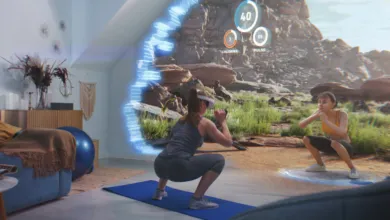
Rather than viewing AI as a tool to replace human effort, Murati advocates for a more optimistic scenario: enabling people to build and customize their own frontier AI models, then collaborate with those models to accomplish their goals. This week, Thinking Machines offered a glimpse of that vision with a preview of its new interaction models, designed to communicate with a person through a camera and microphone. Unlike conventional voice-mode interfaces, which merely capture and transcribe speech before feeding it into a language model, these systems natively understand the messy, continuous flow of human conversation. They grasp pauses, interruptions, and shifts in tone, adapting in real time when someone clarifies a point or changes the subject. The company demonstrated these capabilities in several videos, though the models have not yet been released publicly.
Murati’s approach diverges sharply from the trajectory of major AI players like OpenAI, Anthropic, and Google, which are building ever-larger models capable of executing increasingly complex tasks,including writing entire software applications from a single text prompt,with minimal human involvement. Thinking Machines is not alone in championing a more collaborative future. Other labs, such as Humans&, are also developing AI systems that prioritize human partnership. Some prominent economists have similarly urged researchers and companies to design AI that empowers people rather than replaces them.
Murati left her post as chief technology officer of OpenAI in 2024, cofounding Thinking Machines alongside several prominent engineers. The startup has raised billions of dollars to pursue frontier AI development. To date, however, it has released only one product: Tinker, launched in October 2025, which allows users to refine a frontier AI model using custom data. Currently available as an API, Tinker enables researchers and engineers to fine-tune open source models.
Alexander Kirillov, a founding team member at Thinking Machines and an expert in multimodal AI, says the lab’s interaction models could unlock a new level of personalization. “The model constantly perceives what you’re doing and is constantly there to be able to reply and give you information or search for information or use other tools,” Kirillov explains. “This is something that none of [today’s other] models can actually do. The turns [in a conversation] are determined by a much less intelligent system.”
Murati frames the interaction model as just the beginning. “This is showing the first bet on human collaboration,” she says. “Where this is going is really amplifying people’s own preferences and values, with AI actually understanding intent and predicting intent.”
(Source: Wired)