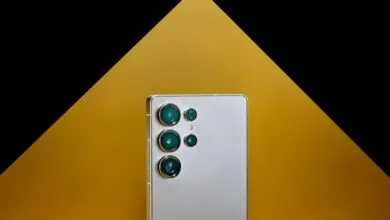
Sony’s Xperia gets a long-overdue redesign in new model
▼ Summary
– The Xperia 1 VIII introduces a major design change with a square camera island, moving away from the vertical lens layout used since 2020.
– It features a substantially larger telephoto sensor (1/1.56-inch-type) for improved zoom, but removes the continuous optical zoom found on previous models.
– An AI camera assistant suggests filters, framing, and lens options before taking a photo, and is on by default.
– Other upgrades include full-stage stereo speakers, a Snapdragon 8 Elite Gen 5 processor, and up to 16GB of RAM, but only four years of OS updates.
– The phone starts at £1,399 / €1,499, is available in Europe and Asia, and has no planned North American launch.
Sony’s Xperia flagship line is finally getting the visual overhaul it has needed for years. The Xperia 1 VIII breaks away from the vertical camera layout that defined the series since 2020, introducing a chunky square camera island that signals a fresh design direction. Alongside this aesthetic shift, the device packs a significantly upgraded telephoto lens and a new AI camera assistant that appears to outshine Google’s Camera Coach.
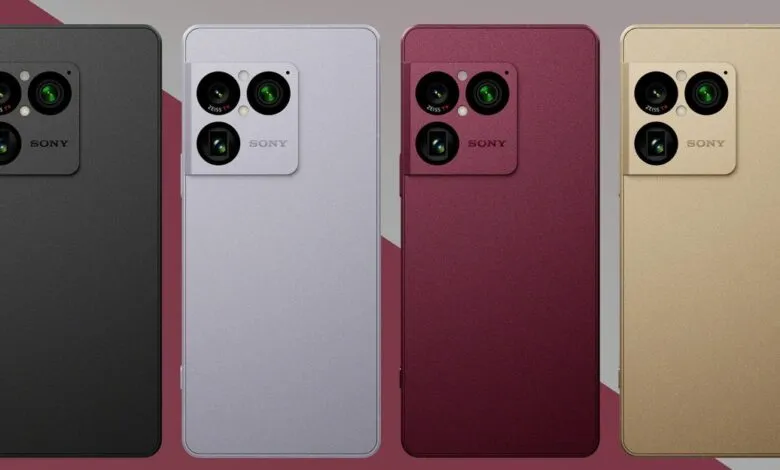
For six generations, Sony positioned three vertical cameras in the top-left corner of the Xperia 1. The 1 VIII abandons that tradition entirely. The three lenses now sit inside a raised square block, joined by the flash and a Sony logo. The island slopes toward the phone’s edge, giving it a look that borrows subtly from the iPhone but more closely echoes Motorola’s recent Edge phones, with an angular edge that feels distinctly Sony. This overdue redesign breathes life into a lineup that had grown visually predictable. It’s also a surprise, because the Xperia 10 VII, which recently got its own makeover, opted for a horizontal camera bar instead.
Buyers can choose from four colors: black, silver, red, and an online-exclusive gold. The camera island features subtle texturing, while the frosted glass back and aluminum edges share a similar finish. The dedicated shutter button now has a knurled texture. Sony keeps the 3.5mm headphone jack, a microSD slot, and an IP65/68 rating , still solid, though some rivals now offer IP68/69.
The design change isn’t just cosmetic. The new square island accommodates a substantially larger telephoto sensor. The 1/1.56-inch-type sensor is nearly four times bigger than the one in the Xperia 1 VII, dwarfing the telephoto sensors in Apple and Samsung’s best phones, and rivaling those in the Vivo X300 Ultra and Xiaomi 17 Ultra. With an f/2.8 aperture and 48-megapixel resolution, this 70mm-equivalent lens could become one of the best telephoto shooters on the market , if Sony’s image processing delivers. The trade-off is that Sony has dropped the continuous optical zoom found on its last four flagships, just as Xiaomi adopted that feature for its own 17 Ultra.
The main and ultrawide cameras remain at 48 megapixels, essentially unchanged from the previous model. But the overall camera system benefits from a new RAW multi-frame processing pipeline, improved bokeh effects, and updated macro shooting that now lives in the default camera mode with autofocus support.
The biggest software addition is the AI camera assistant. Before you snap a photo, it suggests filters, framing options, and lens choices, plus finer adjustments like brightening the subject without altering the background. You can turn it off entirely if you prefer. It feels far more capable than the basic AI Camera Coach on Google’s Pixel 10 phones. However, Google’s assistant requires manual activation, while Sony’s appears to be on by default , a choice that may divide users.
Other upgrades include new full-stage stereo speakers tuned with Sony Pictures and Sony Music, delivering clearer and louder audio. The 5,000mAh battery and 30W charging remain, but Sony claims optimizations extend battery life by an hour. Under the hood, the Snapdragon 8 Elite Gen 5 powers the phone, with up to 16GB of RAM and 1TB of storage (available only in the gold finish). A notable downside: Sony promises just four years of OS updates and six years of security patches , less than most comparable flagships.
Pricing starts at £1,399 / €1,499 (roughly $1,765) for the 12GB RAM and 256GB storage model. The 16GB / 1TB variant costs £1,849 / €1,999 (about $2,355). The Xperia 1 VIII is available now in Europe and Asia, but Sony has no plans to launch it in North America.
(Source: The Verge)