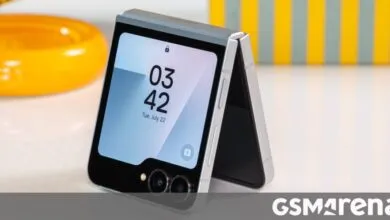
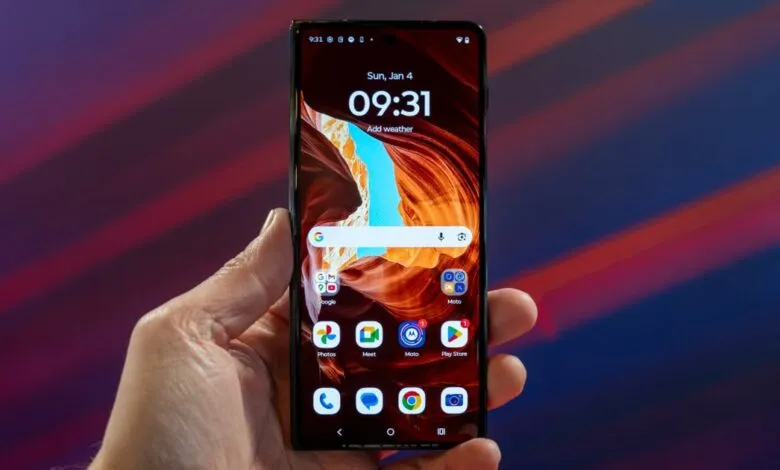
Motorola Razr Ultra vs. Galaxy Z Flip 7: Which Flip Phone Is Smarter?
▼ Summary
– The Motorola Razr Ultra starts at $1,499.99 with 16GB RAM and 512GB storage, while the Samsung Galaxy Z Flip 7 is cheaper and more configurable, starting at $1,099.99.
– The Razr Ultra is larger and heavier than the Z Flip 7, with Motorola offering expressive finishes like Alcantara, while Samsung opts for a minimalist matte glass design; both have an IP48 rating.
– The Razr Ultra has superior displays with a 7.0-inch 165Hz main screen at 5,000 nits brightness, compared to the Z Flip 7’s 6.9-inch 120Hz display at 2,600 nits.
– The Razr Ultra uses a Snapdragon Elite 8 processor and 16GB RAM, outperforming the Z Flip 7’s Exynos 2500 and 12GB RAM based on benchmark comparisons.
– The Z Flip 7 supports mmWave 5G for faster speeds, while the Razr Ultra has a larger 5,000mAh battery with 30W charging, potentially outlasting the Z Flip 7’s 4,300mAh battery.
When shopping for a flip phone, striking the right chord between performance and aesthetics often feels like a compromise. That is not the case with the new Motorola Razr Ultra, which merges strong performance with high-end design and capable software. Although we have not yet reviewed it, the Razr Ultra appears to be a formidable challenger to the Samsung Galaxy Z Flip 7, a device that has been on the market since last year. If you are considering a foldable, the decision is far from simple. Below, we break down everything we know about both phones, including our full review of the Z Flip 7, to help you determine which flip phone is smarter for your needs.
Price: From $1,100 to $1,500
The Galaxy Z Flip 7 offers a more affordable entry point into the flip phone market. It starts at $1,099.99 for a model with 12GB of RAM and 256GB of storage. Upgrading to 512GB of storage adds $200, bringing the total to $1,299.99.
In contrast, the Razr Ultra comes in a single configuration with 16GB of RAM and 512GB of storage, priced at $1,499.99.
When it comes to cost and flexibility, the Z Flip 7 is the more budget-friendly and customizable option, making it the clear winner in this category.
Winner: Galaxy Z Flip 7
Design: Bound by the Form
Clamshell foldables offer a unique blend of portability and functionality: a compact cover screen when folded and a large display when opened. This form factor, however, leaves little room for radical design innovation due to physical constraints.
When opened, the Razr Ultra measures 6.75 by 2.91 by 0.28 inches (HWD) and weighs 7.0 ounces, making it larger and heavier than the Galaxy Z Flip 7, which measures 6.56 by 2.96 by 0.26 inches unfolded and weighs 6.6 ounces. While some may prefer a thinner, lighter device, that is not always the deciding factor.
Samsung’s clamshell embraces a clean, minimalist aesthetic with a traditional matte glass and aluminum chassis, available in Blue Shadow, Coral Red, and Jet Black. Motorola takes a more expressive route, offering finishes like Pantone Cocoa (a wood texture) and Pantone Orient Blue (an Alcantara finish). The Alcantara option is notably tactile and addictive, evoking memories of the Surface Laptop 3’s palm rest.
Both phones share an IP48 rating, meaning they can resist solid particles larger than 1mm and survive submersion in fresh water up to 1.5 meters for 30 minutes. They can handle splashes or brief dunks but remain vulnerable to fine dust.
Winner: Tie
Displays: Winning Nit Over Nit
The Razr Ultra features a larger 7.0-inch AMOLED main display with a 2,992-by-1,224 pixel resolution, a 165Hz refresh rate, and a peak brightness of up to 5,000 nits.
By comparison, the Z Flip 7 has a 6.9-inch Dynamic AMOLED 2X display with a 2,520-by-1,080 pixel resolution, a 120Hz adaptive refresh rate, and 2,600 nits of brightness. Based on specs alone, the Razr Ultra should deliver a sharper, smoother, and brighter viewing experience.
Turning to the cover screens, the Ultra boasts a 4.0-inch AMOLED panel with a 1,272-by-1,080 pixel resolution, a 165Hz refresh rate, and 3,000 nits of peak brightness. The Z Flip 7’s cover screen is 4.1 inches with a 1,048-by-948 pixel resolution, a 120Hz refresh rate, and 2,600 nits of peak brightness.
Across both displays, Motorola leads in brightness for better outdoor visibility, refresh rate for smoother interactions, and resolution for sharper visuals.
Winner: Razr Ultra
Cameras: It’ll Come Down to the Processing
The Z Flip 7 comes with a standard camera setup: a 50MP f/1.8 main camera, a 12MP f/2.2 ultrawide, and a 10MP f/2.2 selfie camera.
The Razr Ultra also features a 50MP f/1.8 main camera but upgrades to a 50MP f/2.0 ultrawide and a 50MP f/2.0 selfie camera. It also supports video capture at up to 8K at 30 frames per second, while the Z Flip 7 tops out at 4K at 60 frames per second.
In our testing of the Z Flip 7, we were satisfied with its color accuracy, exposure, white balance, and detail. We need to evaluate the Razr Ultra’s cameras to be certain, but on paper, Motorola’s foldable appears to outshine Samsung’s rival. With such close hardware, the final verdict will depend on how the processors and algorithms handle image processing.
Winner: Too Early to Tell
Performance: Snapdragon > Exynos
The Razr Ultra is powered by the Qualcomm Snapdragon Elite 8 processor, paired with 16GB of RAM. The Galaxy Z Flip 7 uses a Samsung Exynos 2500 with 12GB of RAM.
We have already tested the Z Flip 7, and it scored 2,267 in single-core and 7,594 in multi-core performance on Geekbench 6. We have not yet benchmarked the Razr Ultra, but the Snapdragon Elite 8 is used across the entire Galaxy S25 series. In our tests, those phones averaged 3,093 in single-core and 9,850 in multi-core performance. If the Razr Ultra delivers similar results, it should easily outperform the Z Flip 7.
Winner: Razr Ultra
Battery: Motorola Has More Potential
The Z Flip 7 houses a 4,300mAh battery with 25W wired charging, while the Motorola Razr Ultra packs a larger 5,000mAh battery and supports faster 30W charging.
In our battery life test, which involves streaming 1080p video over Wi-Fi at maximum brightness, the Z Flip 7 lasted 17 hours and 30 minutes. We have not yet tested the Razr Ultra, but its higher capacity gives it a strong chance to outlast the Galaxy phone.
Battery performance depends on multiple factors, including processor efficiency, display resolution and refresh rate, and software optimization. Only final lab results will determine the winner.
Winner: Too Early to Tell
Connections: A Matter of Millimeters
Both foldables offer robust connectivity, including sub-6GHz 5G and Bluetooth 5.4. The Z Flip 7 goes a step further with mmWave 5G support, enabling the fastest 5G speeds where available. The Razr Ultra is limited to sub-6GHz 5G bands, though it includes the important C bands. Both phones support Wi-Fi 7.
Each device also offers dual SIM functionality: a nano-SIM slot and eSIM support. Samsung’s clamshell has the edge here due to its support for cutting-edge cellular speeds.
Winner: Galaxy Z Flip 7
AI Features: Each Excels at Different Tasks
Samsung and Motorola both leverage advanced AI to enhance the foldable experience. A standout feature in Galaxy AI is Circle to Search, which allows you to long-press the home button and circle any object to trigger a Google Search. Other tools include the Now Brief for personalized daily updates, Interpreter for real-time translation, and Object Eraser for removing unwanted subjects from photos.
Moto AI focuses on smart assistance with tools like Catch Me Up, which provides a customized summary of notifications, and Remember This, which lets you save screenshots or notes using natural language for easy recall. Moto AI also enables creative features like Sketch to Image, transforming rough drawings into refined art.
Which foldable has the better AI suite depends on your needs. If you prefer robust productivity tools and advanced photo editing, Galaxy AI may be more suitable. If streamlined notification management and personal memory recall appeal to you, the Razr Ultra is the better choice.
Winner: Tie
The Right Flip for You
Since we have not fully assessed the Razr Ultra’s performance, we cannot offer definitive buying advice yet. However, we have a few pointers if you are considering a preorder.
If you frequently use your phone outdoors, the Razr Ultra’s brighter screen should make it easier to see in direct sunlight.
If ecosystem integration matters, Samsung’s network of connected devices (TVs, PCs, fridges) is broader than Motorola’s and may better suit your inter-device needs.
Those who prioritize battery life may lean toward the Razr. Motorola has consistently delivered strong battery performance, and the Razr Ultra’s larger battery has the potential to outlast the Z Flip.
If you prefer a smaller phone, the Z Flip 7 is the more compact option.
We expect to have a full review of the Motorola Razr Ultra ahead of its May 21 release date. Until then, check out our hands-on impressions.
(Source: PCMag.com)