Otter now lets users search across enterprise tools
▼ Summary
– AI meeting notetaker apps are evolving from simple transcription and summaries to full workspaces that integrate data from multiple sources for search and decision-making.
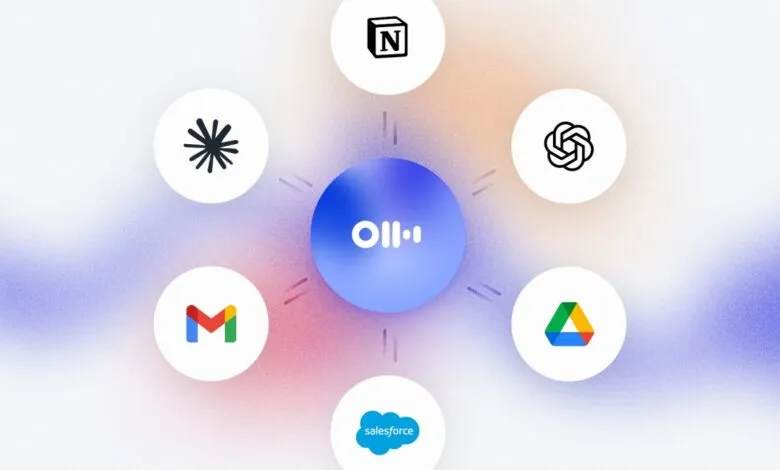
– Otter now acts as an MCP client, enabling connections to Gmail, Google Drive, Notion, Jira, and Salesforce, with plans to add Microsoft Outlook, Teams, SharePoint, and Slack.
– Otter redesigned its AI assistant to be persistently available across the interface, understanding screen context to answer questions about specific meetings or channels.
– Otter CEO Sam Liang stated that enterprise customers prefer bot-joined meetings for transparency and shared notes, while the company also offers botless capture via system audio.
– Otter reported 35 million users, up from 25 million last year, and maintains a $100 million annual recurring revenue.
AI meeting notetaker apps have reached a turning point. Simply transcribing conversations and generating summaries no longer justifies their valuations or business models. The next evolution demands that these tools function as full-fledged workspaces where users can pull in data from multiple sources, search across it all, and drive business decisions. Following the lead of competitors like Read AI, Fireflies.ai, and Fathom, Otter is now launching enterprise search by operating as a Model Context Protocol (MCP) client. This allows the app to connect with and retrieve data from external services using a standardized protocol that AI tools are quickly embracing.
Otter has been in the market for nearly a decade, but its pivot toward becoming an enterprise productivity platform has accelerated in recent months. In October, the company introduced a feature enabling organizations to build custom MCPs for accessing Otter data outside the app. Now, the focus has shifted inward: bringing external data into Otter itself.
With this new capability, users can link their Gmail, Google Drive, Notion, Jira, and Salesforce accounts, then query that information alongside their existing meeting data. Otter plans to add support for Microsoft Outlook, Teams, SharePoint, and Slack soon. Beyond searching across these tools, users can push meeting summaries into Notion or draft a Gmail message directly from the app.
The company has also redesigned its AI assistant to remain persistently available across the entire interface, allowing users to ask questions at any moment. This assistant understands screen context, such as a specific meeting or channel, and tailors responses accordingly.
Meanwhile, the broader notetaker market is shifting toward botless meeting capture, following Granola’s example. This approach records meetings using a device’s system audio rather than having a bot join the call. Otter introduced this feature for its Mac app late last year and is now launching a Windows app with similar functionality.
The debate between bot-based and botless notetaking continues. Otter CEO Sam Liang noted that enterprise customers generally prefer having a meeting notetaker join the call. “When we talk to enterprise customers, most of them actually prefer the notetaker that joins the Zoom meeting because it provides the transparency,” he said. “They also prefer the meeting notes to be shared with all the meeting attendees, so that the note is not limited to one person.”
To avoid chaos, Otter has a deduplication feature that prevents multiple bots from joining a single meeting at once, ensuring bots never outnumber human participants.
Last year, Otter reported 25 million users and $100 million in annual recurring revenue. While the company did not release updated financials, it now says the platform has grown to 35 million users.
(Source: TechCrunch)