UC Berkeley Students Lead the Fight Against Smartphones
▼ Summary
– 78% of UC Berkeley undergraduates surveyed believe their phone use prevents deep thinking, creativity, and full engagement with ideas.
– Student Ashlyn Torres found an event through a flier, not social media, and reported feeling more aware of life around her after leaving her phone at home.
– Student Jonny Vasquez promotes reduced screen time by holding a sign for a “Lowest screentime contest” and says deleting social media increased his life satisfaction.
– Students shared tips to reduce phone use, such as charging phones out of reach, turning them off while socializing, and building accountable communities.
– Student Kelly says the movement is about personal agency, arguing that tech companies have stolen students’ peak years by maximizing screen time.
A striking new survey from the University of California, Berkeley reveals a student body increasingly aware of the toll their devices are taking. Among undergraduates polled, a resounding 78% believe their phone use actively hinders their ability to think deeply, be creative, or fully engage with ideas.
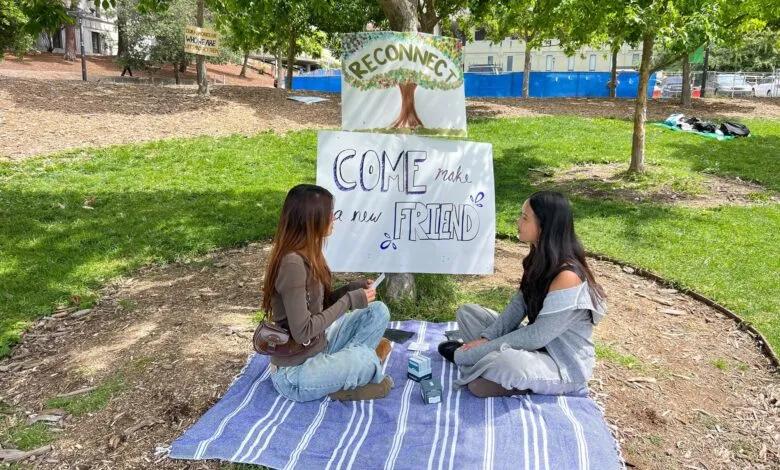
This sentiment is fueling a grassroots movement on campus, led by students who are choosing to disconnect. Third-year students Ashlyn Torres and Izzy Newman, for instance, learned about a recent phone-free gathering not through Instagram or TikTok, but from a physical flier. Torres made a deliberate choice to leave her phone at home before attending. “It was different this morning because I was able to recognize there is life around me,” she explained. “And we probably should talk to each other more and just listen to what the world has to offer rather than just what our phones have to offer.”
Another student organizer, third-year Jonny Vasquez, has become a visible advocate for reducing screen time on campus. His method is decidedly low-tech: he stands in a busy area holding a sign that reads, “Lowest screentime contest.” The reaction has been telling. “People would either completely ignore the sign,” Vasquez recalled, “or they would come up and say, ‘Oh my goodness, I’ve been waiting for someone to help us with this.’” Since deleting his own social media accounts, Vasquez reports a notable drop in social comparison and a greater overall satisfaction with his life, a feeling he is eager to share with peers.
The movement is also practical. Students have been swapping tips for creating distance from their phones, such as plugging the device in an out-of-reach spot overnight, turning it off completely during social interactions, and building a community of like-minded individuals for accountability.
For many, the fight is deeply personal. One student named Kelly framed the effort as a reclamation of agency. “These are the peak years of our lives, and they’ve been stolen from us by companies that are making billions and billions of dollars every single year to take as much of our time as possible,” she said. “We have to fight back, and we fight back by connecting and engaging in a life that we should have been living from the beginning.”
(Source: KQED)