OpenAI Teams Can Build Custom Autonomous Work Bots

▼ Summary
– OpenAI is launching cloud-based “workspace” agents for its Business, Enterprise, Edu, and Teachers plans to perform tasks like finding web feedback or drafting emails.
– This release follows growing industry interest in AI agents, spurred by competitors like Anthropic’s Claude Cowork and the viral OpenClaw project, whose founder now works at OpenAI.
– These shared agents are designed for organizational use, allowing teams to build, use in tools like Slack, and improve them over time while following set processes.
– The new agents may replace OpenAI’s custom “GPTs,” which the company describes as an evolution, with plans to allow easy conversion from GPTs to workspace agents.
– OpenAI states that GPTs will remain available during a testing period for workspace agents, with a spokesperson directing inquiries back to the official announcement.
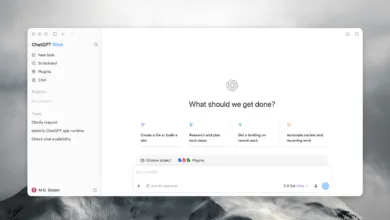
OpenAI has expanded access to its cloud-based workspace agents, making them available to users on Business, Enterprise, Edu, and Teachers plans. These autonomous AI agents operate within ChatGPT and are designed to handle a variety of business tasks. Examples include an agent that scours the web for product feedback and compiles a report in Slack, and a sales assistant that drafts follow-up emails directly in Gmail. This move represents a significant step in bringing task automation directly into collaborative work environments.
The launch capitalizes on growing industry momentum around AI agents, a trend amplified by the viral success of OpenClaw. That agent, which rebranded from Clawdbot and Moltbot, famously promotes itself as the “AI that actually does things.” Notably, OpenClaw’s founder, Peter Steinberger, is now employed by OpenAI. The company is also navigating a competitive landscape, with rivals like Anthropic offering its Claude Cowork agent for desktop task automation and a separate platform for building autonomous agents.
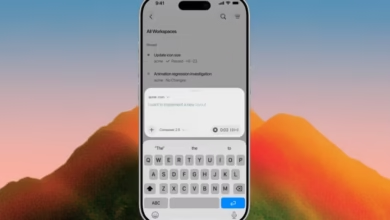
A key feature of these new tools is their shared workspace functionality. Teams can construct a single agent, deploy it across their organization in ChatGPT or Slack, and collectively refine its performance. According to OpenAI, the agents are engineered to pull context from various systems, adhere to established team protocols, request human approval for critical steps, and maintain workflow continuity across different software applications.
This development, however, suggests a potential sunset for OpenAI’s earlier custom GPTs, the tailored chatbots introduced in 2023. The company frames workspace agents as a natural evolution of that concept. For now, GPTs will remain accessible as organizations evaluate the new agents within their operational processes. OpenAI has also indicated it will soon provide a straightforward method for teams to convert existing GPTs into workspace agents. When asked for further details, a company spokesperson referenced the official blog announcement without offering additional commentary.
(Source: The Verge)