New Glenn’s third launch places satellite in incorrect orbit
▼ Summary
– Blue Origin successfully re-used a New Glenn rocket booster for the first time, but the mission failed to deliver a customer satellite to its correct orbit.
– The AST SpaceMobile satellite was placed into a lower-than-planned orbit, will be de-orbited, and its loss is covered by insurance.
– This marks the first major failure for the New Glenn program, which only began flying customer payloads recently.
– The failure could impact Blue Origin’s ambitions to become a key launch provider for NASA’s Artemis moon missions.
– The company had considered using this launch for its own lunar lander test but chose the satellite mission instead.
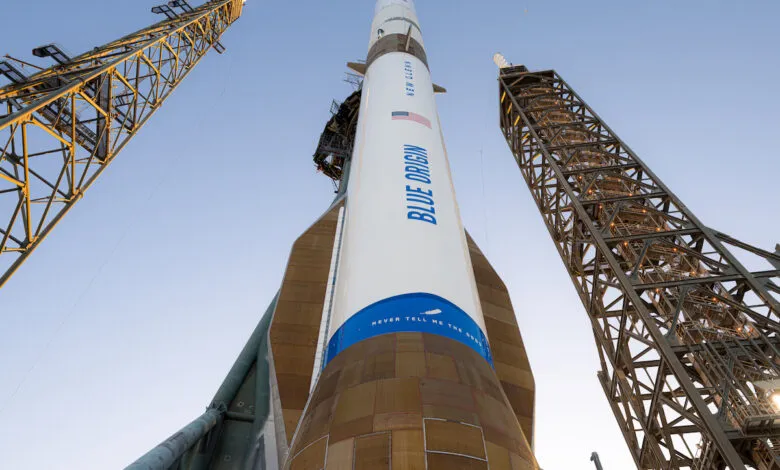
Blue Origin achieved a significant milestone with the first successful re-flight of its New Glenn booster this past Sunday, yet the mission ultimately fell short of its primary objective. The rocket failed to deliver the AST SpaceMobile BlueBird 7 communications satellite to its intended orbit, marking a notable setback for the company’s commercial launch ambitions. While the booster performed flawlessly, landing on a drone ship after launch, the upper stage underperformance resulted in the satellite being released into a lower, unsustainable trajectory.
AST SpaceMobile confirmed the satellite separated and powered on, but the orbit is too low to support operations. The spacecraft is now destined for a controlled de-orbit and will burn up in Earth’s atmosphere. The company stated the financial loss is covered by its insurance policy and noted that subsequent BlueBird satellites are nearing completion, with launches planned through other providers. AST SpaceMobile maintains an aggressive schedule, aiming to launch 45 more satellites by the end of 2026.
This incident represents the first major mission failure for New Glenn, a heavy-lift rocket that debuted just over a year ago in January 2025. The program’s third flight was only its second carrying a customer payload, following a successful NASA Mars mission last November. The implications extend beyond immediate commercial contracts. Blue Origin is vying to become a key launch provider for NASA’s Artemis program, which aims to return humans to the Moon. Both NASA and the current administration have emphasized the urgency of landing robotic landers on the lunar surface within the next few years.
Company leadership, including CEO Dave Limp, has publicly committed to moving “heaven and Earth” to support NASA’s timeline. Blue Origin recently completed testing on its own Blue Moon lunar lander prototype, which it had considered launching on this very New Glenn mission before opting for the AST SpaceMobile payload. A demonstration launch of that lander is anticipated later this year.
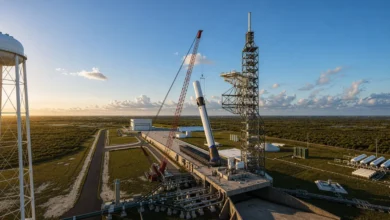
Sunday’s launch from Cape Canaveral appeared nominal initially, with the reused first stage performing a precise landing. Founder Jeff Bezos even shared footage of the event on social media. However, roughly two hours after liftoff, Blue Origin acknowledged the off-nominal orbit insertion in a brief statement and has not provided further details since.
The decision to fly commercial payloads on these early New Glenn missions was seen as a vote of confidence in the rocket’s lengthy development. This approach contrasts with competitor SpaceX’s strategy for its Starship system, which has carried only test masses during its ongoing flight test campaign. It is worth remembering that even established programs encounter failures. SpaceX lost payloads on its Falcon 9 rocket years into its operational life, including a 2015 in-flight failure that destroyed a space station cargo ship and a 2016 pad explosion that claimed a satellite.
(Source: TechCrunch)