Artemis II Ends: NASA’s Next Steps for Moon Missions

▼ Summary
– The Artemis II mission successfully concluded with the crew’s spacecraft splashing down in the Pacific Ocean after a 700,000-mile journey around the Moon.
– NASA has revised its plans for Artemis III and IV, adding a stepping-stone mission before attempting a human lunar landing.
– The Space Launch System rocket performed with high accuracy for Artemis II, and hardware for the next mission is being delivered.
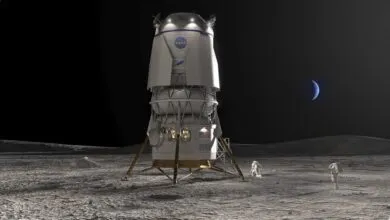
– Future Artemis missions will involve more complex operations, including coordinating multiple vehicles for a lunar landing.
– NASA officials state that the work ahead for the lunar landing program is greater than what has already been accomplished.
The successful splashdown of the Artemis II spacecraft in the Pacific Ocean this week marks a pivotal moment for human spaceflight. After a journey spanning over 700,000 miles around the Moon, the mission’s conclusion signals humanity’s confident return to deep space exploration after a gap of more than fifty years. While this achievement is a spectacular testament to engineering and international partnership, it represents just the opening chapter. The path ahead is far more complex and demanding.
NASA officials have been candid about the challenges. The recently concluded mission, while a monumental success, was the most straightforward step in the broader Artemis Program. As one NASA leader stated after the landing, the work ahead is greater than the work already completed. The agency has already adjusted its roadmap, inserting a new stepping-stone mission before the planned lunar landing to ensure all systems are thoroughly proven. The next phases will involve orchestrating multiple spacecraft and mastering the intricate dance of landing on another world, a task of exponentially greater difficulty.
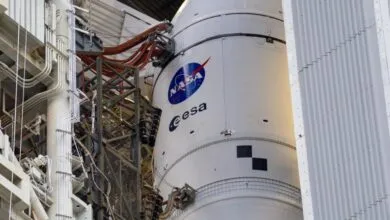
Central to this effort is the Space Launch System (SLS) rocket, which performed with exceptional precision during the Artemis II launch earlier this year. Its accuracy in delivering the Orion spacecraft to its target orbit exceeded 99 percent, providing a strong foundation for future flights. Hardware for the next mission is already progressing, with the core stage for Artemis III scheduled to depart its Louisiana factory imminently for transport to Florida’s Kennedy Space Center. Other rocket components are either on site or will arrive shortly.
However, the infrastructure supporting these launches also requires attention. The Mobile Launch Tower used for Artemis II sustained moderate damage and must now undergo refurbishment. It will be moved back to the Vehicle Assembly Building for repairs before it can be prepared for stacking operations with the next SLS rocket. This necessary maintenance underscores the meticulous preparation required for each launch campaign. Every element, from the massive rocket to the ground systems, must be in perfect condition to support the more ambitious objectives ahead, including the complex orchestration of a human lunar landing.
(Source: Ars Technica)