Server-Side Tagging: When It Benefits Your Brand
▼ Summary
– Server-side tagging moves tracking scripts from the visitor’s browser to a server you control, allowing the browser to send data to a first-party endpoint instead of directly to third parties.
– This approach provides more control over data, improves website performance by reducing browser load, and offers better alignment with privacy regulations like GDPR and CCPA.
– Key benefits include the ability to filter or enrich data before sending it to platforms, standardize events, and improve tracking accuracy by bypassing some ad blockers.
– Implementation can be done internally with technical resources or through managed service providers like Elevar or Littledata, which offer different levels of support and specialization.
– It is particularly valuable for brands with strict compliance needs, heavy investment in paid media, or a focus on site performance and reliable data for optimization.
The digital marketing landscape is shifting rapidly. Stricter privacy regulations, widespread ad blockers, and the demand from advertising platforms for higher-quality data are forcing brands to rethink their approach to user tracking. Server-side tagging has emerged as a powerful solution to these challenges, offering a way to collect cleaner, more reliable data while enhancing site performance and supporting compliance. This method fundamentally changes where and how your tracking operates, moving critical processes from the visitor’s browser to a server you control.
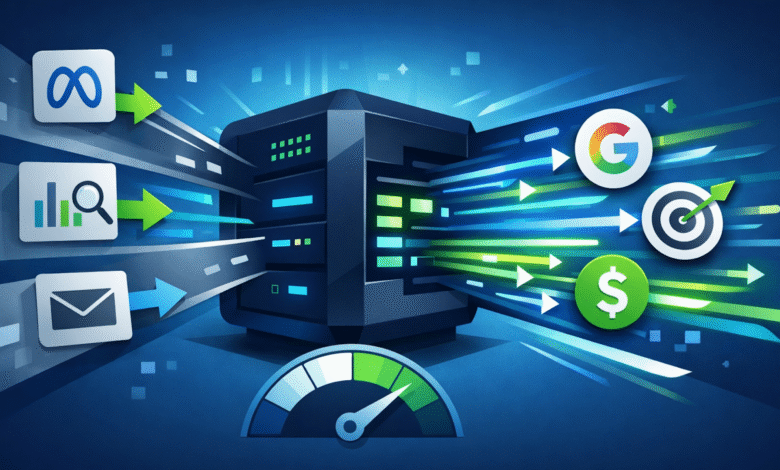
Traditionally, tracking scripts from platforms like Meta or Google Analytics execute directly within a user’s web browser, a method known as client-side tagging. With a server-side approach, these scripts run on your own server infrastructure. Instead of a browser sending data directly to numerous third-party endpoints, it sends events to a single, first-party server endpoint, often a Google Tag Manager server container. This server then processes, enriches, and routes the data to your analytics and ad tools. This architecture provides greater control over the data pipeline, improves page load performance by reducing browser workload, and offers better alignment with evolving privacy laws.
Beyond these core benefits, server-side tagging introduces significant flexibility for data management. You can standardize event names, filter out irrelevant or low-quality interactions, and append custom parameters to improve audience segmentation. This creates a unified data foundation across platforms like Meta Ads, Google Ads, and Klaviyo, leading to stronger optimization signals and more confident marketing decisions.
Determining if this approach is right for your brand depends on specific needs and goals. It is particularly advantageous in several key scenarios. If you operate under strict privacy compliance requirements like GDPR or CCPA, server-side tagging provides superior control over data processing. You can apply consent logic, filter or hash sensitive information, and precisely control which data is shared with each platform based on user permissions. For brands focused on user experience and SEO, shifting data processing off the browser results in faster website performance, which can directly improve conversion rates and reduce bounce rates. Furthermore, because server-side requests originate from your own domain, they can bypass many ad blockers, leading to more accurate tracking and more reliable data for platform algorithms, a critical factor for effective attribution.
The decision becomes especially crucial for brands with substantial investments in paid media. When you are spending heavily on channels like Meta or Google Ads, data accuracy directly impacts return on ad spend. Server-side tagging helps ensure conversion events are delivered consistently, allowing advertising algorithms to learn faster and optimize toward higher-value customers.
Implementation generally follows one of two paths. You can opt for an internal setup, which offers full control but demands significant technical expertise for building and maintaining the infrastructure on a platform like Google Cloud Run. Alternatively, using a dedicated server-side tagging service like Elevar or Littledata provides a managed, turnkey solution. These providers handle the infrastructure, updates, and complex edge cases, allowing marketing teams to focus on strategy rather than engineering.
Direct experience with these providers reveals distinct ideal use cases. Littledata often serves as a strong entry point, particularly for emerging Shopify brands with moderate paid media budgets and a focus on owned channels like email and SMS. Its affordability and straightforward setup make improved attribution accessible. However, in high-performance environments where large paid media spends depend on pixel-perfect in-platform reporting, some brands may encounter limitations with data alignment.
This is where a solution like Elevar becomes relevant. As brands scale their paid acquisition and optimize toward specific return on ad spend targets, the margin for tracking error diminishes. Elevar is designed for this stage, offering more advanced data enrichment, deeper platform integrations, and specialized support to ensure data precision for sophisticated bidding strategies.
Adopting server-side tagging is both a technical upgrade and a strategic investment. It supports privacy compliance, enhances site speed, and crucially, future-proofs your measurement stack as browsers phase out third-party cookies and platforms increasingly prioritize first-party data. The ultimate goal is not merely to recover lost data points but to build a resilient, adaptable framework for measurement. By taking ownership of your data pipeline and reducing reliance on fragile browser-based signals, you gain a long-term advantage, enabling clearer insights, stronger attribution, and more confident optimization across every marketing channel.
(Source: Search Engine Land)