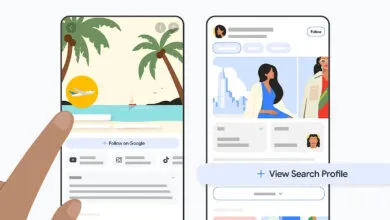
Flipboard Launches Surf: A Social App and Feed Reader
▼ Summary
– Surf is a multi-purpose app that functions as a fediverse client for platforms like Bluesky and Mastodon, a feed reader for websites and podcasts, and a tool for creating curated content feeds.
– The app officially launched on the web, featuring “social websites” where users can find content and community discussions, with posting enabled through hashtags.
– Users sign up with existing Mastodon or Bluesky accounts, and Surf aggregates content from multiple open protocols and the web into a single searchable interface.
– Interactions within Surf, such as liking or commenting, are executed through the user’s connected social accounts, integrating with the underlying fediverse infrastructure.
– Surf presents content in varied, media-rich formats like video-first feeds and magazine layouts, offering an alternative to traditional algorithmic timelines by emphasizing human curation.
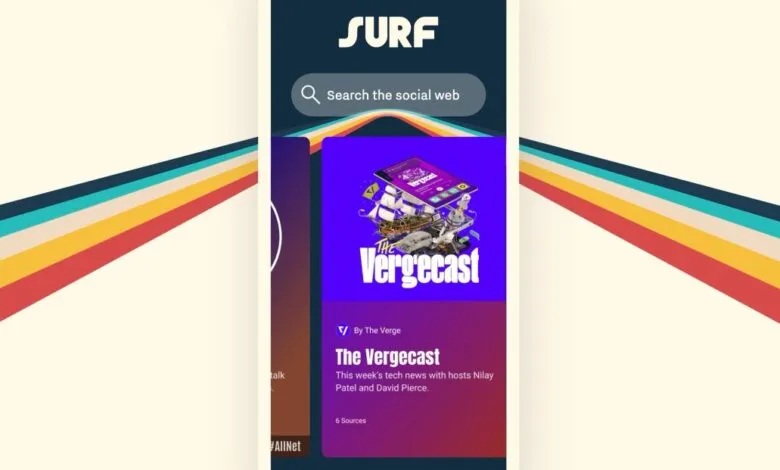
Flipboard has officially launched its new platform, Surf, a multifaceted tool that reimagines how we discover and interact with online content. This new service functions as a fediverse client, a comprehensive feed reader, and a content curation tool, all rolled into one. It aims to serve as a unified browser for the open social web, connecting users to platforms like Bluesky and Mastodon while letting them subscribe to websites, podcasts, and YouTube channels. After an extensive beta period, Surf is now publicly available on the web, with mobile applications in development.
The platform introduces the concept of “social websites.” For instance, a user visiting a partner’s page, such as one for a specific podcast, will find recent episodes alongside real-time social discussion about the content. Community interaction is driven by hashtag-based posting, a core organizational principle for Surf. Moderators of these feeds have tools to shape the conversation and control what is displayed. Signing up is streamlined through existing Mastodon or Bluesky accounts, after which users can create a Surf profile to manage everything in one place.
Once inside, the powerful cross-protocol search allows users to find and curate from billions of posts across ActivityPub, AT Protocol, and the wider web. The technical backend is designed to be invisible, with Flipboard’s role being to seamlessly aggregate content regardless of its origin. Users can follow feeds curated by others or create and share their own collections.
The integration with the underlying social infrastructure is where Surf becomes particularly innovative. Actions within the app are not isolated. Liking a post or leaving a comment is performed directly from your connected social account. Adding an item to a Surf feed might simultaneously generate a post on Mastodon. This highlights the federated social network model, which promises a single identity for posting across the internet instead of managing separate profiles on numerous platforms. While the mechanics are powerful, the ecosystem is still evolving to make this vision intuitive for everyone.
Fundamentally, these networks can be seen as vast, structured databases of user content. Most apps present this as a dense, chronological timeline. Surf offers a different experience. It provides video-first feeds with large previews, transforms podcast listings into a functional player, and displays links in a magazine-style layout. A standout feature is the ability to filter feeds by content type, allowing users to search for a topic and view only videos or only articles, all curated by people across the fediverse.
Having used Surf since its early stages, the platform demonstrates significant potential. The experience can feel like the engaging, endless scroll of a video app, but with a crucial difference: the feed is shaped by human curators rather than a proprietary algorithm. Flipboard is building a business around this model, yet the system remains open by design. The content and connections exist on the independent protocols, meaning they would persist even if Surf itself were to disappear. At a moment when major platforms often feel opaque and unstable, Surf represents a compelling and more resilient alternative for navigating the social web.
(Source: The Verge)