AI Startup ALSO Raises $200M at $1B Valuation
▼ Summary
– ALSO, a small electric vehicle company spun out from Rivian, raised $200 million in a Series C funding round led by Greenoaks Capital, achieving a valuation over $1 billion.
– DoorDash made a strategic investment and signed a multi-year commercial agreement to develop and deploy ALSO’s purpose-built autonomous delivery vehicles at scale.
– The company’s vehicles, like the TM-Q cargo EV, are designed from scratch for last-mile delivery in dense urban spaces, not retrofitted onto existing platforms.
– DoorDash co-founder Stanley Tang will join ALSO’s board as an observer, and the partnership provides a major operational network for real-world deployment.
– ALSO plans to begin delivering its initial products in the United States in 2026, marking a serious attempt to deploy these vehicles commercially through a high-volume operator.
A Palo Alto-based company focused on small electric vehicles has secured a major $200 million investment, propelling it into unicorn status. The Series C funding round, led by Greenoaks Capital with participation from Prysm Capital and a strategic investment from DoorDash, values ALSO at over $1 billion. This capital infusion is paired with a substantive, multi-year commercial agreement with DoorDash to develop and deploy purpose-built autonomous delivery vehicles at scale. DoorDash co-founder and Head of DoorDash Labs, Stanley Tang, will join ALSO as a Board Observer, further cementing the strategic nature of the deal.
Originally incubated within electric vehicle maker Rivian before being spun out as a dedicated entity in 2025, ALSO retains Rivian as a significant minority owner. The company’s core philosophy is that the last-mile delivery environment demands specialized solutions. It argues that navigating bike lanes, tight curbs, and dense urban spaces requires vehicles designed from the ground up for those tasks, rather than retrofitting autonomy onto conventional, larger platforms.
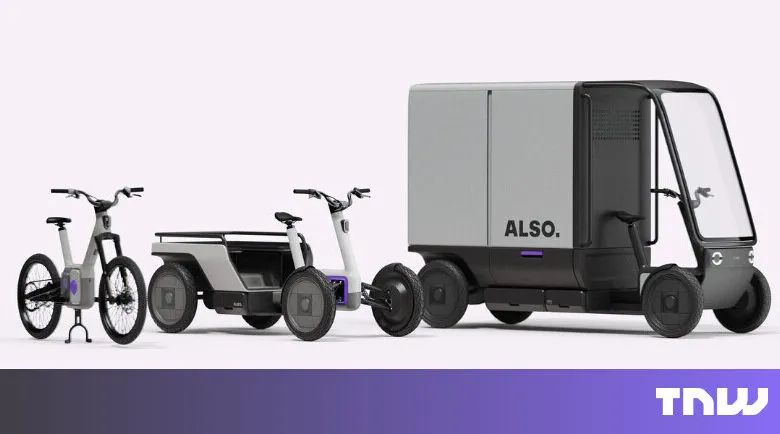
ALSO’s current product lineup illustrates this approach. It includes the TM-B, a $3,500 e-bike featuring a virtual drivetrain, and the TM-Q, a four-wheeled cargo EV built to carry substantial goods while remaining compact enough for a bike lane. While the companies have not specified which vehicles will be deployed under the new partnership, the TM-Q’s cargo capacity positions it as a strong candidate for scaling food and goods delivery.
The structure of the DoorDash partnership is particularly significant, moving beyond a simple financial stake. DoorDash has committed to a concrete commercial agreement with a defined timeline, providing ALSO with immediate access to a massive, real-world operational network for validation. For DoorDash, which now sees over 30% of its U. S. monthly active users ordering from grocery and retail categories beyond restaurants, the incentive is clear. Integrating autonomous vehicles is a strategic path to managing and reducing per-delivery labor costs as the business continues to grow.
Stanley Tang described autonomous small EVs as “optimal” for dense, mixed-use environments, stating the partnership aims to solve delivery challenges specifically “at the intersection of roadways, bike lanes and road adjacent spaces.” ALSO plans to begin delivering its initial products in the United States in 2026, with international expansion to follow. This funding round and the partnership collectively represent one of the first serious, large-scale attempts to deploy specialized autonomous delivery vehicles through an operator with immense existing order volume, shifting the model away from limited pilot programs.
(Source: The Next Web)