Apple II’s Enduring Legacy
▼ Summary
– The Apple II, released in 1977, was Apple’s first major consumer product, a preassembled computer with a keyboard that helped establish the company.
– Its success was significantly boosted by the 1978 addition of an affordable floppy disk drive, which made software easier to use and spurred an explosion in sales.
– The Apple II became a key educational tool and gaming platform, widely adopted in schools and homes to expose children to computing.
– A major driver for business adoption was the 1979 release of the VisiCalc spreadsheet, which was initially exclusive to the Apple II.
– Despite Apple’s repeated attempts to replace it with newer models, the Apple II product line remained in production and sold well until the early 1990s.
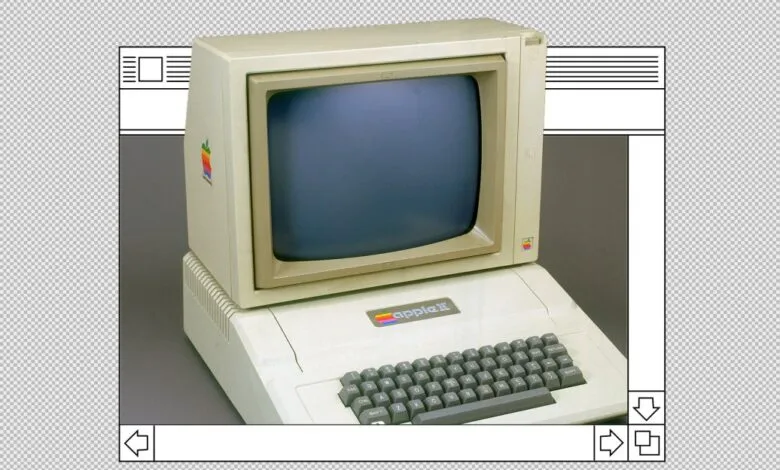
The foundation of Apple’s modern empire was laid not by a sleek smartphone or a minimalist laptop, but by a beige plastic box with a built-in keyboard. Without the Apple II, the company’s first major commercial success, the brand loyalty and cultural impact we associate with Apple today might never have materialized. This machine, emerging from the hobbyist era of the 1970s, transformed a fledgling startup into a powerhouse and defined the early personal computer experience for a generation.
In the mid-1970s, computing was largely a domain for enthusiasts who assembled machines from kits. Apple’s own first product, the Apple I, was a bare circuit board. A pivotal suggestion from a retailer, however, shifted the strategy. Steve Jobs recognized that a pre-assembled, consumer-friendly package could reach a wider market. This insight led to the 1977 launch of the Apple II, a complete system in a plastic case priced at $1,298. While still primitive, requiring commands typed on a keyboard and often using cassette tapes for storage, it felt like a genuine product in a sea of DIY projects.
A critical breakthrough came with data storage. The slow, unreliable cassette method was a major bottleneck. Steve Jobs sourced partially assembled floppy disk drives, and Steve Wozniak engineered a superior, cost-effective controller. By mid-1978, Apple offered the world’s most affordable disk drive. This innovation catalyzed a software explosion, making it easy to create, save, and distribute programs. The company’s revenue skyrocketed, growing 640% in 1979 alone. Wozniak’s elegant engineering ensured the Apple II was instantly usable, booting directly into the BASIC programming language.
For many families, the computer represented an investment in their children’s future. A pervasive sense that kids needed to “learn computers” drove sales, amplified by Apple’s aggressive push into schools. This created a digital playground where a generation first encountered programming, often starting with simple text loops before graduating to pioneering games like The Oregon Trail and Karateka. The machine’s real transformation into a business tool arrived in 1979 with VisiCalc, the first spreadsheet software. Exclusively available on the Apple II initially, this “killer app” drove sales up tenfold by offering unprecedented productivity to professionals.
Paradoxically, Apple spent much of the 1980s trying to supplant its own cash cow. The Apple III, aimed at business users, was a costly and flawed failure. The company quickly returned to its reliable platform with the improved Apple IIe in 1983. Even as Apple developed revolutionary mouse-driven systems like the Lisa and the Macintosh, the Apple II line persisted. The compact Apple IIc launched alongside the original Mac in 1984, and the advanced Apple IIgs, blending Apple II software with Mac-like graphics, arrived in 1986.
The Apple II’s longevity is astounding; models remained on sale until 1993, years into the Mac era. While the Mac ultimately became the company’s flagship, the long, slow transition was bankrolled by the enduring success of the older platform. The Apple II provided the financial stability and user base that allowed Apple to experiment and eventually succeed with its visionary, graphical future. Its legacy is one of accessible computing, proving that a machine could be both a serious tool and a gateway to creativity, securing Apple’s place in history long before the iPhone was ever imagined.
(Source: The Verge)