New Fishing Tech Cuts Turtle Bycatch
▼ Summary
– Fishing gear like nets and hooks accidentally captures and kills millions of non-target marine animals, including whales and turtles, a problem known as bycatch.
– Bycatch also harms fishermen by damaging equipment, costing money, and hurting fisheries’ reputations.
– While various solutions to reduce bycatch have been developed, implementing them widely remains a significant challenge.
– Some promising and practical mitigation strategies include using lighted nets or attaching simple items like plastic bottles to gear.
– Stakeholders including industry, conservationists, and fishermen generally share the common goal of wanting less bycatch.
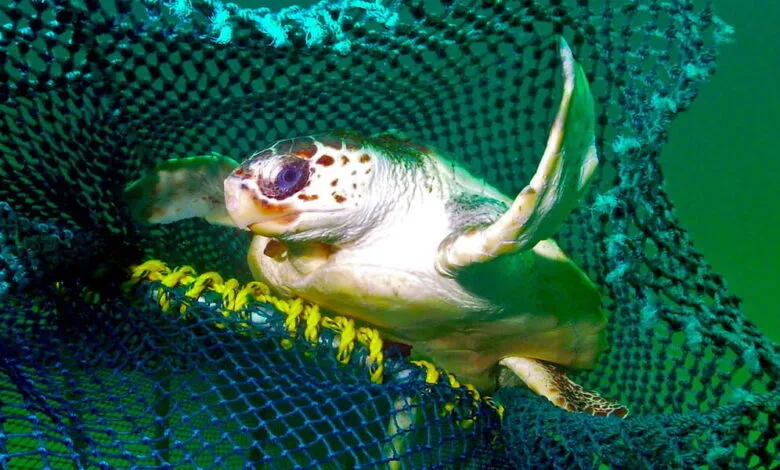
The tools of modern fishing, from nets to longlines, function as remarkably efficient traps in our oceans. While designed to target specific species for harvest, these methods frequently ensnare a wide range of non-target marine life. This unintended capture, known as marine bycatch, results in the deaths of millions of whales, dolphins, sharks, sea turtles, and seabirds annually. Animals can drown, suffer severe injuries, or perish even after being released. For fishing operations, bycatch presents a significant economic burden, damaging expensive gear, wasting valuable time, and harming the industry’s public standing.
For decades, a collaborative effort between conservationists, scientists, and fishermen has yielded various strategies to reduce this collateral damage across global fisheries. Widespread adoption remains a persistent hurdle, with many effective solutions failing to move beyond pilot projects. Yet, several innovative approaches are demonstrating real success. Recent studies highlight the effectiveness of illuminated fishing nets, while even simple modifications like attaching plastic bottles to gear show promise for deterring certain species. These solutions offer the dual benefit of protecting wildlife while remaining practical and cost-effective for crews at sea.
The fundamental issue is not new. “It’s a conflict that’s intrinsic to the whole idea of fishing,” notes marine scientist Nancy Knowlton. “If you have something that’s designed to catch animals, you’re going to wind up, almost always, catching some things that you didn’t mean to catch.” The entanglement threat is severe, as illustrated by animals like the North Atlantic right whale known as Snowcone, who has been observed trailing fishing gear while swimming with her calf.
Despite the complexities, there is a rare alignment of interests driving progress. “There are not very many conservation issues where industry and conservationists and consumers and the fishermen all want the same thing,” observes marine biologist Matthew Savoca. “Every stakeholder wants less bycatch.” This shared goal is fueling continued research and the gradual implementation of bycatch mitigation technology, offering a clearer path toward more sustainable and selective fishing practices that benefit both ecosystems and the people who depend on them.
(Source: Ars Technica)