S27 Ultra S Pen upgrades may be minor
▼ Summary
– Samsung has used the same EMR stylus technology for over 15 years in its Galaxy devices.
– The company tested but decided against using a new stylus technology for the upcoming Galaxy S27 Ultra.
– The newer AES technology requires a battery and makes the stylus thicker, unlike EMR which needs a display digitizer.
– Samsung developed a hybrid technology that needs neither a battery nor a digitizer but has postponed its adoption.
– The shift to the Qi2 wireless charging standard may eventually force Samsung to replace EMR due to magnetic interference.
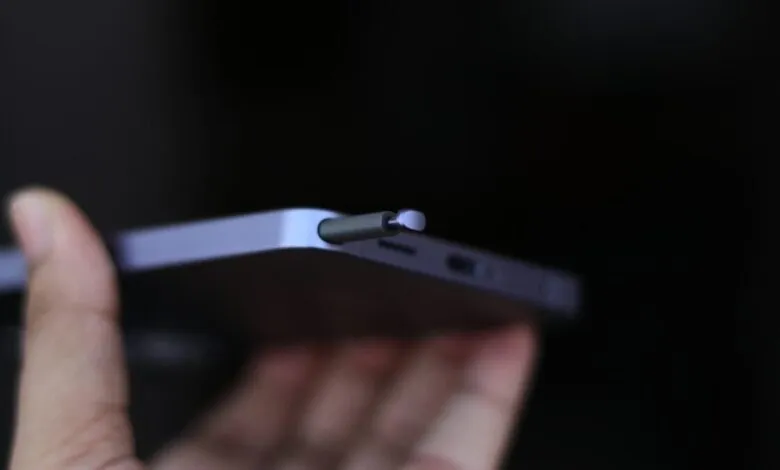
For more than a decade and a half, Samsung’s S Pen stylus has been a defining feature of its premium Galaxy devices. This entire time, the accessory has operated on the same underlying Electromagnetic Resonance (EMR) technology. While recent speculation suggested a major technological shift could arrive with the Galaxy S27 Ultra, new information indicates any upgrades will likely be modest.
According to industry reports, Samsung did explore a newer stylus system for the upcoming flagship but chose not to implement it. The current EMR standard functions by pairing the pen with a specialized digitizer layer embedded in the phone’s display. An alternative technology, known as Active Electrostatic (AES), takes a different approach. AES styluses contain their own internal battery and power system, using the device’s standard capacitive touchscreen to detect input. This method removes the need for a built-in digitizer, but it results in a physically bulkier pen.
Samsung’s engineers apparently worked on a hybrid stylus technology designed to merge the best aspects of both systems. This innovation would theoretically eliminate the requirement for both a battery in the pen and a digitizer in the screen. Development on this solution, however, has been postponed. The specific reasons for the delay remain unclear.
A significant factor pushing Samsung toward a future transition is the new Qi2 wireless charging standard. This technology requires the integration of powerful neodymium magnets within a phone’s chassis, which can create interference with the sensitive EMR system. This inherent conflict suggests that moving away from EMR is inevitable for Samsung’s long-term roadmap. The company appears to be prioritizing refinement, waiting for its next-generation pen technology to reach full maturity before introducing it in a future Galaxy S Ultra model.
(Source: SamMobile)