Samsung Galaxy S26 Ultra Review: A Display of Power
▼ Summary
– The Samsung Galaxy S26 Ultra’s new Privacy Display effectively reduces the author’s feeling of being watched in public by limiting the screen’s viewing angle, though it’s not completely impenetrable.
– The phone features significant camera hardware upgrades, including brighter apertures on the main and telephoto lenses, which improve low-light performance and image sharpness.
– Samsung has implemented new AI features, including a contextual suggestion tool in messaging and a Gemini task automation system, though the generative AI photo editing tools are described as unsettling and weird.
– The S26 Ultra’s design is sleeker and more curved than its predecessor, but it remains a very large phone and lacks built-in Qi2 magnetic charging.
– The reviewer concludes the S26 Ultra is a return to form, offering unique features like the Privacy Display and genuine camera improvements that make it a worthy update for fans of the series.
Using a smartphone in public often comes with a nagging sense that someone might be peeking at your screen. For years, this low-level anxiety has been a constant companion during commutes, flights, or coffee shop visits, even for mundane tasks. The Samsung Galaxy S26 Ultra directly addresses this modern discomfort with its groundbreaking Privacy Display, a feature that genuinely changes the daily user experience. This isn’t just another incremental update; it’s a meaningful innovation that makes the phone’s substantial price tag easier to justify for those who value discretion alongside top-tier performance.
The Privacy Display leverages a technology Samsung calls Flex Magic Pixel to narrow the screen’s viewing angle. When activated, it dims and flattens the image slightly for anyone not looking directly at it. While not absolutely impenetrable to a determined snooper, it effectively shields your activity from casual glances. You can even set it to apply only to notification banners, leaving the rest of your screen normal, a clever touch. The feature offers a standard and a maximum privacy setting, with the latter making angled viewing extremely difficult, albeit with a more noticeable impact on contrast head-on. After days of use, I only remembered it was on when someone next to me struggled to see a photo I was trying to show them. This peace of mind is the S26 Ultra’s standout achievement, solving a problem many didn’t fully articulate until they experienced the solution.
Beyond this headline feature, the S26 Ultra remains a powerhouse defined by its comprehensive, no-compromise approach. It continues to house a versatile quad-camera system and the beloved built-in S Pen stylus. This year, however, the camera hardware receives a significant, welcome upgrade. Both the main 200-megapixel sensor and the 5x telephoto lens feature brighter apertures. In practical terms, this allows the camera to use lower ISO settings or faster shutter speeds in low light, resulting in cleaner, sharper images with less digital noise. Side-by-side tests with its predecessor consistently showed the S26 Ultra capturing better detail in challenging lighting, a tangible improvement that outshines any software trick.
Samsung’s push into AI features is a mixed bag. Helpful tools like Now Nudge, which suggests calendar events based on text conversations, show promise despite limited availability. A new Gemini task automation feature, which can perform simple app-based actions like ordering a ride, is intriguing and implemented with sensible user-review steps. However, the generative AI photo editing tools within the gallery app feel unsettling. The ability to radically alter reality, changing outfits, adding people, or creating entirely fictional scenes, undermines the trust we place in photographs. While basic guardrails prevent explicit content generation, the philosophical shift from “photos as memories” to “photos as anything” is a disconcerting direction.
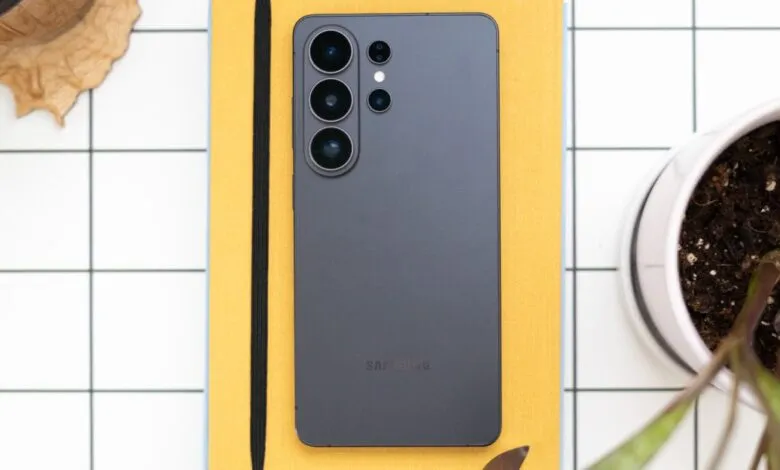
Physically, the phone refines last year’s design with softer curves, moving further from the Note’s boxy heritage. The build is premium, with a smoother seam between the glass and aluminum frame. It’s still undeniably large at 6.9 inches, though the new contours make it slightly more comfortable to hold. A continued disappointment is the lack of built-in Qi2 magnets for accessories, a feature still reserved for Samsung’s official cases. The S Pen silo’s placement on the corner gives the stylus a subtle curve, creating a definitive right and wrong way to insert it, a minor quirk for stylus enthusiasts.
For the past few iterations, the Ultra line seemed to be searching for its identity. The Galaxy S26 Ultra reclaims it by delivering genuine innovation where it counts. The Privacy Display is a legitimately useful first, the camera improvements are rooted in superior physics rather than AI gimmicks, and the overall package feels cohesive again. It remains a big, expensive device aimed at users who want every possible feature. But for that audience, this is finally the substantial, forward-thinking update that the “Ultra” moniker promises.
(Source: The Verge)