Nuro Tests Driverless Delivery Tech on Tokyo Streets
▼ Summary
– Nuro, a Silicon Valley startup, has begun its first overseas testing of autonomous vehicle technology in Tokyo, Japan, using Toyota Prius cars with human safety operators.
– The company faces new challenges in Japan, including left-side driving, dense traffic, and different road signs, but its AI model navigated without prior training on Japanese data.
– Nuro shifted its business model in 2024 from building low-speed delivery bots to licensing its self-driving software to automakers and mobility providers.
– The startup’s technology is based on an end-to-end AI foundation model, which it calls “zero-shot autonomous driving,” allowing it to learn as it drives.
– Nuro has secured significant funding from investors like Nvidia and Uber, raising $203 million last year as part of its Series E financing round.
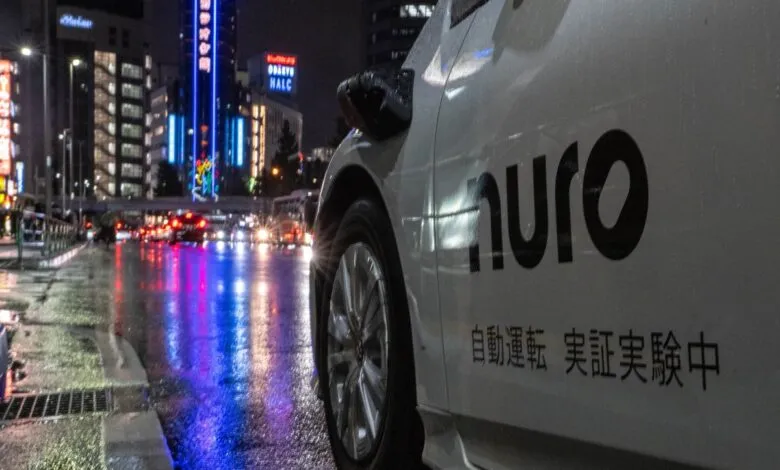
A Silicon Valley startup, backed by major names in technology and investment, has begun testing its autonomous vehicle software on the public roads of Tokyo. This move represents the company’s first international expansion, signaling a significant step in its strategy to deploy self-driving technology globally. The initial tests involve modified Toyota Prius cars, which currently have human safety drivers onboard as a precautionary measure.
Nuro, founded by former Google self-driving project engineers, is conducting these trials to adapt its system to Japan’s unique driving environment. This includes navigating left-side traffic, dense urban conditions, and different road signage. The company, which established a Tokyo office last year, has not specified the size of its test fleet or a timeline for removing the human safety operator. In a recent announcement, Nuro suggested this is just the beginning, stating that operations in Tokyo mark “the beginning of the compounding benefits of global deployment.”
The company originally gained attention for its purpose-built, low-speed delivery robots. After securing a substantial $940 million investment from the SoftBank Vision Fund in 2019, Nuro later shifted its business model. Faced with high development costs and industry consolidation, the startup pivoted in 2024. It discontinued its own delivery bots and now focuses on licensing its autonomous driving software to other automakers and mobility service providers.
A key aspect of Nuro’s technology is its end-to-end AI foundation model, which the company claims enables “zero-shot autonomous driving.” This approach allowed its software to navigate Tokyo’s streets without prior training on specific Japanese driving data, learning instead from its general driving experience. This strategy mirrors that of other AI-focused autonomous vehicle firms, such as the U.K.’s Wayve.
Nuro emphasizes that this broad AI capability does not compromise safety. The company employs a rigorous validation process, including closed-course testing and extensive simulation for edge cases. When vehicles are first introduced to new roads, the software runs in a “shadow mode.” In this phase, the AI model generates driving decisions, but these commands are not executed; a human driver remains in control. Engineers analyze the system’s performance in this state to determine when it is ready for fully autonomous operation.
The company’s strategic pivot and technological approach continue to attract investor confidence. Last year, Nuro raised $203 million in a Series E funding round. Participants included existing investor Baillie Gifford and new backers such as Icehouse Ventures and Kindred Ventures. Notably, Nvidia also invested, and Uber committed to a “multi-hundred-million-dollar” investment as part of a broader partnership involving electric vehicle manufacturer Lucid.
(Source: TechCrunch)