OpenAI’s AI Coding Assistant Launches on Windows
▼ Summary
– OpenAI has launched a native Windows desktop app for Codex, its AI coding tool that uses ChatGPT-powered agents to generate code from natural-language prompts.
– The tool allows users to adjust the autonomy level of its AI agents, from requiring approval for every action to fully automated coding.
– Codex supports complex project planning, connects to local directories and GitHub repositories, and can manage multiple coding tasks simultaneously in a single workspace.
– It is a free tool that competes with similar offerings like Anthropic’s Claude Code and Google’s Antigravity.
– Despite being free, high usage can quickly consume token allowances, even for users on paid ChatGPT subscription plans.
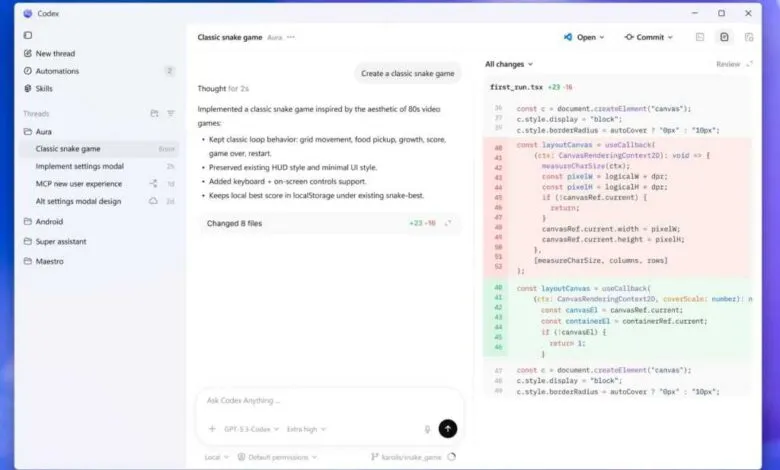
Windows users now have a powerful new tool for software development with the launch of OpenAI’s native desktop application for Codex. This AI-powered coding assistant transforms natural language instructions into functional code, bringing the capabilities previously available on macOS directly to the Windows platform. The tool represents a significant step in making advanced AI development assistance more accessible, allowing programmers to delegate complex tasks to intelligent agents.
Crafting applications with AI assistance has surged in popularity, and this release provides Windows developers with a dedicated workspace. Users can direct multiple AI agents simultaneously to handle different programming tasks, all within a single interface. The system connects to both local project directories and remote GitHub repositories, enabling it to analyze existing codebases before suggesting modifications or generating new features.
The core functionality revolves around specialized versions of ChatGPT that act as coding agents. You simply provide a prompt, ranging from a simple file system query to a complex request like building an audio transcription application. Beyond writing code, these agents can plan intricate project roadmaps, outlining their proposed steps for review and adjustment before any code is executed. This pre-planning feature helps maintain control over complex development workflows.
A key aspect of Codex is its adjustable autonomy. Developers can configure agents to require explicit approval for every action, ensuring close oversight. Alternatively, they can grant full autonomy, though this approach can lead to unpredictable results and higher costs. For safety, the platform supports worktrees that sandbox an agent’s output, allowing thorough testing before changes are merged into a live production environment.
The application’s interface includes a sidebar to monitor multiple concurrent chats, effectively letting you manage several AI agent teams working on separate projects. Notifications alert you when an agent requires input or approval for a pending action. This facilitates a parallel workflow that can significantly accelerate development cycles.
Codex enters a competitive field alongside tools like Anthropic’s Claude Code and Google’s Antigravity. While Claude offers both command-line and desktop components, and Antigravity supports agents powered by various models including Gemini and GPT-OSS, OpenAI’s solution integrates deeply with its own ecosystem. All these platforms, including Codex, offer free access with basic accounts, but they impose strict usage limits.
A critical consideration is the rapid consumption of computational resources, or tokens, by AI coding agents. Even users on paid subscription plans, such as ChatGPT Plus or the professional tier, may find their monthly allowances depleted quickly during active development sessions. This operational cost is an important factor for developers planning to integrate such tools into their daily workflow.
(Source: PC World)