Honor’s Robot Phone: A Quirky Camera, Not a Great Robot
▼ Summary
– Honor’s “Robot Phone” is primarily a smartphone featuring a 200-megapixel camera mounted on a retractable, AI-powered gimbal arm for enhanced stabilization and subject tracking.
– The phone’s key hardware innovation is a remarkably small 4DoF gimbal system, made possible by using ultra-thin and ultra-strong materials repurposed from foldable phone hinge technology.
– While the gimbal provides stabilized video and unique shooting modes, its value versus software-based stabilization solutions like Samsung’s will depend on final camera quality and cost.
– The “robot” aspect is currently minimal, centered on an LLM chatbot with basic gestures, with Honor suggesting future potential for the device to act as a mobile companion.
– The phone is confirmed for a release in China later this year, with a global launch being a possibility but not guaranteed, and its marketing focus may differ by region.
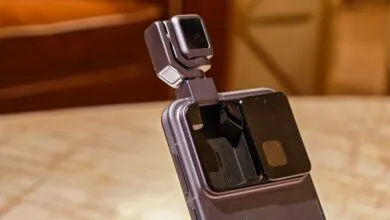
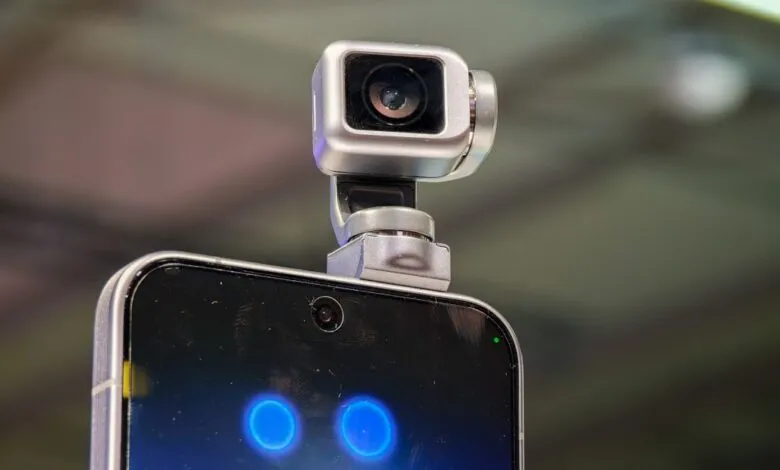
After months of anticipation, Honor’s Robot Phone has finally been shown in action. The device presents a compelling hardware innovation, though its name might set unrealistic expectations. The core feature is not a robotic companion, but a sophisticated 200-megapixel camera mounted on a retractable gimbal arm. This mechanism folds out from the phone’s body for use and tucks away behind a cover when not needed, offering a unique blend of smartphone and stabilized camera system.
The gimbal enables a suite of features familiar to users of handheld stabilizers like the DJI Osmo Pocket. It provides significantly improved video stabilization, allowing for smoother footage. Users can manually control the arm to pan and tilt the camera or rely on AI-powered subject tracking, which can follow a subject through nearly a full 360-degree rotation, effectively turning the main camera into a high-quality selfie shooter. Automated shooting modes, such as a spinning “spin shot,” are included, with promises of future AI-driven video editing tools.
For content creators, the appeal is clear: a single pocketable device that can capture professional-looking stabilized video and handle editing. For everyday users, it promises a phone with notably better video performance and selfie quality from the primary sensor. The engineering behind the gimbal is a feat in itself. Honor claims it is 70 percent smaller than competing gimbal systems, making it the industry’s smallest 4DoF (four degrees of freedom) gimbal. This miniaturization presented significant challenges.
Thomas Bai, a product expert at Honor, explained that shrinking the gimbal required sourcing ultra-thin yet strong materials for the motors to ensure both lightness and durability. The company leveraged expertise from its foldable phone division, repurposing steel and titanium alloys from its Magic V6 hinge to construct the micro motors that drive the arm. The inherent risk is whether a smaller gimbal compromises performance. At its MWC demonstration, Honor compared the Robot Phone’s stabilization against a flagship Vivo phone, a leader in software-based stabilization, and the gimbal system appeared to deliver substantially steadier video during dynamic movements like spins or walking on a treadmill.
The timing of this launch is interesting, coming just after Samsung unveiled its Horizon Lock software stabilization on the Galaxy S26 series, which effectively counters shakes and rotation. A key test for Honor will be whether its complex, and likely more expensive, hardware solution offers enough of a quality advantage over sophisticated software alternatives to justify its cost and potential fragility. Much hinges on the quality of the camera sensor itself, details about which remain scarce beyond the high megapixel count.
Beyond stabilization, the gimbal enables other capabilities. The subject tracking appeared responsive in demos, though it could lose a fast-moving target. The stable platform should also benefit low-light photography, though Bai noted that stable video recording was the primary challenge the Robot Phone aimed to solve, as low-light performance is already strong on the company’s flagship devices.
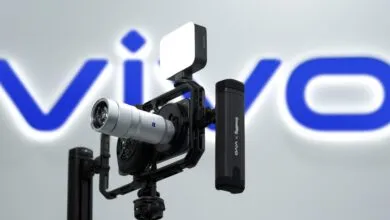
This focus on video as a key differentiator is echoed in the market. Rival Vivo used MWC to preview its X300 Ultra, emphasizing video features like 4K 120fps recording across all lenses and introducing an official camera cage accessory made with SmallRig for steady, modular shooting. Vivo’s approach leans more toward professional workflow integration, while Honor’s targets on-the-go creators, but both strategies highlight that superior video performance is now a critical battleground for premium smartphones.
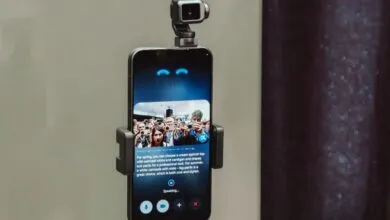
Noticeably absent from substantial discussion is the actual “robot” aspect of the Robot Phone. The only demo provided was essentially an LLM-powered chatbot app, enhanced with cute noises and simple physical gestures like nodding its “head.” You could ask about your outfit or request music, prompting the phone to dance, in the demo, it had a puzzling exclusive preference for Imagine Dragons.
Bai mentioned the company is developing a backpack clip accessory, envisioning scenarios where the phone could act as a tour guide or conversational partner during walks. He described a vision of “multimodal perception,” where the device responds through motion, sound identification, and visual tracking for a more natural interaction. However, Honor’s vision for this relationship seems fluid. Descriptions wavered between calling it a “real companion, humanlike” and suggesting it’s simply something to “make you feel comfortable.” Whether the Robot Phone is meant to be a friend remains an open question, even for its maker.
This ambiguity may stem from cultural differences. Honor confirms the Robot Phone will launch in China in the second half of the year, with a global release merely a future possibility. The concept of companion robots is more established in some Asian markets than in Western ones, where robots are often viewed as either tools or sci-fi antagonists. This likely explains why the Chinese marketing heavily emphasizes its role as an “ever-present companion” with “emotion.” Should the phone ever reach other regions, expect the pitch to focus far more on its innovative camera system than on its personality.
(Source: The Verge)