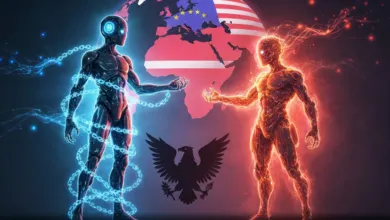
OpenAI’s Pentagon Deal Realizes Anthropic’s AI Fears
▼ Summary
– The US government condemned Anthropic for restricting its AI model Claude from military uses like autonomous weapons, with the Defense Secretary calling it a betrayal and ordering a halt to government collaboration.
– OpenAI’s position appears conflicted, as it claims it will use leverage to act ethically but also defers to legal boundaries for Pentagon use of its technology.
– A key concern is whether OpenAI’s stance will satisfy its critical employees, who may view the company’s justification as an unacceptable moral compromise.
– The Defense Secretary launched an aggressive campaign against Anthropic, declaring it a supply chain risk and banning US military partners from doing business with it, a move Anthropic vows to legally challenge.
– The Pentagon faces operational challenges in phasing out Claude for military operations, as it was used in strikes on Iran shortly after the ban, highlighting the difficulty of replacing AI systems during active conflicts.
The recent partnership between OpenAI and the Pentagon has brought to the forefront a critical debate simmering within the tech industry: the ethical boundaries of artificial intelligence in military applications. This development starkly contrasts with the stance taken by Anthropic, which recently faced severe government backlash for restricting its Claude model from use in autonomous weapons and mass surveillance. The situation forces a difficult question about corporate responsibility, should private companies unilaterally prohibit uses of their technology that are legal but which they deem morally objectionable?
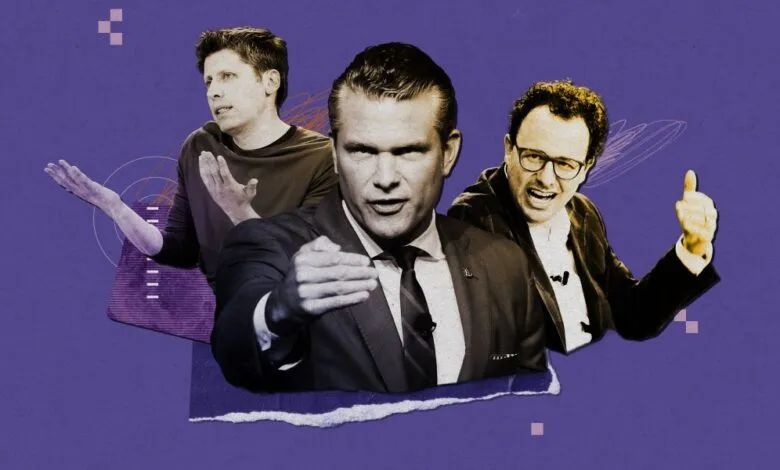
The government’s reaction to Anthropic’s ethical policies was swift and severe. Just hours before U.S. strikes in Tehran, Defense Secretary Pete Hegseth publicly condemned the company, accusing it of “arrogance and betrayal.” His statement on social media aligned with an executive order to halt all government collaboration with Anthropic. Hegseth argued that the Department of Defense requires unrestricted access to advanced AI for every lawful purpose, framing corporate restrictions as an unacceptable impediment to national security.
This puts OpenAI in a precarious position. While the company has historically emphasized safety and ethical guidelines, its new Pentagon contract suggests a different calculus. Observers note the company appears to be balancing on an ideological tightrope, asserting its commitment to responsible AI while simultaneously deferring to existing law as the ultimate boundary for military use. It remains unclear whether this nuanced position will satisfy OpenAI’s own workforce, where some employees may view cooperation with the military as an unforgivable ethical compromise.
Meanwhile, the Pentagon has launched an aggressive campaign against Anthropic that extends far beyond contract cancellation. Hegseth declared the company a supply chain risk, effectively blacklisting it by prohibiting any U.S. military contractor or partner from engaging in commercial activity with Anthropic. Legal experts are actively debating the feasibility of such a sweeping measure, and Anthropic has vowed to pursue litigation if the threat materializes. OpenAI has publicly criticized this punitive approach, highlighting the deep divisions within the sector.
A pressing logistical challenge now emerges for the military. Claude is reportedly the only AI model currently integrated into certain classified operations, including missions in Venezuela. The Pentagon has been given a six-month window to replace it, with plans to phase in models from OpenAI and Elon Musk’s xAI. However, reports indicate Claude was used in strikes against Iran shortly after the ban was announced, signaling that a swift and clean transition may be practically impossible.
This unfolding drama represents more than a simple contract dispute. It is a high-stakes test of the Pentagon’s strategy to accelerate AI adoption, which increasingly pressures tech firms to abandon previously stated ethical red lines. With escalating tensions in the Middle East serving as a primary proving ground, the fundamental relationship between Silicon Valley and the national security apparatus is being renegotiated in real time. The outcome will set a powerful precedent for how artificial intelligence is governed and deployed in an era of great-power competition.
(Source: Technology Review)