6 Overlooked Science Stories You Need to See

▼ Summary
– A team of scientists has revived Thomas Edison’s concept of a nickel-iron battery, creating a new version as detailed in a journal paper.
– The battery’s design was inspired by natural processes, using beef proteins and graphene oxide to form a scaffold for nickel and iron clusters.
– The resulting structure allowed for extremely fast recharging (seconds) and a long lifespan of over 12,000 cycles, equivalent to roughly 30 years.
– However, the battery’s storage capacity remains significantly lower than that of modern lithium-ion batteries.
– The researchers suggest its most promising application is for storing excess electricity from renewable sources like solar farms, rather than for powering electric vehicles.
It’s easy to miss fascinating scientific discoveries in the constant stream of news. Each month, we gather a selection of the most intriguing stories that deserve a second look. This roundup features a forgotten battery concept from Thomas Edison finding new life for renewable energy, a novel device that transforms ordinary underwear into a health monitor, and a surprising experiment where neurons in a dish learned to play a classic video game.
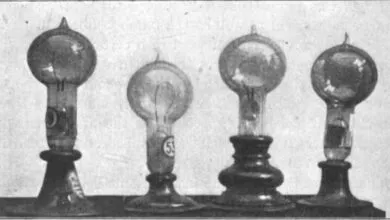
A team of researchers has breathed new life into a century-old battery design originally conceived by Thomas Edison. Back in the early 1900s, electric vehicles running on lead-acid batteries were actually more common than gasoline cars. Their limited range of about 30 miles, however, allowed the internal combustion engine to dominate. Edison believed his alternative nickel-iron battery could achieve a 100-mile range, boast a long lifespan, and recharge in roughly seven hours. Scientists have now revisited this idea, publishing their modern interpretation in the journal Small.
Their innovative approach drew inspiration from natural processes like bone and shell formation, where proteins act as a scaffold for mineral growth. The team replicated this by using proteins from beef byproducts mixed with graphene oxide. They then grew tiny clusters of nickel and iron onto this framework to serve as the positive and negative electrodes. A process involving superheating in water followed by high-temperature baking charred the proteins into carbon. This step removed oxygen atoms from the graphene oxide and permanently embedded the metal clusters, creating a lightweight, porous aerogel structure.
This unique folded architecture confined the metal clusters to sizes smaller than five nanometers. This minute scale creates a vastly increased surface area where the battery’s essential chemical reactions can take place. The resulting prototype demonstrated remarkable performance, recharging in just seconds and surviving over 12,000 charge cycles. That’s comparable to about three decades of daily use. While its energy storage capacity currently lags behind modern lithium-ion batteries, making it less ideal for electric vehicles, the researchers propose it could be perfect for storing surplus power from solar farms and other renewable sources.
Turning to a different field of study, another story involves a rather personal metric of health. A team has developed a small, snap-on sensor designed to attach to standard underwear, effectively creating “smart” garments. This device can monitor gastrointestinal activity by detecting and counting episodes of flatulence. The goal is to provide a discreet, long-term tool for tracking digestive health, offering data that could help diagnose conditions like irritable bowel syndrome or food intolerances, moving beyond patient self-reporting to objective measurement.
In a truly unconventional experiment, scientists have successfully taught a collection of living neurons to play the 1990s video game Doom. By growing a layer of brain cells from mice on a grid of microelectrodes, they created a system they call “DishBrain.” The neurons received electrical inputs representing the game’s environment and could send signals to move the in-game character. Through a feedback loop that rewarded desirable actions, the neural network learned to navigate the game’s simple corridors. This research provides a novel platform for studying how networks of neurons process information and learn.
Another highlight comes from the world of materials science, where researchers have created a new type of ultra-white paint. Unlike standard paints that use titanium dioxide and reflect about 85% of sunlight, this formulation employs barium sulfate particles of different sizes. This structure scatters a broader spectrum of light, reflecting up to 98.1% of solar radiation. When applied to a building’s roof and walls, it can significantly cool surfaces, reducing the need for air conditioning and offering a passive tool for fighting urban heat islands and lowering energy consumption.
Finally, archaeologists made a significant discovery in the Peruvian Andes: a previously unknown network of ancient roads and settlements. Using a combination of satellite imagery, drone surveys, and ground exploration, they mapped extensive pathways and residential complexes built by pre-Inca civilizations. This find is reshaping understanding of the scale and sophistication of societies in the region long before the rise of the famous Inca Empire, revealing a more interconnected and populated landscape than previously documented.
(Source: Ars Technica)