RGB LED TVs Explained: Your 2026 Guide to Next-Gen Tech

▼ Summary
– Micro RGB TVs are expected to offer superior contrast and more natural color than mini-LED rivals, though real-world performance comparisons are pending.
– Hisense introduced a new RGBY mini-LED TV at CES 2026, adding a cyan element to enhance color nuance and claiming over 110% BT.2020 color coverage.
– TCL promoted its Super Quantum Dot (SQD) mini-LED technology as a competitor, emphasizing high brightness and minimized color artifacts compared to RGB LED.
– 2026 is seeing RGB LED TVs become more accessible, with new models from Samsung, LG, and Hisense launching in smaller sizes and at potentially lower price points.
– The TV market is rapidly evolving with RGB LED, SQD, and ongoing OLED advancements, promising brighter, more affordable, and better-looking displays.
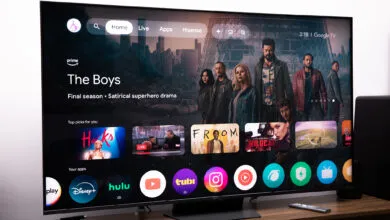
The year 2026 marks a significant turning point for television technology, with RGB LED emerging as a dominant force in the premium display market. This next-generation backlighting promises to deliver superior picture quality through enhanced contrast and color performance, moving beyond the capabilities of traditional mini-LED and QLED sets. While still an evolving technology, several major brands are now bringing RGB LED TVs to consumers in more accessible sizes and, hopefully, more competitive price points.
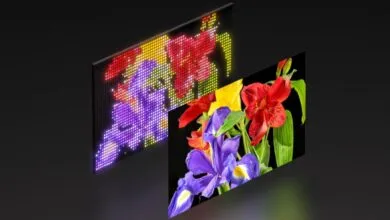
Micro RGB TVs are anticipated to offer superior contrast compared to mini-LED rivals. Their smaller light source size allows for a theoretically higher number of dimming zones, which should translate into deeper, more precise black levels. They also hold the potential for more natural and detailed color transitions. The full extent of their advantage will become clearer with extended hands-on testing. A prototype from Samsung showcased in 2025 demonstrated fantastic colors, clarity, and brightness. Currently, Samsung’s first commercial Micro RGB TV is a massive 115-inch model commanding a $30,000 price, but the 2026 lineup is expected to include far more mainstream screen sizes.
Hisense has further complicated the landscape with its introduction of RGBY LED technology. Building on the RGB (red, green, blue) foundation, Hisense’s new 116UXS RGB mini-LED TV adds a cyan light module. The company states that cyan occupies a part of the color spectrum where human vision is particularly sensitive, allowing for more nuanced and lifelike rendering of gradients and tones. This TV is claimed to achieve an impressive 110% coverage of the BT.2020 color standard and includes a high-end audio system from Devialet. Details remain scarce, but it is expected to carry a premium price tag upon release.
Not every manufacturer is following the RGB LED path. TCL chose to highlight its SQD LED, or Super Quantum Dot mini-LED, technology instead. This approach combines a traditional blue mini-LED backlight with newly formulated quantum dots and an advanced color filter. The resulting TV, the X11L, boasts specifications that rival top RGB LED models, including a claimed peak brightness of 10,000 nits and full coverage of the BT.2020 color spectrum. TCL emphasizes that its technology minimizes color artifacts compared to RGB LED and uses a special panel to provide wide viewing angles and deep blacks for better competition with OLED. Available now in several large sizes starting at $7,000, it represents a compelling alternative.
The most encouraging development for consumers is that RGB LED TVs are now a commercial reality. Hisense led the way by selling its first UX Series model in 2025, albeit in very large and expensive configurations. The landscape is shifting in 2026, with multiple brands preparing RGB LED models in more practical sizes.
Several models are available for purchase right now. Samsung’s original Micro RGB TV features what the company calls the smallest backlight system of its kind, complete coverage of BT.2020, a glare-free screen, and a dedicated AI processor. Hisense’s existing mini-LED RGB TV also delivers spectacular performance, reaching 95% of the BT.2020 gamut and claiming up to 8,000 nits of peak brightness.
More options are on the horizon. Samsung’s upcoming Micro RGB lineup will include sizes from 55 to 115 inches, which should lead to more attainable pricing. These sets will feature a next-generation AI processor and an enhanced light source for better color dimming precision. LG is entering the arena with its Micro RGB evo, billed as the “most advanced LCD TV” and promising 100% coverage of multiple major color gamuts, including BT.2020 and DCI-P3.
Perhaps most intriguing are Hisense’s planned UR9 and UR8 models, which aim to bring RGB LED backlighting to more homes and price points. Positioned as proof of the technology’s scalability, these TVs could potentially land in the premium range of current OLED and QLED pricing, offering dramatically expanded color range and accuracy.
It is important to remember that RGB display technology is still in its early stages. Competing technologies like OLED continue to advance, and the market remains dynamic. However, the trajectory for 2026 is clear: the future of television is shaping up to be brighter, more colorful, and increasingly within reach for a wider audience.
(Source: Wired)