Roborock’s Stair-Climbing Robot Vacuums as It Walks
▼ Summary
– Roborock unveiled the Saros Rover at CES 2026, a robot vacuum with articulating legs designed to climb and clean staircases.
– The Rover demonstrated impressive, froglike leg movement for climbing, though the process was slow and appeared precarious during the demo.
– The vacuum can navigate slopes, perform small hops over thresholds, and is claimed to handle various staircase types, aiming to access every room.
– No specifications or release date were provided, as it is still in development, and it currently lacks a mopping system.
– This innovation signals the rapid evolution of robot vacuums toward greater capability, potentially paving the way for more advanced home robots.
For years, the dream of a truly autonomous home has been held back by one persistent obstacle: the staircase. While robot vacuums have mastered flat floors, those vertical transitions remained a no-go zone, leaving a significant portion of the home untouched. At CES 2026, Roborock provided a potential solution with the Saros Rover, a prototype robot vacuum that uses articulating legs to climb and clean stairs. This development represents a significant leap toward a future where robots can access every corner of a multi-level home.
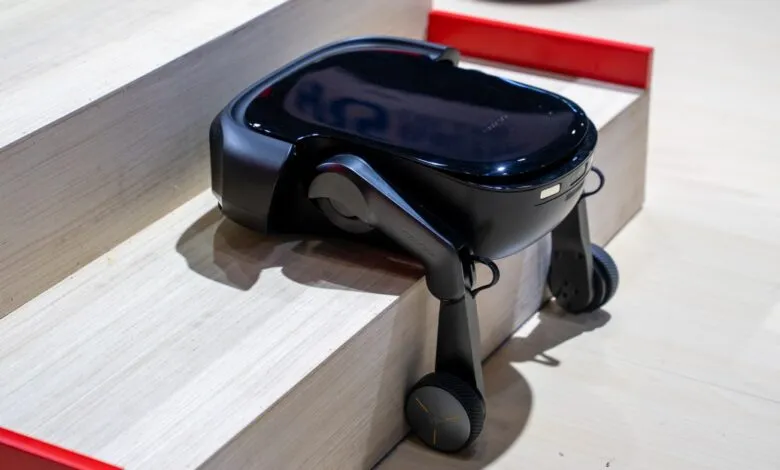
During a live demonstration, the Rover moved with a surprisingly fluid, froglike gait. Its legs operate independently, allowing it to lift its body, lower itself onto a step, and pivot to vacuum the tread before proceeding. Watching it navigate a five-step flight in just under three minutes was a tense experience; there were moments where it seemed poised to topple backward, but it always recovered. While the pace is deliberate, the ability to conquer stairs at all is a monumental engineering feat. The robot also demonstrated impressive control on slopes, rolling down smoothly with the ability to brake, turn, and even execute a small hop to clear room thresholds.
Roborock claims the Rover will eventually handle almost any staircase design, including curved, spiral, and carpeted varieties with rounded bullnose fronts. In its current form, it can climb up or down using the same method, and it can travel without vacuuming for faster relocation between floors. However, the company is proceeding with caution, especially after the mixed reception of its earlier Saros Z70 model with a robotic arm. No specifications, pricing, or release date have been announced, with Roborock openly stating “it will take a while to reach the market.” Furthermore, the Rover is currently a vacuum-only device, as engineers are still determining how to integrate an effective mopping system.
This innovation didn’t emerge in a vacuum. The industry has been steadily marching toward this moment. The previous year saw the debut of vacuums with simple arms, and by IFA 2025, several companies showcased stair lifts for robots. The Rover feels like the next logical, if ambitious, step in that progression. What it signals is perhaps more important than the product itself: robot vacuums are evolving from simple floor-cleaners into increasingly capable, multi-functional domestic machines.
The absence of a robotic arm on the Rover feels temporary. The industry’s trajectory suggests that adding limbs for picking up objects or performing other tasks is an inevitable next phase. This gradual accumulation of capabilities, navigation, suction, climbing, and eventually manipulation, hints that the path to a truly useful humanoid home helper may not come from building a bipedal robot from scratch. Instead, it might evolve incrementally from the humble disc-shaped vacuum, learning to conquer the home one step at a time, quite literally. Whether the Rover becomes a practical and affordable reality is still unknown, but its very existence redefines what we can expect from our automated helpers.
(Source: The Verge)