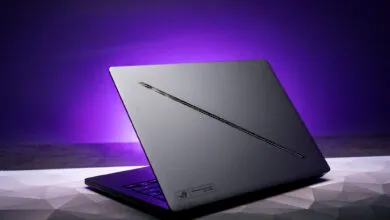
Acer Laptop Debuts Massive Haptic Trackpad with Stylus
▼ Summary
– Acer’s new Swift 16 AI laptop features what it claims is the world’s largest haptic trackpad, which also supports stylus input.
– Several Acer Swift laptops are being refreshed with Intel’s new Panther Lake processors, while the Swift Go 16 AI will use AMD chips.
– New gaming laptops include the mid-range Nitro V 16S AI and the higher-end Predator Helios Neo 16S AI, both with RTX 50-series GPUs and Intel Panther Lake CPUs.
– Acer has discontinued its AI-themed lid logos and trackpad activity monitors on these new laptops, despite the “AI” naming.
– The company has paused its Blaze gaming handheld line, including the Blaze 11, to focus on its core laptop products.
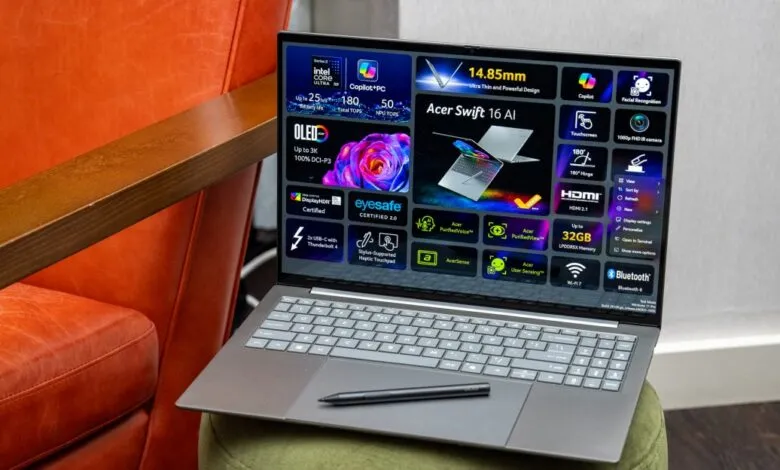
Acer has unveiled its latest laptop lineup for CES 2026, featuring a series of updates across its Swift, Nitro, and Predator families. The standout innovation is found on the new Acer Swift 16 AI, which boasts what the company claims is the world’s largest haptic trackpad. While spacious trackpads are common on bigger laptops, they typically rely on mechanical switches. This new model replaces that with a vast haptic surface, measuring an impressive 175.5 by 109.7 millimeters. Even more intriguing, Acer includes a stylus designed for use directly on the trackpad, enabling basic sketching and editing tasks without the need for a separate drawing tablet.
Beyond its groundbreaking input method, the Swift 16 AI is equipped with next-generation Intel Panther Lake processors, scaling up to the Core Ultra X9 388H. Buyers can also opt for a vibrant OLED display, and the laptop offers a generous selection of ports. The Panther Lake chips extend to other refreshed models, including the more affordable Swift Go 14 AI and the slim Swift Edge 14 AI and 16 AI. Notably, the larger Swift Go 16 AI will utilize AMD processors instead. These updates are primarily centered on the new silicon, but Acer has also expanded OLED display options across the board. The Swift Go and Swift Edge models introduce a clever feature: contextual media controls that appear directly on their mechanical trackpads when relevant content is detected.
The gaming division receives attention with two new models. The Nitro V 16S AI sits just above the entry-level tier, starting with an NVIDIA RTX 5050 GPU and configurable up to an RTX 5070. For enthusiasts, the Predator Helios Neo 16S AI serves as the gateway to Acer’s flagship Predator series. It also maxes out with an RTX 5070 but distinguishes itself with a more premium chassis and an optional OLED display. Both gaming laptops are powered by Intel’s Panther Lake CPUs to pair with their NVIDIA graphics. Interestingly, despite the prominent “AI” branding in every model name, Acer has quietly removed its dedicated AI lid logo and the trackpad-based NPU activity light that featured on previous designs.
This year’s announcements feel more incremental compared to last CES, which was energized by the widespread launch of new RTX 50-series graphics cards. Acer’s more disruptive news involved its Blaze gaming handheld line, particularly the oversized Blaze 11 prototype. However, the company has since placed that project on hold. Acer representatives confirmed that following the announcement, new US tariffs prompted a strategic shift. The focus is now squarely on core laptop products, with no immediate plans to bring the large handheld to market.
Pricing and specific availability dates are still pending. The Swift 16 AI and Swift Go 16 AI are slated for a first-quarter 2026 release. Other Swift models will follow in the second quarter. Gamers will need to wait until the third quarter of 2026 for the Nitro V 16S AI and Predator Helios Neo 16S AI. Some regions may see these models arrive slightly earlier than the global schedule.
(Source: The Verge)