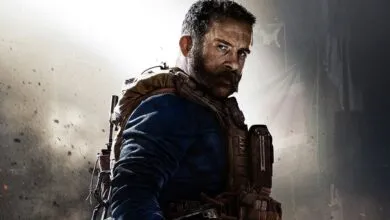
Call of Duty’s 2025 Downfall: What Happened?

▼ Summary
– Call of Duty: Black Ops 7 underperformed in 2025, with sales down over 10% compared to its predecessor and it receiving the lowest user score in franchise history.
– The game was heavily criticized for its poorly received, online-only campaign and was seen as an iterative disappointment following the well-regarded Black Ops 6.
– It faced unprecedented competition from two major shooters: Battlefield 6, which succeeded with a back-to-basics approach and strong community engagement, and the accessible extraction shooter ARC Raiders.
– Battlefield 6 benefited from a longer, non-annual development cycle and its Battlefield Labs program, allowing for more meaningful innovation and player feedback.
– Despite this setback, Call of Duty remains a major franchise, and Activision has signaled a change in strategy to avoid back-to-back subseries releases and focus on more meaningful innovation.
For over a decade, the video game landscape could always count on one dominant force: Call of Duty reliably topping the annual sales charts. That unshakeable pattern finally broke in 2025. A combination of internal missteps and formidable external competition converged, knocking the latest entry, Black Ops 7, from its perennial throne and signaling a significant shift in player loyalty.
The franchise’s historical success is staggering. Since 2009, a Call of Duty title claimed the year’s best-selling spot in thirteen out of sixteen years, with only massive releases like Hogwarts Legacy and Rockstar’s epics briefly interrupting its reign. By late 2023, total series sales surpassed half a billion units. Yet Black Ops 7, launched in November 2025, received a notably lukewarm reception. Critics and players alike delivered some of the series’ lowest scores, with particular scorn directed at its online-only, checkpoint-free campaign that many labeled confusing and frustrating. While its multiplayer and zombies modes maintained polish, the damage was done. Market data revealed a telling statistic: full-game dollar sales for Black Ops 7 dropped by a double-digit percentage compared to the well-received Black Ops 6 from the previous November.
This decline wasn’t happening in a vacuum. Two major shooters launched just weeks before Black Ops 7 and successfully siphoned away its audience. The first was a resurgent Battlefield 6. After the rocky launch of Battlefield 2042, developer DICE, under the late Vince Zampella, pursued a back-to-basics strategy that directly targeted Call of Duty’s perceived stagnation. Marketing emphasized a return to the “classic” Battlefield feel, large-scale warfare, destructible environments, and combined arms combat, inspired by beloved entries like Battlefield 3 and 4. This approach resonated, making Battlefield 6 the best-selling game of 2025 in the U.S. at the time. Analysts noted that the franchise’s non-annualized development cycle allowed for more meaningful innovation and community testing through programs like Battlefield Labs, which let players shape the game early in development.
The second challenger was a surprise. ARC Raiders, a third-person extraction shooter from Embark Studios, captured a different segment of the market. It distinguished itself with a more accessible and less punishing take on the hardcore extraction genre. While death still carried consequences, players could always make some progress, avoiding the feeling of wasted time. Its PvPvE (player vs. player vs. environment) focus fostered a surprisingly cooperative and positive community, as players often teamed up against giant robot threats rather than each other. This unique social dynamic, combined with strong word-of-mouth and watchable streaming moments, made it a breakout hit that appealed even to casual Call of Duty fans seeking something fresh.
The collective impact was clear. For the first time in years, Call of Duty faced serious competition that exposed its own vulnerabilities. The pressure of an annual release schedule seemed to foster iterative, rather than innovative, sequels. In response, publisher Activision has signaled a major strategic shift, announcing it will no longer release back-to-back entries in a subseries like Modern Warfare or Black Ops, pledging to deliver “absolutely unique experience each and every year.”
Despite the setback, analysts caution against counting the franchise out. It retains a massive, dedicated player base, and a return to form with compelling gameplay could quickly restore its position. However, the 2025 sales crown appears destined for Battlefield 6, ending Call of Duty’s long streak. The horizon holds further challenges, notably the eventual release of Grand Theft Auto VI. The lesson for Activision may be that in a crowded market, quality and meaningful innovation have overtaken reliable annual releases as the key to dominance. The king was dethroned, not by a single usurper, but by a perfect storm of its own stumbles and rivals finally hitting their mark.
(Source: The Ringer)